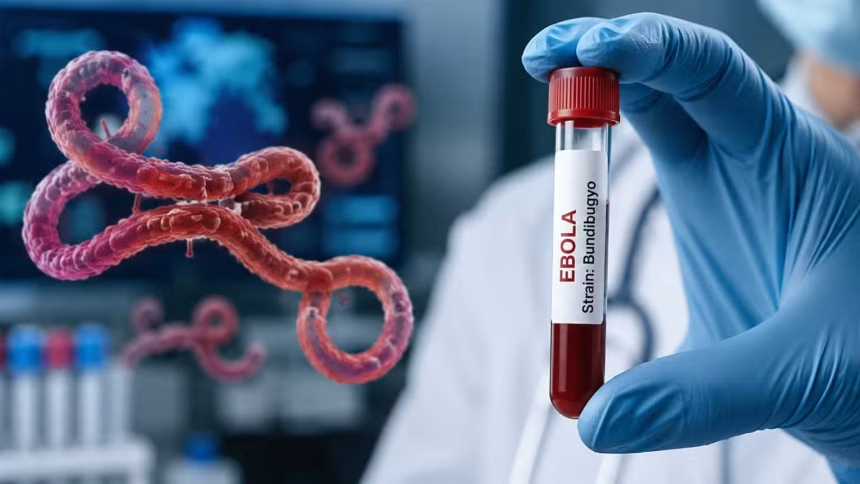
The Ghana Health Service (GHS) has activated its Ebola preparedness measures and conducted about three simulation exercises to assess the country’s readiness to respond to a possible outbreak.
The Director-General of the GHS, Dr Samuel Kaba Akoriyea, said the Service was closely monitoring developments in affected African countries, including the Democratic Republic of the Congo (DRC) and Uganda, while coordinating with relevant institutions to assess potential risks to Ghana.
He explained that the GHS was using its Public Health Emergency Operations Centre at Pantang to track emerging health threats and coordinate preparedness activities around the clock.
“So here you are, you have an outbreak in Congo, Uganda, and then you see it coming to Kenya, and we have airlines that come indirectly, day in, day out. Then from there, you see it get to Nigeria. And as I talk to you, I’m always in touch with my colleagues in those countries to know exactly what is happening,” he said.
Dr Kaba Akoriyea said the Service had conducted about three simulation exercises since concerns about the disease emerged in the region, adding that Ghana activated its preparedness system following reports of the outbreak in the DRC.
“When it started in DRC, we activated our system. In Congo, in Kenya, we started with simulation exercise,” he said.
He added that about 33 agencies were involved in the preparedness efforts, including the Food and Drugs Authority, the National Disaster Management Organisation (NADMO), the Ghana Education Service, the Veterinary Services Department and the Ghana Armed Forces.
The exercises are intended to test coordination among institutions, particularly in identifying and managing suspected cases, sharing information and mobilising resources during a public health emergency.
Dr. Kaba Akoriyea also highlighted Ghana’s cross-border cooperation with Burkina Faso and Côte d’Ivoire, saying the engagements were aimed at strengthening information sharing and improving responses to infectious disease threats.
“So we’ve held a cross-border meeting with our counterparts in Burkina, we’ve had one with our counterparts in Côte d’Ivoire, Ivory Coast, and we’ve had a tripartite meeting to know what is happening there and what is happening here. How do we compare those and solve these issues?” he said.