Long before the establishment of the Electricity Company of Ghana (ECG) and the spread of electric power across towns and villages, nightfall in Ghana signalled a different rhythm of life.
Darkness was real, deep, and respected. When the sun set, families relied on creativity, nature, and locally available materials to bring light into their homes.
In those days, lighting was not just about visibility; it shaped social life, storytelling, security, trade, and spirituality.
In our Ghana Month Series, The Ghana Report takes readers back to a time when firewood, kerosene lamps, also referred to as ‘Bobo’, and others were the main sources of illumination in Ghanaian homes before the invention of electricity.
1. Firewood and the Hearth

Before lamps became common, the kitchen fire was the primary source of light. In many Ghanaian homes, especially in rural communities, firewood is burnt in clay stoves or three-stone hearths.
At night, families gathered around the glowing embers. The fire illuminated faces as elders told folktales, stories of Ananse the spider, brave hunters, and ancestral wisdom.
Children completed homework beside the kitchen fire, squinting through the smoke but determined to learn and make good grades at the end.
READ ALSO: Ghana Month: Meet the woman who financed Ghana’s first president
The hearth was more than a light source; it was the centre of family life. However, it produced smoke, soot, and limited brightness. Light barely reached beyond the immediate circle.
2. Palm Oil or Kerosene Lamps (Bobo)

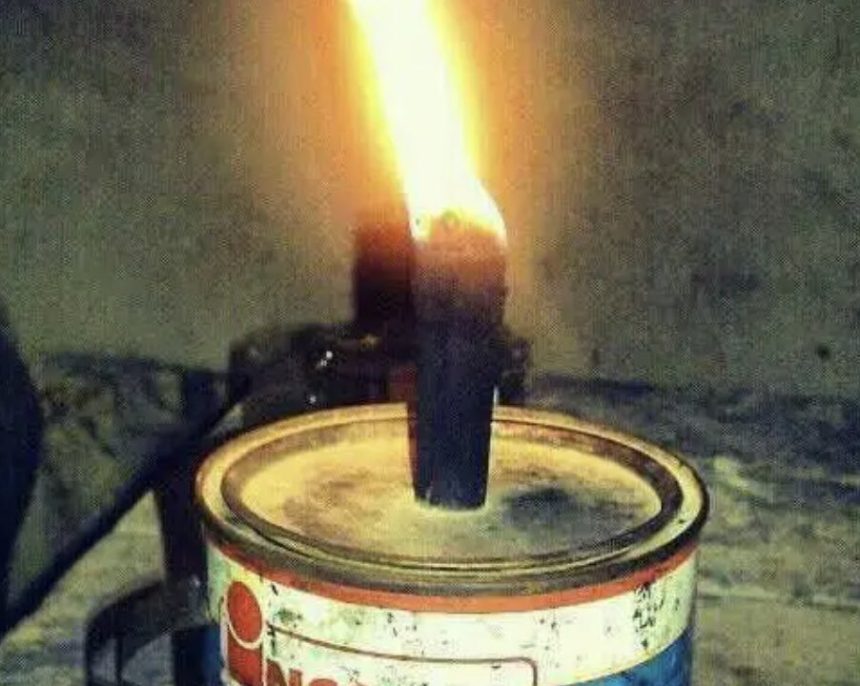
With time, palm oil lamps became common. Known in some communities as ‘Bobo’, they were made from small clay bowls, tins, or carved containers filled with palm oil or kerosene. A cotton wick was placed inside and lit.
Palm oil and kerosene were widely available in Ghana, making this an affordable lighting option.
Compared to firewood, oil, or kerosene lamps provided a steadier and more focused flame.
They were often used indoors for eating supper, evening prayers, sewing and weaving, and studying.
Though brighter than a hearth fire, palm oil or kerosene lamps still produced smoke and required constant refilling.
3. Kerosene Lanterns (Hurricane Lamps)

Another object used as a source of light in the olden days was a kerosene lantern, popularly called a hurricane lamp, which became a breakthrough.
Fuelled by kerosene and protected by a glass chimney, they produced a stronger and more wind-resistant flame.
These lanterns were especially useful for night fishing along coastal communities and for market traders closing late, and students used them to prepare for examinations.
The lantern became a symbol of progress in many homes. Owning one meant brighter nights and better productivity. However, kerosene could be expensive, and accidental fires were a risk if not handled carefully.
4. Candles

Candles were another important source of light. Though simple, they were effective for short-term lighting needs. Churches, homes, and small shops relied on candles during special occasions or emergencies.
Students preparing for the Basic Education Certificate Examination (BECE) or other tests often revised their books under candlelight. The phrase “burning the midnight candle” was literal in those days.
Candles, however, melted quickly and could easily be blown out by the wind. They were sometimes considered a luxury in very poor households.
Although electricity is now available to many, some still resort to candles during blackout hours.
5. Bamboo and Torch Lights

For outdoor movement at night, people crafted torches from bamboo or dry sticks wrapped with cloth soaked in oil.
These makeshift torches were used during night hunting, community patrols, festivals, and funeral processions.
Common torchlight used in many homes in the olden days
The flames flickered dramatically in the dark, creating a powerful visual presence during cultural ceremonies.
Before ECG extended electricity across Ghana, nightfall meant a slowdown in activities. Children were expected indoors. Moonlight nights were treasured because they provided natural brightness for social gatherings and outdoor games.
The expansion of electricity by the Electricity Company of Ghana transformed Ghanaian life. Homes became brighter, businesses operated longer hours, hospitals functioned more effectively, and students studied without smoke-filled rooms.
Some Facts About ECG
ECG was incorporated in 1963 and became a limited company when shares were first sold in the firm in February 1997. However, the company is still owned by the government.
The enactment of the Electricity Corporation Decree, 1967 (NLCD 125), and the repeal of the Electricity Act established the Electricity Corporation of Ghana (ECG).
For the next two decades, ECG was to remain the entity solely responsible for electricity supply and the distribution networks nationwide. In 1987, the corporation’s sphere of operation was limited to the southern parts of Ghana, which also had the greatest concentration of customers.
The first government, led by Prime Minister Dr. Kwame Nkrumah and his Convention People’s Party (CPP), sponsored public electricity supply in the country, which commenced in 1914 at Sekondi. It was operated by the Railway Administration, which extended supply to Takoradi in 1928.
Meanwhile, the Public Works Department had commenced a limited Direct Current (DC) supply in Accra during 1922; this was immediately followed by a large Alternating Current (AC) project, which commenced in 1924.
A small plant consisting of three horizontal single-cylinder oil-powered engines was installed in Koforidua in 1925. Also in 1926, work commenced on providing power to Kumasi.
During the period 1929-30, a limited electricity supply was extended to Tamale until a new AC plant was installed in 1938. The next power station to be established was Cape Coast, which came into being in 1932.
After its takeover by the Electricity Department from the Public Works and Railways on 1st April, 1947, a power station at Swedru was commissioned in 1948. This was followed by the installation of generating plants at Oda, Dunkwa and Bolgatanga in 1948.
The Tema power station was commissioned in 1956 with a 3 x 650 kW generating set. The Ho power station followed in 1957. From 1961-64, the Tema Station was extended to a maximum capacity of 35,298 kW, thus, making it the biggest single diesel-powered generating station in Africa.
Ghana’s main electricity power source, the Akosombo Dam, has a total Plant capacity of 1020 megawatts. The country has constructed a 330 megawatt thermal plant in Takoradi to supplement its power supply needs. A 560 megawatt Sunon Asogli Power is under construction.
The first phase of 200 megawatts has been completed. There is an ongoing project to build another 400 MW hydropower plant at the Bui dam in the Brong Ahafo region.