
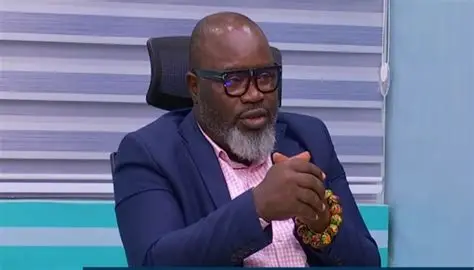
Education policy analyst and Executive Director of Africa Education Watch (Eduwatch), Kofi Asare, has raised concerns over what he describes as fairness and transparency issues in Ghana’s ongoing teacher recruitment process.
In a statement, Kofi Asare questioned the approach adopted by the Ghana Education Service (GES), particularly the decision to open applications to a large pool of graduates despite limited recruitment slots.
“I have chosen to stay quiet on the operational issues, but honestly, my mouth has been itching,” he remarked, signalling growing unease within education policy circles.
According to him, GES has long maintained a clear and widely accepted convention when recruiting from Colleges of Education (CoE), prioritising the most senior graduating cohorts.
However, he argued that while such a formal convention may not exist for university graduates, the same principle of fairness could still be applied.
Mr. Asare pointed out that there is currently a significant backlog of trained teachers awaiting employment. He estimates that about 30,000 graduates from the 2022, 2023 and 2024 CoE cohorts remain in the system, alongside more than 20,000 university-trained graduates.
Against this backdrop, he questioned the rationale behind inviting roughly 50,000 applicants to compete for just 7,000 available teaching positions.
“So, if clearance is given to recruit only 7,000 teachers, why ask 50,000 to apply?” he asked. He further suggested that limiting applications, particularly among CoE graduates, to specific cohorts could have ensured a more manageable and transparent process without compromising competitiveness.
The EduWatch director also raised concerns about emerging allegations that the recruitment portal was closed after reaching a certain quota. He argued that such claims are difficult to dismiss when the application pool significantly exceeds available vacancies.
He acknowledged that the government’s objective of deploying teachers to underserved schools is commendable. However, he questioned whether the current approach guarantees fairness among qualified candidates or rather fuels anxiety and uncertainty.
Drawing from past experiences, he warned that when thousands compete for limited opportunities, the risks of perceived or actual unfairness, lack of transparency, and even corruption tend to increase.
“This is my genuine concern,” he stressed.