
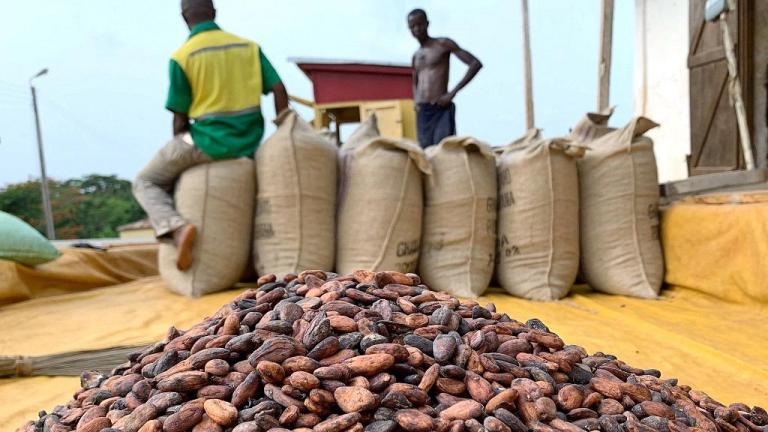
Ghana is one of the world’s top cocoa producers, and cocoa is a major part of the economy, supporting hundreds of thousands of farmers and generating foreign exchange.
But in 2025–26, the sector has faced serious financial strain because global cocoa prices recently collapsed.
Buyers around the world are offering much less for cocoa beans than before, which has created problems across the whole system.
Farm-gate price slashed from GH¢3,625 to GH¢2,587 per bag. The farm-gate price is the amount the Ghana Cocoa Board (COCOBOD) pays farmers for a 64 kg bag of cocoa beans.
At the start of the 2025–26 season, this price was GH¢3,625 per bag.
However, on 12 February 2026, the government announced a new price of GH¢2,587 per bag (about GH¢41,392 per tonne). This represents a nearly 29% reduction.
The government explained that because world cocoa prices have fallen sharply, Ghana’s previous price had become too high and uncompetitive, leading to cocoa beans sitting unsold at ports and buyers delaying payments.
The goal, the government say, is to align local prices more closely with international market levels so Ghanaian cocoa can sell abroad without large losses.
Why was the old pricing model unsustainable?
For years, COCOBOD relied on forward contracts and syndicated loans to buy cocoa from farmers and sell it later on world markets.
But when global cocoa prices fell, buyers backed away, and the syndicated loan system became unsustainable.
This left COCOBOD with large stocks of unsold beans and huge financial obligations, including significant debt that it struggled to meet.
New financing model and domestic funding
To replace the old system, the government is introducing a new financing approach that moves away from international syndicated loans.
Instead:
COCOBOD will use domestic cocoa bonds, which are financial instruments funded locally and expected to be repaid within each crop year.
Legacy debts (old obligations) will be converted or restructured to reduce immediate pressure on COCOBOD.
The Government has also directed the Board to pay outstanding amounts owed to farmers, some of whom have gone months without full payment.
This shift is meant to stabilise cocoa purchases and keep Licensed Buying Companies (LBCs) operational so they can buy beans from farmers without cash flow problems.
How much income are farmers losing?
In February 2026, the government reduced the farm-gate price paid by the Ghana Cocoa Board (COCOBOD) from GH¢3,625 to GH¢2,587 per 64kg bag.
That’s a drop of GH¢1,038 per bag, nearly 29% less income per bag.
Example:
If a farmer produces:
100 bags in a season
Old income: GH¢362,500
New income: GH¢258,700
Loss: GH¢103,800
For many smallholder farmers (who typically produce between 50 and 200 bags depending on farm size), this is a major reduction in yearly earnings.
And remember that cocoa income often comes only once or twice a year, so farmers depend on that money to support their households for months.
But are farmers’ costs going down?
No, and that’s the problem.
While cocoa prices have fallen, the cost of living in Ghana remains high, with fertiliser prices remaining elevated, agrochemicals are expensive, labour costs have increased, transport costs are still high, and school fees, food, and healthcare expenses continue to rise.
So farmers are earning less money, but their expenses have not reduced, which squeezes profit margins badly.
What does this mean for everyday life for the farmer?
Lower cocoa income could lead to reduced spending on children’s education, delayed farm maintenance and replanting, lower use of fertiliser (which may reduce future yields), higher rural debt levels and increased poverty in cocoa-growing communities.
This is staggering because some farmers may even abandon cocoa or turn to or even sell( of which some farmers have threatened) to illegal mining or other activities if returns become unattractive.
In simple terms
The government cut the money paid to cocoa farmers because global cocoa prices fell too low.
The old way of financing cocoa buying wasn’t working anymore, leaving COCOBOD in debt and cocoa unsold.
Now the government is trying new ways using domestic funding, paying farmers their money, making prices follow world markets, and cutting costs to make the whole cocoa system work better and stay sustainable.