When we sang this old nursery rhyme back in the early 1970s at the Tarkwa Goldfields Preparatory School in the Western Region, a giant leap for mankind had already been taken with one small step during the moon landing under the Apollo 13 mission in 1969.
But my classmates and I were, of course, blissfully unaware of this, being the tiny tots that we were then.
All we knew was that at night, this lovely, soft-looking ball appeared in the sky to take over from the sun, hanging delicately in the sky, watching over us.
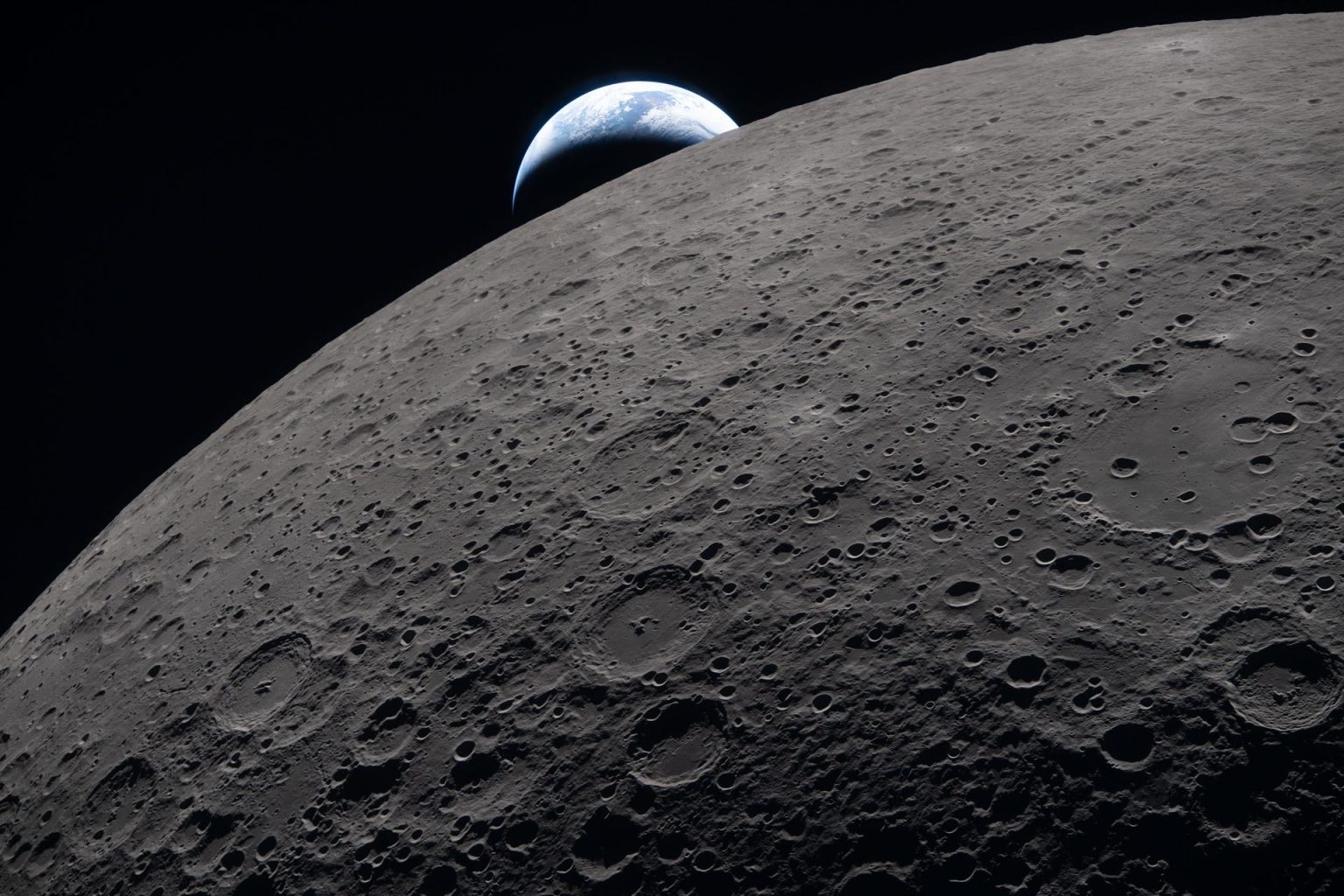
With news of the recent space flight of the Artemis II mission by the United States’ National Aeronautics Space Agency (NASA), I have occasionally caught myself staring at the moon at night and recalling my childhood nursery rhyme, hoping in vain to catch a glimpse of the spacecraft winging its way around the silvery moon about 384,000 kilometres away.
Mind-boggling facts
Apart from the avid space watchers who have been following every NASA mission over the years, many of us were completely unaware of the imminent space mission, but NASA managed to catch the attention of the world anyway. Enthralled, I stayed up to watch the live coverage of the countdown to liftoff.
I was not prepared to miss re-entry and subsequent splashdown for anything in the world.
On social media platforms, several Ghanaians could not help but latch onto the fact that one of the astronauts, Christina Koch, had once been an exchange student at the University of Ghana.
They drummed it up as if she were a full alumna of the university.
They actually just stopped short of saying Ghana had launched an astronaut into space as they sought to claim her.
Of course, success, they say, has many fathers.
The mission figures were mind-boggling. Fully fuelled, the rocket weighed approximately 2,600 tonnes, stood taller than a 30-storey building, and generated over 8.8 million pounds of thrust to send the four astronauts on a lunar flyby covering a total of about 1 million kilometres.
The launch vehicle, including its rocket boosters — called the Space Launch System — costs around $2.2 billion, and finally, there is another $570 million for the necessary ground infrastructure, including mobile launchers.
That means each flight of Artemis I through IV costs around $4.1 billion.
Given my general phobia of science from childhood, many of the explanations about the mission only bounced around my head.
I could only imagine the high-level physics and mathematical calculations that must have gone into the whole process and the insane amount of man-hours and intellectual firepower spent on it.
Everything seemed to have worked according to plan, right down to the speed and angle of descent, through to the time and location of the final splashdown, with those giant parachutes deploying at just the right moment. Simply impressive.
Space dreams and benefits
In this day and age, even after countless space explorations, the idea that man can blast his way into deep space and actually land on the moon is still too fantastic for many minds to process.
For many, it is nothing short of witchcraft to try to go to the moon. For what?
Yet, space continues to tickle man’s fantasies as we try to understand beyond what we know and experience as our world, including the eternal question of whether there are life forms elsewhere.
Or are we alone and unique, a tiny dot in the vast galaxy almost beyond our comprehension?
I think the fact that man keeps pushing beyond our known frontiers to try to understand the universe and beyond is a fantastic idea.
But beyond the dreams and the quest for knowledge, space exploration has brought mankind huge benefits, including Global Positioning Systems (GPS), which in turn impacts shipping, aviation, telecommunications, agriculture and many aspects of our daily lives.
Astrophysics and astrochemistry are also huge areas of benefit.
More space-based research is important, and those who argue that missions such as Artemis are needless perhaps do so from an uninformed position.
We cannot relent on pushing frontiers.
Whither African Space Agency?
In all of this, one cannot help but wonder: where is Africa in all of this? I am not aware of any African country engaging in space mission dreams.
In his seminal 1986 TV documentary ‘The Africans: A Triple Heritage’, the political scientist and historian Prof. Ali Mazrui, famously stated that ‘as the world goes to the moon, Africa goes to the village.’
With this phrase, Prof. Mazrui contrasted Africa’s slow adoption of technology and modernisation by capturing it as the ‘village’, and setting it in contrast with the high technology that moon exploration entails.
On a continent that has several challenges with fulfilling the basic needs of its citizens, the idea of jetting into deep space seems like a frivolous luxury that can only be entertained by those who have met their basic needs and have the time and space to dream about other things.
That argument is difficult to contest. I agree that
Africa must focus on its basics that keep body and soul together.
But that focus must be grounded and rooted in science and technology, with an aggressive approach to Science, Technology, Engineering and Maths (STEM) at the core, to excite young minds that science is fun, practical and opens many exciting doors – a far cry from the phobia of science and mathematics that many of us developed in childhood because of the sort of teachers we had.
It also means a realistic and more serious approach to research funding to address our relevant, unique needs in agriculture, food sustainability, health and many others.
This means superstitious beliefs and practices in the name of ‘culture and tradition’ must have no place in our national conversation, nor must religious fervour be allowed to supplant science, and our education system must aggressively address this.
Medical treatment for ailments belongs in hospitals rather than in prayer camps.
Our local movie scene must direct away from witchcraft and ‘juju’. Other countries that are at the forefront of cutting-edge technology today, including space exploration, were once steeped in these negative influences.
When we are able to break the barriers that draw the continent back from optimising its potential and the basic challenges are surmounted through science, the skies above will be our limits, literally speaking.
It should be possible for children across Africa to aspire to be astronauts without having to dream of NASA, the European Space Agency or a similar entity in the West as the only destination worthy of their dreams.
Africa must be at the table for important global conversations, and an African Space Agency should not be an impossibility in a few generations.