Several of the rebel groups which have been fighting the Ethiopian authorities in different parts of the country have announced they have formed an alliance to remove the government in Addis Ababa.
The alliance brings together the Fano militia in Amhara, the Oromo Liberation Army (OLA), Tigray People’s Liberation Front (TPLF) and four other smaller groupings in a coalition named Alliance for Survival.
The seven groups accuse Prime Minister Abiy Ahmed’s government of presiding over “war, genocide, mass destruction and utter poverty”, claiming Ethiopia is at risk of disintegration.
Abiy’s spokesperson Billene Seyoum said the groups had already been collaborating for some time, Reuters reports.
The BBC has asked the government for comment.
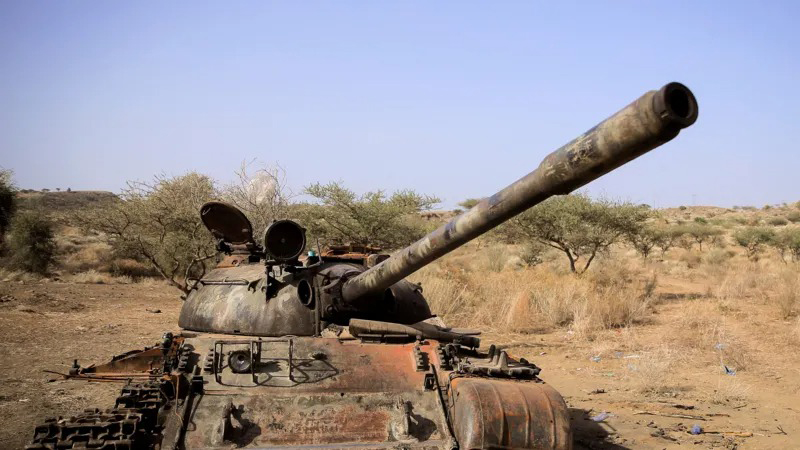
Ethiopia has faced years of armed conflict in Oromia and Amhara, the most populous states in the country.
There have also been renewed tensions in the northern Tigray region, where a two-year civil war left hundreds of thousands dead and displaced millions.
An African-Union peace deal ended that war in 2022, but there have been fears of a return to a full-scale conflict, with both sides accusing each other of violating that agreement.
Besides Oromia, Amhara and Tigray, the new alliance also includes groups based in three other regions – Somali, Afar and Benishangul-Gumuz – making up a half of Ethiopia’s 12 regional states.
The states are structured largely based on their dominant ethnic groups – a system of ethnic federalism that gives some autonomy to the states, but which can present social and political challenges for the country which has more than 80 ethnic groups.
poll.
A map of Ethiopia showing the different regions, as well as Eritrea
Some of the rebel groups in the new alliance have previously fought against each other but they say they will now work together against their common enemy.
However analyst Edward Bach from advisory firm Verisk Maplecroft told the AFP news agency that the groups were “unlikely to share weapons… as your ally today can be your enemy tomorrow”.
Amhara’s Fano group fought alongside federal forces against the TPLF during the Tigray war.
It however turned against the federal government in an armed insurgency less than a year after the war ended, after refusing government orders to disarm.
Abdikadir Addaani Hirmooge, the spokesman for the Ogaden National Liberation Front (ONLF), which is part of the alliance, told the BBC that the groups in the new coalition were working to bring together communities that have been divided against one another.
“Our objective is for the communities to have democracy and to exercise their right to self-determination, to genuinely govern themselves,” he said.
He said that the government had not respected a peace deal signed in 2018 to end the conflict in the Somali region.
“Ethnic conflict, insecurity, and mutual oppression and pushing each other aside have not been eradicated, resulting in a need that has affected every ethnic group,” he said.
The government has been fighting the OLA since 2018.
The announcement of the Alliance for Survival coalition comes months after reports of an alleged alliance between TPLF and neighbouring Eritrea.
Abiy responded by saying he had faith in Ethiopia’s “defensive capabilities”.
“Even if others were added, we do not have an iota of fear regarding Ethiopia’s sovereignty,” he told lawmakers in July.
The country held a general election in June, with Abiy’s Prosperity Party retaining its overwhelming parliamentary majority, despite the poll being overshadowed by conflict, accusations of repression and little participation by opposition parties.
The Fano and OLA rebel groups rejected the election and its results.
The Tigray region and its six million inhabitants were completely excluded from the