A few weeks ago, an autistic girl in Bolgatanga SHS was allegedly sexually assaulted by two security officers in her school.
This news is deeply disturbing and begs the question: how safe are our most vulnerable children in the very places where parents entrust them for protection, education and development?
For the family of such a child, the pain must go far beyond the immediate trauma.
Imagine watching your daughter work hard to learn, to overcome the challenges associated with her disability and to make progress academically, only to discover that while she was trying to succeed, adults in the very environment where she should have been protected were allegedly preying upon her vulnerability.
For parents and families, that can be devastating.
They send their children to school believing that they are entering an environment where teachers, caregivers and other adults will help them learn and thrive.
For a child with autism or another developmental disability, that trust can be even greater because the child may require additional support, supervision and advocacy.
School should be a place where a vulnerable child becomes safer and not a place where vulnerability becomes an opportunity for exploitation.
A general child-protection policy is not enough in our schools.
Child abuse often occurs where there is an imbalance of power.
The perpetrator may be stronger, older, and more influential or placed in a position of trust.
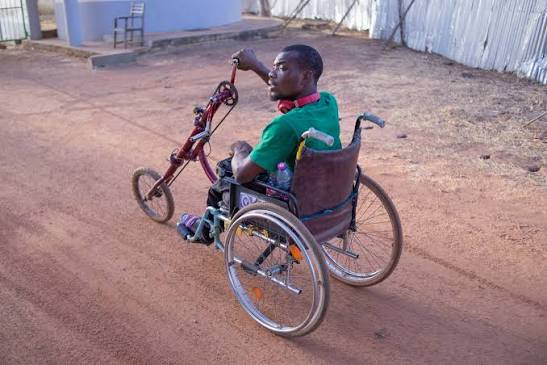
Children with disabilities can face additional vulnerabilities.
Some may have difficulty communicating verbally, understanding social boundaries, recognising inappropriate behaviour or explaining what has happened to them.
Some may depend on adults for toileting, dressing, transportation or other personal care.
These realities demand more than a generic statement that “all children must be protected.”
Dormant Account Notice
Safeguarding
Ghana needs disability-inclusive safeguarding policies in schools now, if it has none.And if there are, duty-bearers must be held accountable for the obvious lack of implementation.
Such a policy should specifically address the vulnerabilities and communication needs of children with autism, intellectual disabilities and other developmental conditions.
Every vulnerable child should have an individual safeguarding and communication profile.
A sudden change in behaviour, withdrawal, fear of a particular person or regression should not automatically be dismissed as “just the autism.”
Every adult around the child matters.
This includes Security officers, drivers, cleaners, teaching assistants, therapists, coaches, volunteers and other personnel who may have access to children.
They should therefore be appropriately screened, trained and supervised.
Schools must also establish clear rules around one-to-one contact, physical assistance, etc.In this case, the child was apparently visiting the security post to charge her school tablet, and at odd hours too.
This should not happen in a school where safeguarding is taken seriously.
Children with autism should receive age- and developmentally appropriate body-safety education.
This may involve pictures, social stories, role-play, communication devices and other methods suited to the child’s abilities.
They can learn that their body belongs to them, which parts are private, which adults may appropriately help them with personal care, how to communicate “no,” and which trusted adults they can tell when something feels wrong.
But responsibility cannot be placed on the child.
Teaching a child about safety does not absolve adults of their responsibility to create a safe environment.
Case
This Bolgatanga case should not draw sympathy and die out after two weeks.It should compel us to examine whether our current safeguarding systems adequately protect children with disabilities.
We need to move from general child protection to disability-inclusive safeguarding.
Parents should not have to choose between their child’s education and their child’s safety.
They should be able to send a vulnerable child to school knowing that the adults entrusted with that child’s care understand the vulnerability and are committed to protecting it.
Our children deserve schools where vulnerability attracts protection, not predators.
And children with disabilities deserve more than inclusion in the classroom.
They deserve inclusion in our safeguarding systems.