Former Vice President Dr. Mahamudu Bawumia has explained the economic challenges that influenced his decision to propose the “Gold for Oil” programme and the Domestic Gold Purchase Programme while serving in government.
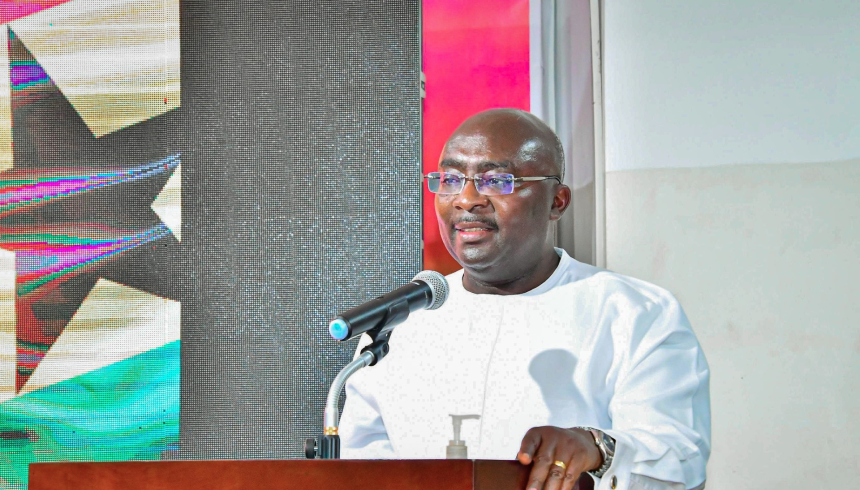
Speaking to members of the Ghana Small-scale Miners Association in Accra, Dr Bawumia said the two initiatives were introduced in response to serious pressure on Ghana’s foreign exchange reserves and the depreciation of the cedi.
He explained that Ghana’s access to external financing had been severely affected by the COVID-19 pandemic and the Russia-Ukraine war.
The situation, he said, contributed to a balance of payments crisis as the country struggled to secure enough foreign currency.
According to Dr. Bawumia, Ghana’s situation was further complicated by conditions under the country’s International Monetary Fund (IMF) programme.
He said one of the conditions limited the Bank of Ghana to using about $80 million each month to intervene in the foreign exchange market, despite the country’s much higher demand for dollars.
He argued that the gap between demand and supply of foreign exchange put pressure on the cedi and contributed to its depreciation.
It was against this background, he said, that the idea of Gold for Oil was developed. The programme was designed to allow Ghana to use gold to obtain petroleum products rather than relying entirely on scarce US dollars for fuel imports.
Dr. Bawumia also explained the thinking behind the Domestic Gold Purchase Programme, which he referred to as “Gold for Reserves”.
He said he questioned why Ghana, a major gold-producing country, should rely on exporting other commodities to generate the dollars needed to build its reserves when the country could buy locally produced gold with cedis.
He described both initiatives as unconventional ideas that required the Bank of Ghana to conduct extensive due diligence before their implementation.
Dr. Bawumia said the central bank took nearly a year to assess the proposals because of their unusual nature.
He added that Ghana eventually became the first country to implement such a programme and claimed that other countries have since shown interest in learning from Ghana’s experience.