
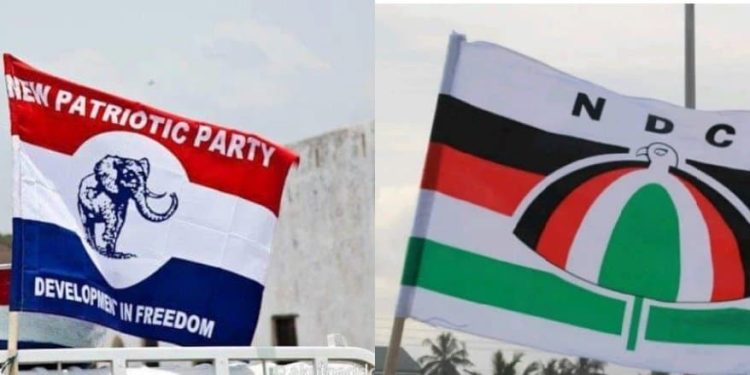
We cherish democracy and it’s evident in our quest to keep it alive.
Ask anyone who has been through Ghana’s educational system for its definition and you most likely will get Abraham Lincoln’s version of Government of the people, by the people and for the people.
Centuries before this pronouncement however, the people of Ancient Greece were literally living the essence of the statement.
They had a more practical outlook of how democracy should operate. All qualified persons gathered at one place for decision making.
There was no minister, no MP nor Chief Executive Officer. Each, a legislator in his own right. This became impractical as states expanded. This classical form of democracy gave way to representative democracy. Ghana has been practicing this form of democracy at least since 1993 uninterruptedly.
Political Parties, a central piece to representative democracy, developed a narrow mode of internal decision making, relying on a delegate system to elect executives and candidates to contest in national elections.
Three decades later, Ghana’s democratic architecture remains stable but under threat. The collapse of internal party democracy, and weak party financing exposes Ghana’s democracy to a political economy that rewards loyalty over merit, entrenches corruption before candidates even attain office, and subordinates the party to the presidency.
These are not just our words. The Supreme Court recently determined that the delegate system breeds corruption and ordered political parties within a year to allow all members in good standing to vote. To what end? To demonetise politics.
It is a welcome intervention and one worthy of commendation. Yet, by itself, it cannot complete the journey. At best, it opens the first gate. To truly reform Ghana’s politics, the country must walk much further.
I. Internal Party Democracy and the Pre-Corruption of Power
If corruption has a birthplace, it is not the ministerial office or the parliamentary chamber. It is the party primary. That is where public office first acquires a price tag.
The evidence hardly needs searching for. It confronts us during almost every internal party election. Television sets, sewing machines, bags of rice, mobile money transfers and even the now familiar kosua ne mako have become recurring features of delegate conferences. Vote buying has become so commonplace that it scarcely provokes surprise anymore.
Delegate-based primaries have quietly transformed political contests into commercial transactions. Research by the Ghana Centre for Democratic Development (CDD-Ghana) estimated that contesting Ghana’s 2024 presidential election required about US$150 million, while an average parliamentary campaign cost not less than GHc 4million.
Politics has consequently become deeply transactional. Delegates, many of whom struggle through difficult economic circumstances themselves, understandably see their vote as perhaps the only bargaining chip they possess. They demand payment because experience has taught them that promises made during campaigns often evaporate after victory. The conspicuous prosperity displayed by some elected officials only deepens that conviction.
Yet the real problem lies beneath the surface. Candidates rarely finance these increasingly expensive primaries from their own pockets. Wealthy financiers, contractors and business interests’ step in, not as philanthropists but as investors expecting future returns through contracts, appointments or privileged access to power.
By the time many candidates finally enter Parliament or the Executive, they already owe political debts whose repayment frequently competes with—and sometimes eclipses—their duty to the public.
Corruption, therefore, does not begin after elections.
It begins long before the first oath of office is administered. It is against this backdrop that the Supreme Court’s directive expanding participation in party primaries is particularly refreshing. Equally encouraging is the government’s commitment to introducing the constitutional amendments required to give practical effect to the ruling.
But no serious observer should mistake the beginning of reform for its completion.The destination still lies some distance ahead.
II. Weak Party Financing and the Path to Institutional Independence
Expanding the franchise within political parties without confronting how those parties are financed risks solving one problem while quietly creating another. If every member in good standing is to vote, the logistical costs of organising primaries will inevitably rise.
More polling stations will be needed. More ballot papers must be printed. Electoral officials, security personnel and logistics will all require additional funding. The obvious question therefore follows. Who pays?
This question matters because Ghana’s political parties have never truly built sustainable financial institutions rooted in broad membership, regular dues and organised fundraising. Instead, many survive largely through election-season benefactors and, once in government, increasingly through the resources and patronage networks surrounding the presidency.
Gradually, the direction of accountability shifts. Instead of the party supervising the government it elected, the government begins financing and, by extension, supervising the party. An institution that ought to restrain executive excess slowly becomes dependent upon executive generosity.
The danger does not end there. In the absence of transparent and sustainable financing, political parties may increasingly turn to financiers whose generosity carries invisible strings, further embedding corruption into the political process. The antidote lies in building genuine mass parties rather than election machines.
Parties sustained by thousands of ordinary members making modest but consistent contributions enjoy something priceless: independence. They possess the financial confidence to challenge their own leaders, uphold internal discipline and preserve institutional memory beyond any single presidency.
The one-year implementation period granted by the Supreme Court therefore presents Ghana with a rare opportunity—not merely to expand voting within parties but to rethink how those parties should survive and flourish. Perhaps the time has come to begin an honest national conversation on carefully regulated
public funding for political parties.
III. Unemployment and the Patronage Trap
Economic hardship has quietly reshaped the relationship between young people and politics. For far too many Ghanaian youth, political parties have become less a vehicle of ideology but ladders of economic survival.
Perhaps no comprehensive dataset yet captures this reality. Yet almost every Ghanaian can point to someone whose fortunes transformed dramatically within months of a change in government. Yesterday’s unemployed activist suddenly drives expensive vehicles, occupies influential offices and enjoys a lifestyle previously unimaginable.
Whether every story is true is almost beside the point. The perception itself has become politically powerful.
Young people increasingly attach themselves to political parties not because they are inspired by manifestos but because politics appears to offer one of the few remaining pathways to economic mobility.
They mobilise supporters, defend party positions and dedicate years of service in the hope that loyalty will eventually be rewarded with employment or contracts. Even then, success is never guaranteed. Ironically, politicians often find themselves trapped by the very system they have inherited.
Experience teaches some of them that once a loyal foot soldier secures stable employment and becomes financially independent, political dependence naturally weakens. Dependency, therefore, becomes politically useful. The consequence is both tragic and ironic: the institutions that ought to empower young
people sometimes find themselves preserving their dependence instead.
Political parties cease to become schools of leadership and instead become waiting rooms of patronage. The developmental cost is immense. Talent is rewarded according to loyalty rather than competence. Public appointments become political compensation rather than public trust. A generation rich in potential risks becoming permanently trapped in partisan dependency instead of productive enterprise.
Yet even this is not where the story begins. It begins much earlier—inside the internal architecture of political parties.
IV. The Youth Dividend: Politics Driven by Passion, Not Poverty
When leaders are free from the grip of financiers and governance begins to deliver, the conditions for youth economic independence improve. Jobs are created not as political rewards but as outcomes of sound policy.
Young people gain something valuable: a choice. And when young people have options, their relationship with politics fundamentally changes.
No longer tethered to a party out of economic desperation, the youth can engage politically on their own terms. They can assess parties by their principles, their track records, and their vision. They can hold leaders accountable without fear of losing their livelihood.
They can join a party because they genuinely believe in what it stands for. Not becoming foot soldiers but citizens: informed, independent, and principled participants in the democratic process. This is the ultimate dividend of internal party reform. It does not just produce better leaders; it produces better citizens.
Connecting the Dots
These failures have long reinforced one another in a closed and stubborn cycle. Unemployment creates dependent foot soldiers. Dependency fuels delegate monetisation. Monetised primaries drive candidates into the embrace of private financiers. Financial obligations distort governance. Weak party institutions ensure that the cycle begins all over again.
Fortunately, cycles can also be reversed.
Demonetise party primaries. Reform party financing. Strengthen internal democracy.
The consequences will ripple far beyond political parties themselves.
Leaders will enter office owing their allegiance first to citizens rather than financiers. Better governance will produce better policy. Better policy will create broader economic opportunity. Economic opportunity will liberate the youth from partisan dependence. And economically independent citizens, participating in politics out of conviction rather than necessity, will become the strongest guardians of democratic accountability.
Ghana’s democratic future does not depend on waiting for extraordinary leaders to appear.
It depends on building institutions that consistently produce them.
That work does not begin at the ballot box.
It begins within the political party itself—where democracy either takes root or quietly withers.