
As the FIFA World Cup is underway in North America, sensationalist headlines suggest that climate change could make the games “the most dangerous ever” because of the heat.
Of course, the claim is absurd, given that the previous tournament was played in considerably hotter conditions in Qatar, but it is an excellent example of the activist-driven climate alarm stories we see every summer.
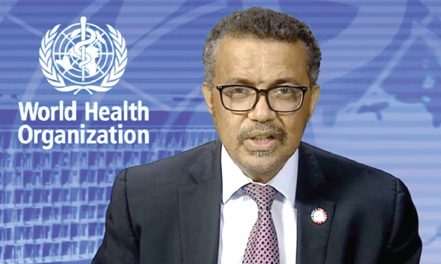
Riding this wave, the World Health Organisation (WHO) is once again blurring the line between evidence-based public health and climate advocacy.
A high-profile WHO commission made up of politicians and green advocates has urged the organisation to declare climate change a “public health emergency of international concern.”
This is a flashback to the 2010s when WHO’s director general named climate change the most important health issue of the 21st century.
Not long after, COVID-19 arrived—and WHO’s preparedness and early response were found deeply wanting.
The lesson clearly was not learned. The WHO commission’s headline claim is that climate change poses a “catastrophic threat to human health.”
Palladium
Its key evidence comes from a Lancet study showing heat deaths in Europe are rapidly rising, reaching 63,000 per year.
Even setting aside the peculiarity of a global health emergency built primarily on European data—the argument collapses under scrutiny.
European heat-death risk has risen by 82 per cent since 1990. But heat mortality risk rises sharply with age and Europe has aged dramatically.
Since 1990, the share of the European population aged 70 and over has increased by 78 per cent.
Ageing alone explains almost all of the observed increase in heat deaths.
Both the study and the commission simply ignore this.
Any honest analysis of mortality would use age-standardised death rates, which make figures comparable over time.
The WHO report makes no such adjustment.
The Global Burden of Disease, the world’s leading mortality database, does.
It shows that Europe’s age-standardised heat death risk has changed only marginally since 1990.
Adjusted to reflect today’s population size and age distribution, the increase amounts to fewer than 850 additional heat deaths.
The commission’s figures exaggerate the problem more than fifty-fold.
The deeper dishonesty lies in what the report omits entirely.
As temperatures rise, heat deaths increase—but cold deaths fall. Cold deaths far outnumber heat deaths on every continent on earth.
Using the same age-standardised methodology that reveals minimal heat death increases, cold death rates in Europe have nearly halved since 1990.
At today’s population levels, that translates to roughly 210,000 fewer cold deaths each year.
The WHO commission conceals the fact that cold deaths have declined by approximately 250 times as much as heat deaths have risen.
Food insecurity
The report’s second major claim is that climate change in Europe has increased food insecurity among Europeans.
This strains credulity. Real food insecurity lies in Africa, Asia, and Latin America.
The claim also ignores the United Nations’ own projections showing the world on track for a new record cereal production.
If the WHO commission were genuinely concerned about the world’s hungry, it would lead with those facts, not bury them.
There is a cruel irony in the commission’s prescription.
Climate policies have already made electricity three to four times costlier for consumers in Europe than in the US and China and more than a third of all Europeans now say they can’t afford air conditioning.
Making even more aggressive emissions cuts would further raise energy costs, making heat waves even deadlier for those who cannot afford air conditioning and prolonged cold deadlier for those who cannot afford heating.
Higher energy prices also raise the cost of fertiliser and mechanised farming, pushing more people in developing countries into hunger.
The prescribed cure is literally worse than the disease.
The WHO director who convened the commission writes that “our citizens expect urgency from us” as though he were an elected politician rather than a health official.
What global citizens really expect from doctors is honest, evidence-based counsel.
They do not expect clinical authority to be borrowed for political purposes, or public alarm to be manufactured by omitting the data that would defuse it.
WHO exists to prevent disease and protect human health.
Declaring a climate emergency on the basis of cherry-picked, misleading statistics will not protect the world’s most vulnerable.
It will further erode the organisation’s credibility, divert attention and resources from genuine threats, and lend political cover to costly policies that harm the very people WHO claims to champion.










На данном сайте есть шанс почерпнуть нужную информацию.
https://ztdn.ru/