Every rainy season carries a reminder of Ghana’s waste management crisis, with rubbish-choked drains overflowing and causing floods that destroy homes, interrupt businesses and sometimes claim precious lives.
The damage caused by floods does not end when the waters recede.
The public health crises that follow are often even more costly.
While climate change has intensified rainfall recently, much of the flooding stems from our indiscriminate littering, poor waste disposal and blocked drains.
By nurturing children as future environmental stewards through knowledge, values and habits formed early in life, children can help solve this crisis.
Child development research shows that attitudes learned in childhood, such as proper waste disposal, recycling and maintaining clean public spaces, often persist into adulthood.
Environmental responsibility, like other core values, can be cultivated from a young age.
Successful models exist elsewhere. In Japan, schoolchildren clean classrooms, hallways and compounds on a daily basis to instil discipline, humility and respect for shared spaces.
Report Card
They also sort waste for recycling, instilling cleanliness as a cultural norm rather than a chore.
In Rwanda, the monthly Umuganda community service programme involves citizens (including children in age-appropriate tasks) in cleaning neighbourhoods, clearing drains, repairing facilities and planting trees.
This collective effort has helped make Rwanda one of Africa’s cleanest nations.
Approaches
Ghana can seriously consider these approaches.Geographic Reference
Environmental education must move beyond textbooks to practical school life.
Schools should be mandated to procure colour-coded bins for separating plastics, paper and organic waste even before recycling becomes a practice.
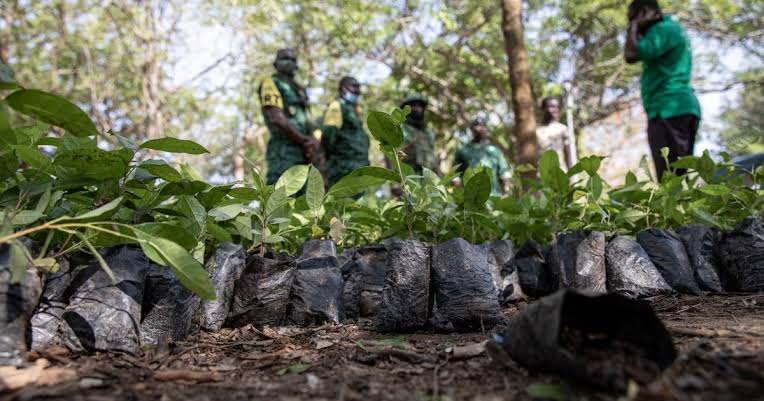
Environmental clubs can teach and practice environmental care, engage in tree-planting exercises, cleanups, etc.
Children alone, however, cannot fix Ghana’s waste crisis.
Systemic failures by adults require fixing.
Many areas lack sufficient approved dumping sites.
Waste collection remains irregular, and recycling infrastructure is lacking.
Open dumping and open defecation are common practices and other issues such as weak enforcement, poor supervision, and corruption undermine efforts.
Bold, coordinated action is essential.
The government must invest in sanitary landfills, transfer stations, and accessible disposal facilities for every district.
Digital tracking, public reporting platforms, and transparent contract monitoring can enhance accountability.
Equally vital is developing a robust recycling industry.
Waste materials (plastic, paper, glass, metal, organic) should be treated as valuable resources for jobs, manufacturing and a circular economy.
Officials who approve construction on waterways and in wetlands that serve as natural water retention areas should be arraigned before the courts.
Food and beverage companies, sachet water producers, packaging manufacturers, supermarkets, and fast-food outlets generate massive volumes of waste.
They must engage in continuous dialogue with government and adopt Extended Producer Responsibility (EPR).
This can involve a National Packaging Recovery Fund, buy-back centres that pay for returned plastics and cans, financing recycling plants, sponsoring clean-ups and funding education campaigns.
Companies should be encouraged to use more recyclable or biodegradable materials for packaging their products.
Fan Milk Ghana sets a positive example through initiatives that engage schoolchildren in education and encourage them to recover their own packaging.
The principle is simple: those who profit from packaging must help manage its waste.
Waste management is a shared duty involving producers, consumers, communities and institutions.
Modelling role
Parents play a crucial modelling role. Children learn more from observed behaviour than instructions.
Adults must, therefore, consistently exhibit exemplary behaviour.
Strong, consistent enforcement of sanitation laws is also necessary.
There should be meaningful sanctions for illegal dumping and littering.
Lasting change requires education, incentives and accountability.
A cleaner Ghana demands more than occasional clean-up drives.
It requires effective governance, modern infrastructure, responsible businesses, active communities and children raised to see environmental care as civic duty.
By teaching today’s children that every wrapper belongs in a bin, every drain needs protection and every community deserves care (while adults provide infrastructure and industry accepts its responsibilities), Ghana can secure a healthier, more sustainable future.
The nation we leave our children depends on the values we instil today and the accountability we demonstrate as adults.