There is an old Ghanaian habit we rarely talk about openly. We celebrate survival so much that we sometimes forget to ask why we nearly drowned in the first place.
When the cedi began its sharp depreciation in 2022, ordinary people felt it before economists did. It was there in Makola, where our mothers’ removed items from the weekly list one by one, as the weakening currency quietly reshaped what the household could afford. It was there in the graduate skipping meals in Accra because transport fares had doubled. It was there in the TroTro driver standing silently at a filling station, staring at the fuel pump as though it had personally betrayed him.
Then came 1st July 2022.
Republic Day.
A day that was supposed to remind us of sovereignty, independence, and Kwame Nkrumah’s vision of an economically liberated Ghana. Instead, the country announced its 17th return to the International Monetary Fund.
Seventeen. That number should disturb us more than it does.
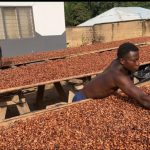
Because Ghana is not a poor country in its traditional sense. We sit on gold. In Africa, Ghana typically ranks as the largest exporter of gold. Ghana is also the 2nd largest exporter of cocoa both in Africa and globally. In 2022 for instance, cocoa export earnings witnessed a great leap to around $1.26b, second only to Ivory Coast. We produce brilliant people who thrive everywhere they go. Yet, every few years, we somehow find ourselves at the same doorstep, asking for economic rescue.
The IMF programme stabilized economic conditions. Let us admit that honestly.
Without it, Ghana’s economy may have spiraled further into collapse. Inflation had crossed over 50% in November 2022. The cedi was hemorrhaging value by the day. Debt had become unbearable. Investor confidence had evaporated. Businesses were suffocating. Families were exhausted.
The Extended Credit Facility helped restore some stability. The $3 b approved by the IMF Executive board was disbursed in tranches based on government performance, with an initial release of about $600 million providing immediate relief. By October 2024, inflation had dropped to 22.1% from 54.1% in December 2022. Foreign reserves had improved to $7.7b, covering 3.5 months of imports. The public debt-to-GDP ratio had reduced from 79.2% in September to 74.6% in October 2024.
In the period that followed, the new administration continued along a path of fiscal prudence. According to the Ministry of Finance, the cedi has strengthened significantly. Ghana’s sovereign credit rating has also improved markedly, with a five-notch upgrade, moving the country to a B-status outlook. Gross international reserves have further improved to about $14.5b, strengthening Ghana’s ability to absorb external shocks and stabilize the economy.
But IMF programmes are like painkillers after surgery. They may stabilize the patient. They do not cure the underlying disease.
And Ghana’s disease has never simply been economic. It is political. Structural. Sometimes even cultural. Every administration arrives promising discipline. Then election years come, and discipline quietly leaves through the back door. Governments overspend, borrowing increases, projects multiply without proper revenue plans. Public debt expands and we mortgage tomorrow to survive today.
We have seen this movie too many times.
Argentina has lived through it repeatedly. IMF reforms bring temporary calm, then governments return to populist spending, inflation worsens, and another crisis emerges. Zambia borrowed aggressively for development projects but found itself trapped under unsustainable debt burdens.
The danger for Ghana now is not immediate collapse. It is comfort. The dangerous belief that because the cedi has strengthened and inflation is slowing, we are somehow permanently safe. We are not.
Ghana remains dangerously dependent on imports. We import fuel, pharmaceuticals, machinery, industrial inputs, and increasingly even basic food products. This means every external shock quickly enters the Ghanaian household. A conflict or a closure of strait somewhere in the Middle East can suddenly change the price of kenkey in Accra. For instance, tensions between the United States and Iran have raised concerns about global oil supply, with projections suggesting a potential decline of up to 6.9 mb/d in Q2 2026, marking one of the largest quarterly declines since the COVID-19 pandemic.
Meanwhile, our economy still leans heavily on cocoa, gold, and oil. When global commodity prices fall, government revenues shrink and pressure returns.
This is why Ghana’s post-IMF period must become a period of production.
We cannot build economic independence while importing nearly everything we consume. We cannot continue celebrating raw exports while others earn real profits from processing and manufacturing. And we certainly cannot keep borrowing to finance consumption.
The conversation must now shift from stabilization to transformation.
Co-author Elizabeth Dansoa Osei
Ghana should aggressively pursue agro-processing, industrialization, digital innovation, and manufacturing. The presence of the African Continental Free Trade Area Secretariat in Accra gives us a historic opportunity to become a regional trade and industrial hub. But opportunities do not develop countries; decisions do.
And perhaps the hardest decision of all is political maturity.
Co-author Abraham Lincoln Yeboah Darkwah
Time and again, fiscal discipline has been weakened by political pressures. Without change, no IMF programme will save us permanently. Serious countries build long-term economic stability beyond political convenience.
The real test of Ghana’s recovery will not be whether we exited the IMF programme successfully. The real test is whether, five years from now, relevant reforms would have been institutionalized. The IMF cannot fix what our domestic politics would break!