Even as Ghana’s overall poverty numbers show modest improvement — with the national multidimensional poverty rate falling from 24.9 per cent in late 2024 to 21.9 per cent by the third quarter of 2025 — not all jobs protect families equally from deprivation.
In fact, the economic sector in which a household head works remains one of the strongest predictors of whether that household is multidimensionally poor — revealing stark inequalities in how opportunities and risks are distributed across the economy.
Agriculture: The Sector Most at Risk
Across previous MPI reports, households led by heads working in agriculture consistently recorded the highest incidence of multidimensional poverty. Data from earlier GSS analyses show that in the reporting period around 2022–2023, **multidimensional poverty rates among agricultural household heads hovered near 68 – 69 per cent, far above the national average.
This pattern reflects the vulnerability of farming livelihoods: low and unpredictable incomes, dependence on rain-fed production, limited access to markets, and weaker linkages to services like health insurance and quality education. The deep concentration of agricultural work in rural regions — where basic infrastructure and services are often lacking — only compounds these risks.
In contrast, household heads in the industry and service sectors fare much better. In the same earlier period, MPI rates were roughly 34 per cent for industry and 31 per cent for services — significantly lower than in agriculture, though still above ideal protective levels.
Why Sector Makes Such a Difference
The reasons that sector matters are multifaceted:
• Income stability and quality — Jobs in industry and services (especially formal employment) tend to offer more predictable wages, sometimes with social benefits such as pension contributions or employer-linked health coverage.
• Access to social protection — Informal agricultural work seldom comes with formal health insurance or employment benefits, increasing vulnerability to shocks.
Human capital access — Service and industry roles are more common in urban or peri-urban areas where schools, clinics, and infrastructure are more accessible, meaning household heads in these sectors can better protect their families against overlapping deprivations.
Households where heads are not working or unemployed also show high poverty incidence in MPI data — although this varies by context and age group. In earlier GSS breakdowns, “not working” households showed significant levels of deprivation, underscoring that lack of employment is itself a risk factor for multidimensional poverty.
Recent Trends: Little Change, Persistent Patterns
The latest GSS press announcements for 2024–2025 reaffirm that employment remains one of the key contributors to multidimensional poverty, even as overall rates improve. While the current detailed breakdown by economic sector in the newest report hasn’t been published in full, GSS commentary notes that employment deprivation contributes about 12.3 per cent of total multidimensional poverty, ranking behind only health and living conditions as a source of deprivation.
Furthermore, households where the head is unemployed are among the most deprived groups — with around 35.6 per cent classified as multidimensionally poor, compared with much lower rates for those in stable formal work.
Taken together with the earlier sectoral data, these findings suggest that the structure of work in Ghana still matters enormously: those in agriculture and informal activities continue to face entrenched poverty risks, while jobs in industry and services, especially in the formal economy, are more strongly linked to resilience against multidimensional deprivation.
Faces Behind the Figures
Imagine Ama, whose husband farms a small cocoa plot and struggles to feed and educate their children when dry seasons reduce yields. Or Yaw, whose factory job provides steady wages and health insurance coverage — enabling his family to access clinic care, safe water, and schooling without falling into deprivation.
These individual stories reflect broader structural forces: the uneven distribution of opportunity across sectors, the protective value of formal work, and the persistent inequalities facing those in subsistence agriculture.
What It Means for Policy
Reducing multidimensional poverty by economic sector demands a multipronged approach:
• Strengthen rural productivity and resilience — through irrigation, extension services, market access, and crop insurance.
• Formalize employment in agricultural and informal sectors, linking workers to social protection and benefits.
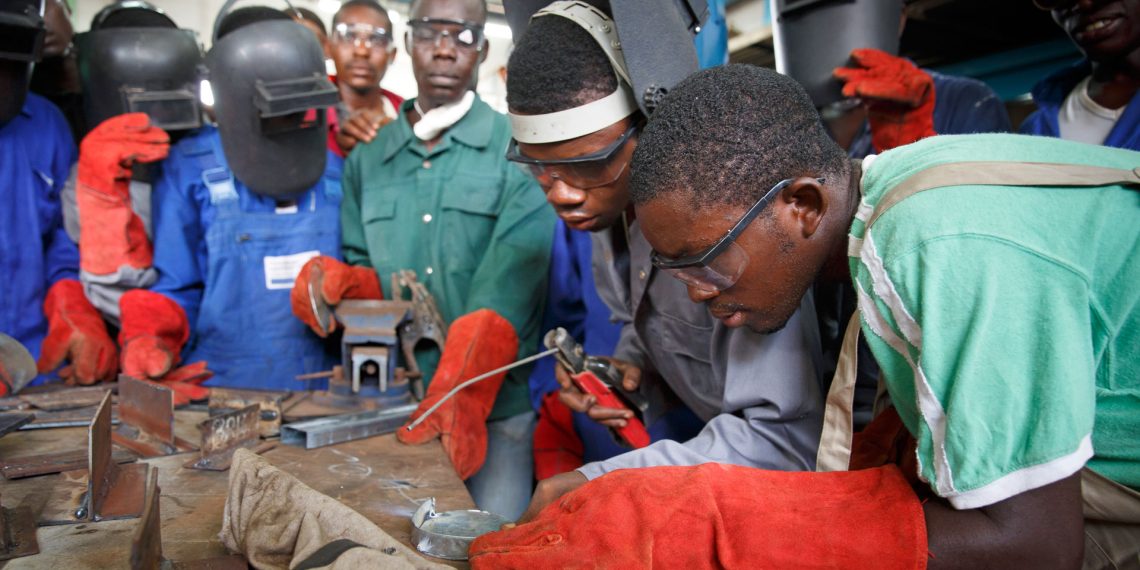
• Expand skills training and mobility pathways so more workers can transition into higher-value sectors without leaving families behind.
As Ghana progresses toward its development goals, tackling the sector-based disparities in poverty will be key to ensuring that growth translates into shared wellbeing for all households — not just those in safer, more secure jobs.