

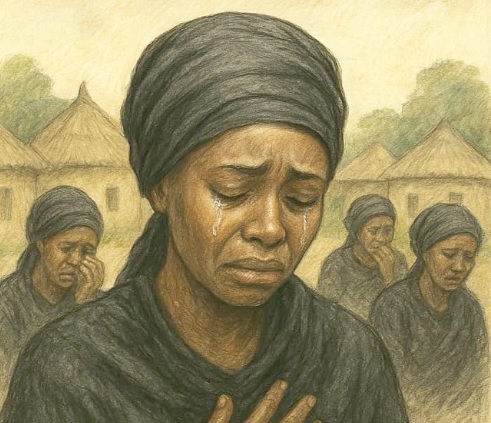
Widowhood inheritance: The sickening practice in some communities
In certain communities across Ghana, especially in parts of the northern sector, a widow is not only expected to grieve the loss of her husband, but to inherit a new one, often without her consent.
This practice, commonly known as widow inheritance, compels a widow to marry a male relative of her late husband, typically a brother or cousin.
Proponents claim it is a tradition meant to protect the widow and her children by keeping them within the husband’s family. In reality, it strips the woman of agency, dignity and basic human rights.
Forced widow inheritance is not just outmoded, it is dangerous. Widows, already vulnerable and grieving, are pressured into unions they did not choose, often with men who already have families of their own.
These unions rarely come with the emotional or financial support the widow is promised. In many cases, they only increase her suffering.
Health risks abound. In an era where public health campaigns stress the importance of HIV/AIDS prevention, this practice defies logic and puts women at serious risk.
The lack of consent and proper health checks in these coerced unions exacerbate the spread of infections and diseases.
The emotional trauma cannot be overstated. A woman who has just lost her partner is forced into a new relationship, often with little regard for her feelings or readiness.
Some are denied the right to mourn properly; others are shamed or ostracised if they refuse the arrangement. The result is a psychological toll that can last for years, if not a lifetime.
Customary laws
Customary laws and cultural practices should not supersede the dignity and rights of women. While Ghana’s Constitution guarantees the freedom and equality of all citizens, including the right to marry out of free will, enforcement in rural and traditional communities remains weak.
Change must begin with education. Chiefs, elders, and family heads must be sensitised to the dangers of this practice.
Women’s rights organisations and civil society must amplify their advocacy, pushing for deeper community engagement and stronger legal enforcement.
Faith-based organisations, too, have a role to play in condemning such coercive practices and offering widows a safe space to heal and rebuild.
Widowhood is painful enough without additional burdens. A woman’s life should not be handed over like property when her husband dies.
She deserves respect, support, and above all, choice. It is time to end widow inheritance. Tradition must not come at the cost of human dignity.
Widowhood is a deeply personal journey, a path none of us choose, yet one that many of us walk.
Sharing experiences
I walked that path when I lost my husband.
The pain was numbing, like a fog that refused to lift. But as I moved through the days, I discovered something profound: amidst the silence, there was strength.
I met Aboagyewaa (not real name for security reasons), a woman in her early 40s who was forced to vacate her late husband’s home within a month of his death.
With no formal education and no source of income, she began selling cooked rice at the roadside.
“They took everything,” she told me, “But they couldn’t take my will to survive.”
Then there is Joana, who buried her husband and became both mother and father to four young children. She sells palm oil to earn a living.
“Pain is part of our story,” she said, “but it is not our identity.”
For Akosua, she is fortunate! Her husband’s relatives support her to take care of her four children.
These women, and so many like them, have taught me that widowhood is not an end.
It is a turning point. A painful one, yes, but also a place from which new purpose can emerge.
And yet, we cannot continue to expect widows to bear it all alone.
There must be legal reforms that protect their rights to inheritance and property.
Faith-based organisations must offer more than condolences, they must become sanctuaries of support.
Communities must stop treating widowhood as a curse and start recognising it as a call for compassion.
In our society, widowhood is often cloaked in isolation.
Some relatives and friends draw back. Conversations become awkward.
And yet, widows continue to wake up, feed children, find work, attend church, and hold households together.
These quiet acts of courage rarely make headlines, but they are stories worth telling.
The power of community
In the face of loss, isolation and injustice, one of the most powerful forces that can uplift a widow is community.
Across Ghana, there are inspiring examples of local groups, churches, women’s associations, NGOs, and even informal networks, stepping in to fill the void where families or systems have failed.
Community support can mean the difference between despair and hope.
A regular visit from a neighbour, an invitation to a church gathering, or a contribution of food and clothing can restore dignity and remind widows that they are not forgotten.
In some towns and villages, women’s groups have taken the initiative to create savings schemes for widows.
These “susu” groups allow members to pool resources, enabling widows to access small loans to start businesses or pay school fees. Best online courses
Some churches have established widow outreach ministries that provide not only spiritual guidance but also medical screenings, skills training, and food aid.
ven simple acts, like helping to fix a leaking roof or accompanying a widow to the clinic, can have a profound emotional and practical impact.
Such support often fills the gap left by family members who may be absent or unwilling to help.
Importantly, communities that openly embrace and protect their widows set an example for others.
They challenge harmful norms, resist property-grabbing relatives, and speak out against widowhood rites that degrade and traumatise.
In these communities, widows are not seen as liabilities but as valuable elders whose wisdom and resilience deserve respect.
But community support doesn’t happen by chance, it must be nurtured.
Local leaders, churches, schools, and youth groups can all play a role in creating inclusive spaces.
Education on widowhood rights and advocacy against stigma should be integrated into community life.
By standing together, we build a culture where no woman faces widowhood alone.
A caring community is not just a haven for widows, it is the bedrock of a compassionate nation.
The writer is a Communications/Public Relations Professional
vickykuus536@gmail.com