We celebrate disability inclusion but still don’t enforce it
By Chelsea NYANTAKYI
Every year, the International Day of Persons with Disabilities gives Ghana an opportunity to gather, reflect and reaffirm our national commitment to inclusion. The atmosphere is always warm, the solidarity genuine and the voices of persons with disabilities(PWD) take centre stage in shaping the national conversation.
But no amount of ceremony can obscure the real foundation of disability inclusion: accessibility must exist and it must be enforced. Talking about accessibility is not the same as delivering it; and without enforcement, even the strongest commitments remain aspirational rather than lived realities.
At this year’s commemoration jointly hosted by the National Communications Authority and the Ghana Federation of Disability Organisations, there was no shortage of goodwill. The presence of the Minister for Gender, Children and Social Protection and the Minister for Communications and Digitalisation signalled that disability inclusion continues to occupy national attention.
The speakers reflected a mix of lived experience, advocacy and policy commitment. The GFD President delivered one of the day’s most striking messages, reminding the audience that disability is not a “them” issue but an “us” issue, a national responsibility that should interest everyone. His words framed disability inclusion not as charity, but as a matter of rights.
Alongside this, the Minister for Gender reaffirmed the President’s pledges on disability: the enforcement of employment quotas, expanded social protection commitments and renewed attention to disability-related reforms. The Minister for Communications highlighted forthcoming digital initiatives, including a proposed programme projected to create 50,000 digital job opportunities for persons with disabilities, as well as efforts to make Ghana’s digital ecosystem more accessible.
The pledges announced at the event – from employment programmes to digital accessibility initiatives – are commendable. They hold potential. But as history has shown us, potential is not the same as progress. Ghana has launched disability-related commitments many times before, yet implementation rarely reaches the scale required to shift national outcomes.
Without operational plans, monitoring structures, timelines and accountability systems, even the most ambitious promises end up performative – repeated every year at events like this, applauded in the moment and then left hanging until the next commemoration.
Accessibility was mentioned frequently, inclusive digital platforms, classroom adaptations and the broader need for systems that support participation rather than obstruct it. This emphasis is welcome. However, accessibility cannot remain a talking point; it must be visible in our schools, workplaces, transport systems, health facilities, public buildings and digital spaces. The law requires it but our current reality does not reflect it.
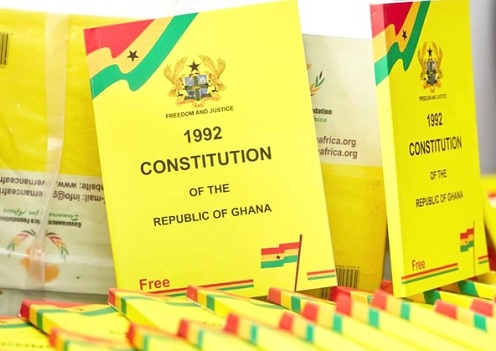
What struck me most during the event was that enforcement, the mechanism that turns commitments into lived experience was noticeably absent from the conversation. Ghana currently has accessibility requirements in Act 715 and in building regulations, yet year after year, schools admit children with disabilities without adapting classrooms, workplaces recruit without preparing inclusive environments and public infrastructure continues to exclude PWDs. Without a system that checks, measures and enforces compliance, accessibility becomes a suggestion rather than a requirement. Unfortunately, suggestions cannot build an inclusive nation.
A moment that underscored the importance of proper disability education came when a non-PWD speaker remarked that they do not like to use the term “persons with disabilities,” preferring instead “persons with special abilities.” It was offered as a compliment, yet it reflected a widespread misunderstanding in Ghana that the word “disability” is negative and must, therefore, be softened. It also highlighted our national discomfort with naming disability directly, prompting us to use language that romanticises or sanitises it.
Disability is not an insult, nor something that needs rebranding. It is a recognised identity, a legal category and a basis for rights and protections. When we replace it with euphemisms, we unintentionally undermine the very structures that are meant to support this community, including legal, institutional and social systems.
Well-intentioned language cannot replace accurate terminology, and accurate terminology is the foundation of effective inclusion. Euphemisms blur responsibility and shift the conversation away from the rights of PWDs, reducing it to sentiment and emotion.
If Ghana is serious about disability inclusion, the path forward is not mysterious. Enforce the existing laws. Resource the institutions mandated to deliver accessibility. Strengthen monitoring at regional, municipal and district levels. Train the workforce responsible for implementation. Require public and private institutions to comply with national standards. Most importantly, centre persons with disabilities in every stage of policy design, from planning to evaluation.
Events like the International Day of Persons with Disabilities are meaningful. They affirm the dignity, visibility and contributions of persons with disabilities in our national fabric. But commemoration cannot be the end point. Until accessibility becomes a lived reality and enforcement becomes a non-negotiable standard, inclusion will remain symbolic rather than structural.
>>>the writer is a disability advocate and safeguarding trainer informed by lived experience, co-founder of Same Opportunities For All (SOFA) Foundation and a clinical pharmacist by profession