


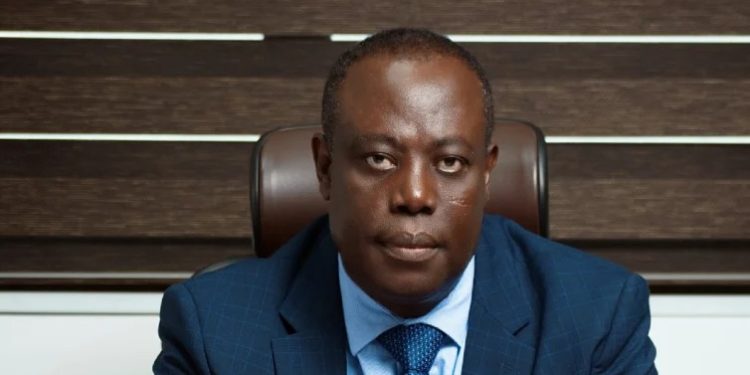
Use the pulpit, classroom and home to fight galamsey – Prof. Frimpong-Manso
Rev Prof. Paul Frimpong-Manso, former President of the Ghana Pentecostal and Charismatic Council (GPCC), says the fight against galamsey must begin from the pulpit, the classroom and the home, describing the menace as a moral and spiritual crisis driven by greed, weak enforcement and societal decline.
According to him, the destruction of rivers and forests for selfish gain amounts to sin and violates God’s command to humanity to “till and keep” the earth.
“Ghana must embrace ethical leadership, community responsibility and spiritual renewal,” the Founder of the Frimpong-Manso Institute said at a virtual environmental conference organised by IGER Africa on Friday, December 5. The conference was held under the theme: ‘Navigating the Challenges of Illegal Mining in Ghana: Impact on Individuals, Communities, Health and Policy.’
Quoting scripture, Rev Prof. Frimpong-Manso said, “The earth is the Lord’s, and we will give an account of how we treated the land.”
He lamented what he described as a growing obsession with quick wealth, saying it had taken deep root in society.
“The desire to get rich quickly with minimal effort has taken deep root in the hearts of many. Young people see images of overnight wealth and are tempted to risk their lives in abandoned pits and polluted rivers,” he said.
He further accused some businesspeople, traditional authorities, and public officials — who ought to be custodians of societal values — of benefiting from the menace through bribes, illegal concessions, or deliberate inaction.
“In many rural communities, opportunities for decent work are limited. When young people are confronted with a choice between slow, uncertain income from farming and quick cash from galamsey, the temptation is strong. Poverty does not excuse wrongdoing, but it does make people more vulnerable,” he added.
Rev Prof. Frimpong-Manso also criticised political interference and selective enforcement of the law, warning that such practices erode public trust.
“When political actors protect illegal miners and enforcement agencies become complicit, the message is clear: wrongdoing is acceptable if it benefits the powerful,” he said.
He emphasised that the fight against galamsey cannot be led by government alone, calling for collective responsibility by communities, parents and guardians.
“Government alone cannot solve the galamsey crisis. Communities must rise as responsible and ethical stewards of the environment. Parents must reflect on the values they are imparting to their children. Are we teaching them that success is measured only by money, or by integrity and respect for God’s creation?” he questioned.
Also speaking at the forum, Dr Charles Sagoe-Moses, former World Health Organisation (WHO) Representative to Tanzania and Namibia and a fellow of the Frimpong-Manso Institute, warned that Ghana is edging towards a public health disaster driven by illegal mining — one he said is entirely preventable.
“We have scientific evidence that mercury used in gold processing contaminates air, soil and water,” he said, adding that WHO data show mercury levels in artisanal gold mining areas can be up to 50 times higher than safe limits.
He disclosed that in some Ghanaian mining communities, mercury contamination of water bodies is between 20 and 30 times above WHO thresholds.
Explaining the human health implications, Dr Sagoe-Moses said mercury exposure causes memory loss, tremors, kidney failure, severe fatigue and muscle weakness, as well as developmental delays and permanent neurological damage in children.
He noted that prolonged exposure to heavy metals such as mercury and arsenic leads to chronic kidney disease, hypertension and kidney failure, even among young adults.
“The tragedy becomes generational,” he added. “Mercury crosses the placenta during pregnancy and contaminates breast milk, resulting in reduced brain development in babies, increased risk of cerebral palsy, learning difficulties and poor academic performance.”