It sounds too good to be true. A five-day diet that promises not only a slimmer body, but also the tantalising possibility of a longer lifespan, improved heart health and reduced inflammation.
Dubbed the “fasting mimicking diet (FMD)” because it delivers all the benefits of fasting, including blasting belly fat and cholesterol, while still allowing you to eat. The five-day diet was created by Prof Valter Longo, a biogerontologist and director of the Longevity Institute at the University of Southern California.
His specific diet called ‘Pro-Lon’ (short for “pro-longevity”), was awarded the first patent in history for “promoting longevity and healthspan.”
So what exactly does all this mean? Here’s our guide on following a fasting mimicking diet, including a meal plan.
What is a fasting mimicking diet?
The five-day “fast” has already been shown to slow ageing in animal studies, but now these benefits have been replicated in humans.
Study participants, who followed the regime for three or four months, following the diet for five days, then eating normally for the other 25, showed their cells and immune systems were acting in a more youthful way. Even more surprisingly, further analysis of blood samples revealed that they had reversed their biological age by two and a half years.
When the body goes into fasting mode it supports cellular rejuvenation and longevity. Our bodies are built to fast “that is literally the reason we carry body fat,” says Dr Jason Fung, a nephrologist, fasting expert and the author of The Obesity Code. Humans have been practising fasts for millennia. However, most of us cannot stick to an extended fast, drinking nothing but water, and still live a normal life.
Which is where the “fast mimicking diet” comes in: a way of achieving the same results as a full fast, but crucially, with the advantage of eating something. “The fast mimicking diet (FMD) makes it easier for people to do a longer fast [five days] as there is some structure and some food,” Dr Fung explains.
What exactly does it involve?
The five-day diet ranges from consuming 1,100 calories on day one to 800 calories on days two to five and is made up of foods that are plant-based, low sugar, low protein and contain a research-backed composite of nutrients.
This combination tips the body into fasting mode, meaning you’re drawing on fat cells for fuel and using up old dead cells – a process known as autophagy.
Benefits of fasting
Fasting can:
Attack belly fat
Prof Longo says fasting attacks abdominal fat, without affecting lean muscle (unlike most other diets, which he says “will cause loss of fats, water, sometimes lean muscle and bone density”). “On average the general population lose 5-6lbs of weight, mostly fat, after three cycles of a five-day FMD,” he adds.
Help with ageing and disease
One published study found that as well as losing body weight – specifically abdominal fat – those who followed ProLon for five days a month for three months, saw reductions in blood pressure and cholesterol and had an increase in stem cell production, as well as reduced levels of insulin-like growth factor (IGF-1), a hormone linked to cancer risk when it is raised.
There are currently several clinical trials underway to look at how it can help cancer patients, something Prof Longo describes as “very promising”.
“I know from having completed or helped complete a number of clinical trials that multiple yearly cycles of FMD can have a range of very beneficial effects on risk factors for ageing and diseases,” says Prof Valter, who has also written The Longevity Diet.
Other five-day diets
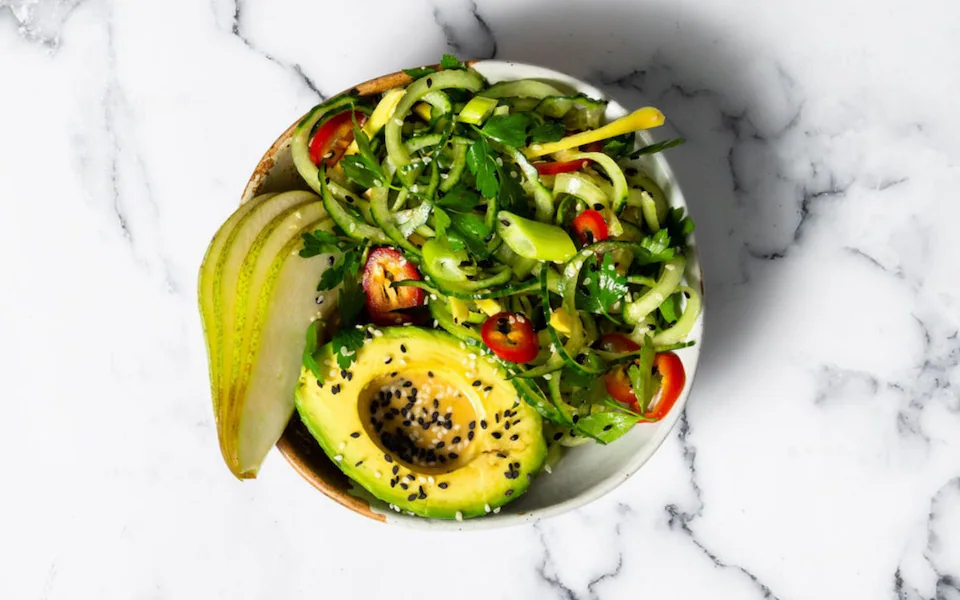
UK-based nutritional therapist Rhian Stephenson has designed a programme based on FMD principles (plant-based, low calorie), providing recipes you can cook yourself. Her five-day “fast” includes smoothies, quinoa salads and mushroom courgetti-pasta dinners, along with regular recorded yoga sessions. “Because we reduced calories but kept nutrient density high, people reported having far more energy than they expected,” she says.
“It is a short, controlled period of caloric restriction combined with rest and foods that are designed to enhance repair, microbial health and promote healthy blood sugar,” explains Stephenson. “The key difference between the fasting mimicking diet and other calorie-restricted diets is that they are low in protein so that triggers cellular repair. It’s also designed to keep insulin and blood sugar below a certain baseline, so that the body dips into its fat stores for fuel.”
Eliza Jenkins, 46, a mother of three with a stressful job as a solicitor, tried the “Five-Day Cleanse” online programme and says she felt surprisingly good on it. “I had a really surge of energy on day three, and even though it was months ago, now, I’ve felt more energetic ever since.” There were other benefits – half a stone of weight loss. “My skin felt and looked lovely and my digestion has really improved. I felt brilliant.”
Is a fast mimicking diet better than intermittent fasting?
Advocates of the fasting mimicking diet say that it can achieve better results than IF alone, particularly for midlife women, who can often lead stressful lives and compound the stress with high-intensity workouts, which raise the body’s cortisol and lead to further inflammation.
We’re getting more used to the concept of fasting – specifically intermittent fasting (IF), such as the 5:2 diet, popularised by the late Dr Michael Mosley, or 16:8, where dieters restrict their eating to within an eight-hour window.
In recent years, IF has become the fourth most popular diet plan in the UK, with 134,000 average monthly searches. It’s not just a fad: a systematic review of 40 studies found that intermittent fasting was effective for weight loss, with a typical loss of 7-11lbs over 10 weeks.