For the past three years, Ghana has exceeded its budget.
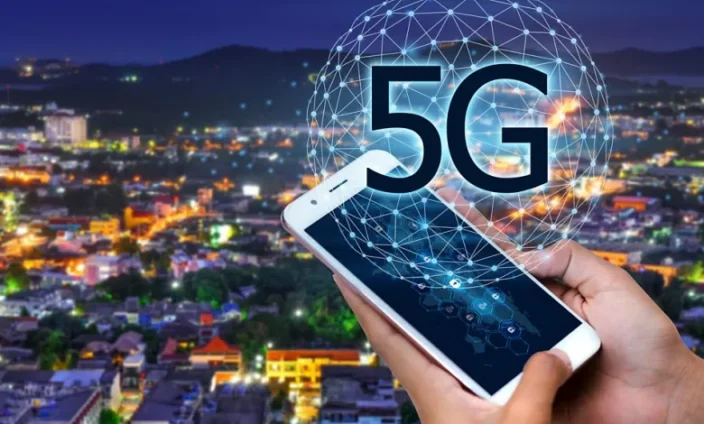
As 2025 ends without a fully operational commercial 5G network, the public conversation has understandably focused on slow download speeds.
However, as an engineer analyzing our national infrastructure, I see a deeper, structural failure.
The delay is an “innovation tax” that actively stifles the sectors poised to leapfrog legacy infrastructure.
If we look past the headlines to the physics of the network, here is the future we are currently missing.
The myth of the “Smart” city
We see ambitious real estate projects, such as Appolonia City, promising a “smart” future. But a city is only as smart as its sensor density.
Current 4G LTE networks are designed for human-to-human traffic, supporting roughly 2,000 to 4,000 devices per square kilometer.
This suffices for smartphones, but it is woefully inadequate for a smart city ecosystem that requires Massive Machine Type Communication (mMTC).
A true smart city, where traffic grids self-optimize and utilities self-balance, requires a density of up to one million devices per square kilometer.
Only 5G standards support this density.
By delaying the rollout, we force developers to build 2030 cities on 2015 infrastructure.
We are laying fibre and building glass towers, but the “nervous system” required to run them is missing.
The precision agriculture gap
Ghana’s agricultural potential is immense, but it suffers from low yields per acre compared to global standards.
The engineering solution to this is Precision Agriculture, relying on IoT (Internet of Things) sensors to monitor soil health in real-time.
In rural areas, running fibre optic cables to every farm is economically impossible.
The fix is 5G Fixed Wireless Access (FWA), which beams high-speed, low-latency connectivity over long distances without the need for trenching cables.
Without this, agritech startups are limited to SMS-based services.
They can provide a farmer with the weather forecast, but they cannot deploy autonomous drone fleets to scan fields for disease. We are essentially asking our farmers to compete globally while blindfolded.
The telemedicine “last mile”
The most critical loss is in healthcare. I have consulted on emergency communication systems globally, and the gold standard today is Ultra-Reliable Low Latency Communication (URLLC).
In a 4G environment, latency (the delay in signal) is unpredictable and can spike to 100 milliseconds or more.
For a surgeon in Accra guiding a robotic procedure or a complex diagnosis in a rural clinic, that delay is dangerous.
It creates a “lag” that makes haptic feedback impossible.
5G drives latency down to single-digit milliseconds, effectively real-time. By sticking with 4G, we are limiting telemedicine to simple video chats, rather than deploying the remote diagnostic tools that democratize access to specialists.
Unlocking the bottleneck
The frustration among developers and network architects is palpable.
We have the code and the use cases.
We are seeing neighbouring ecosystems in Lagos and Nairobi begin to test these frontiers while we remain in a holding pattern.
The delay has created a bottleneck where innovation is theoretically possible but practically unfeasible.
As we move into 2026, the focus must shift from “coverage maps” to “capability.”
It is not enough to just have a signal bar on a phone.
We need the architecture, slicing, edge computing, and density that only a standalone 5G network can provide.
Until then, Ghana’s digital revolution is buffering.
The writer is a US-based Technology Consultant and Researcher specialising in RF engineering and mission-critical communication architectures.