An international sports integrity advisory group has reportedly identified seven potential match-fixing alerts linked to betting activities during the 2026 FIFA World Cup, raising fresh discussions about the monitoring of major football tournaments.
According to reports, the full findings of the group have not yet been released, but some of the flagged incidents are believed to involve unusual betting patterns and controversial moments during matches.
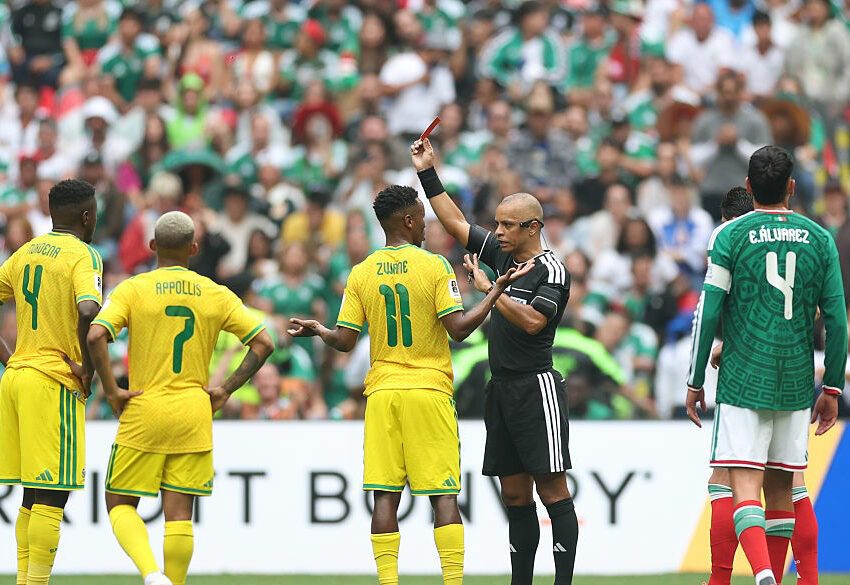
Among the reported alerts was the red card shown to South Africa midfielder Themba Zwane during their match against Mexico. The incident was reportedly reviewed as part of the wider monitoring process due to betting-related concerns surrounding the game.
Another case reportedly involved Spain’s match against Cape Verde, where more than €4 million was allegedly placed on Spain failing to win.
The match eventually ended in a draw, leading to questions about whether the betting activity required further investigation.
A third incident mentioned in the report was a lengthy VAR review during Spain’s game against Saudi Arabia, which resulted in Ferran Torres’ goal being disallowed.
The review lasted approximately three minutes and 30 seconds and was among the moments examined by the advisory group.
Despite the reported alerts, FIFA has strongly rejected suggestions that any match at the tournament was manipulated.
The world football governing body said its Integrity Task Force monitored all 104 matches of the competition in real time and found no evidence of match-fixing or suspicious betting behaviour.
FIFA has consistently stated that protecting the integrity of football remains one of its top priorities, with extensive systems in place to detect unusual betting patterns and possible attempts to influence results.
Match-fixing remains one of the biggest threats facing global sports, with football authorities working closely with betting monitoring organisations, law enforcement agencies and technology companies to identify possible risks.
The football community is now awaiting the publication of the complete report, which is expected to provide more details on the nature of the alerts and whether any further action will be taken.