Mr. Bernard Avle, I watched your debate on the Citi FM YouTube channel dated November 11, 2025, regarding police officers collecting money from drivers, and I felt compelled to respond.
I have always suggested that the Ghana Police Service can be one of the richest self-funded public services in Ghana due to our current level of lawlessness and indiscipline on our roads.
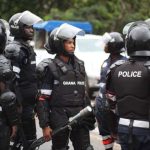
The current practice of police officers taking bribes or “handouts” at checkpoints has entrenched lawlessness on our roads. Instead of enforcing traffic laws, some officers normalise extortion, allowing vehicles that are not worthy for the roads and reckless drivers to continue unchecked.
This undermines public trust, compromises road safety, and deprives the state of significant revenue that could be used to strengthen the police service itself. The result is a vicious cycle: corruption breeds lawlessness, lawlessness breeds accidents, and accidents erode confidence in governance.

My Perspective
I believe Ghana can break this cycle if we build a transparent system where all traffic fines are collected into a single account. Authorities could also send “mystery offenders” to test whether officers accept bribes instead of issuing fines, and those caught should be disciplined publicly to restore deterrence.
The revenue generated from fines could then be reinvested directly into police welfare: increasing salaries, building police housing, funding training, and equipping officers with modern tools. This would not only reduce the temptation of bribe-taking but also restore dignity to the uniform.
I have modelled the potential revenue streams below, based on conservative assumptions and official data. The figures show that Ghana is losing billions of cedis annually to corruption and inefficiency. Imagine what could be achieved if this money were properly harnessed.
Assumptions (with sources)
- Active vehicles/drivers nationwide: ~3.2 million registered vehicles as of 2022 (Ghana News Agency).
- Daily stops: 0.8% of drivers stopped = ~20,000.
- Violation rate among stopped drivers: 65% (Ghana Statistical Service survey: MTTD tops bribery experiences at 51.9%).
- Average infractions per violator: 1.3.
- Total infringements per day: ~16,900.
- Average fine per infringement: GH₵225 (DVLA roadside fine schedule, 2025 update).
- Operating days: 365 days per year.
- Exchange rates: USD ≈ GH₵11; GBP ≈ GH₵14 (late-2025 indicative).
- Police budget allocation 2025: GH₵4.3 billion under the Ministry of the Interior (Finance Ministry 2025 Budget Statement).
Aggregated Cost of Infringements
| Period | Infringements (count) | Cost per infringement (GHS) | Total cost (GHS) | Total (USD) | Total (GBP) |
| Per day | 16,900 | 225 | 3,802,500 | 345,700 | 271,600 |
| Per week (7 days) | 118,300 | 225 | 26,617,500 | 2,420,700 | 1,901,300 |
| Per month (30 days) | 507,000 | 225 | 114,075,000 | 10,370,500 | 8,148,200 |
| Quarterly (90 days) | 1,521,000 | 225 | 342,225,000 | 31,111,400 | 24,444,600 |
| Six months (182 days) | 3,075,800 | 225 | 692,055,000 | 62,914,100 | 49,432,500 |
| Yearly (365 days) | 6,168,500 | 225 | 1,387,912,500 | 126,173,900 | 99,136,600 |
Policy Recommendation: Allocation of Revenue
| Category | % Allocation | Annual Amount (GHS) | Purpose |
| Police Salaries | 40% | 555,165,000 | Raise pay to reduce corruption temptation and improve morale |
| Police Housing | 20% | 277,582,500 | Build modern barracks and family housing units nationwide |
| Training & Education | 15% | 208,186,900 | Expand police academies, continuous professional development, and ethics training |
| Equipment & Logistics | 15% | 208,186,900 | Patrol vehicles, communication systems, forensic labs, and IT systems |
| Integrity & Oversight Programs | 5% | 69,395,600 | Fund “mystery offender” operations, anti-corruption audits, and whistleblower protection |
| Community Policing & Outreach | 5% | 69,395,600 | Public education campaigns, road safety awareness, and community-police partnerships |
Cost of Payment System Options
-
- Bespoke Centralised App Development: Developing a secure, custom-built police fine collection app in Ghana would cost between USD $50,000–$120,000 (≈ GH₵550,000–1.3M) depending on complexity, integration with banks, and security features.
- Using Existing MoMo Systems: Leveraging MTN MoMo or other mobile money platforms requires only setting up unique merchant accounts or centralised MoMo numbers. This option is far cheaper, with setup costs under USD $5,000 (≈ GH₵55,000) plus transaction fees (typically 1–2% per payment).
Comparison:
- Bespoke app = high upfront cost, full control, but slower rollout.
- MoMo integration = low cost, immediate rollout, trusted by citizens, but dependent on telecom operators.
Closing Reflection
Mr. Avle, the numbers speak for themselves. Ghana could generate over GH₵1.3 billion annually from traffic fines if corruption were eliminated and enforcement standardised. To put this in perspective, the official 2025 police budget allocation was GH₵4.3 billion. A transparent fine collection system could supplement nearly 30% of that budget, providing a transformative boost to police welfare, housing, and training.
If we channel these funds transparently, we can pay our officers better, house them decently, and train them rigorously. By doing so, we remove the excuse of poor welfare and replace it with accountability. The uniform must once again symbolise integrity, not extortion.
I hope this contribution adds weight to your ongoing advocacy for reform.
Respectfully,
E Kosi
Sources:
- Ghana News Agency: 3.2 million vehicles registered in Ghana as at 2022
- Ghana Statistical Service: Police MTTD tops bribery table (51.9%)
- Graphic Online: DVLA roadside fines update (GH₵225 per common infraction)
- Ministry of Finance: 2025 Budget Statement and Economic Policy
- Dev Technosys: Mobile App Development Cost in Ghana (USD $50k–120k)
- WoPeDigital: Best payment gateways in Ghana
I accept any constructive criticism and corrections, and amendments to the above.