On that fateful day—forever etched into our collective memory—eight gallant compatriots, including two Cabinet ministers, perished in a helicopter crash. They were not on a ceremonial joyride, nor chasing personal gain.
They were on a national mission to protect our land, water, and future from a menace that has become the single greatest environmental and moral threat of our time: galamsey.
Their sacrifice was the ultimate act of service. It must never be in vain.
The enemy within
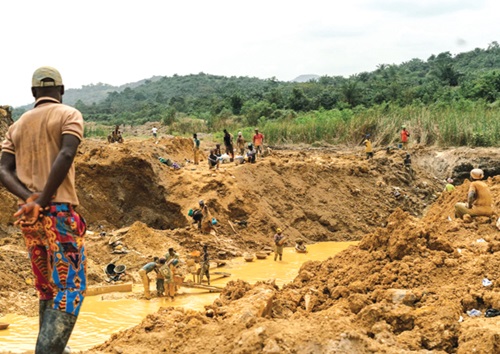
Illegal mining—popularly called galamsey—is not just an environmental crime. It is an act of war against the nation’s present and future. It is slow violence against our children and grandchildren, whose rivers may never run clean again, whose forests may exist only in fading photographs, whose lands may be poisoned beyond redemption.
Those who engage in galamsey—whether directly wielding pickaxe and shovel or sitting in the shadows financing the destruction—are not to be pitied as mere economic desperados. They are enemies of the state.
They are nothing short of environmental terrorists. Their activities kill rivers as surely as a bullet kills a man. They erode soil as surely as theft erodes trust. They destroy life-support systems that no government, however well-intentioned, can simply recreate.
And yet, far too often, we as a nation have treated them with kid gloves—offering warning after warning, and granting reprieve after reprieve—while they dig our destruction deeper with every passing day.
The national delusion
We delude ourselves if we think this is merely a rural, faraway problem. The poisoned water that runs in the Offin, Ankobra, Pra, Birim, and other rivers does not stay in the countryside.
It flows downstream, into the taps of cities. It enters the food chain. It sickens communities. It eats into the economy through the rising cost of water treatment, the loss of arable land, and the collapse of sustainable livelihoods.
When the environment is destroyed, jobs vanish. Agriculture suffers. Fishing becomes impossible. Tourism declines. Health crises multiply. Ultimately, the state is weakened—not just economically, but socially and morally.
This is why galamsey is not a fringe issue. It is a national security threat. It is a direct assault on the constitutional right of every Ghanaian to a clean and healthy environment. And like any enemy of the state, it must be confronted with the full force of national unity, resolve, and law.
The gallant eight: A call to conscience
The eight brave men who perished in that helicopter were part of a national mission to combat illegal mining. They knew the risks. They went anyway. That is courage in its purest form.
Their deaths have thrown into sharp relief the stakes of this fight. This is not a battle for photo opportunities or political slogans. This is about survival—our survival as a nation that can feed itself, drink its water without fear, and preserve its heritage for future generations.
If their sacrifice moves us to words but not action, then we will have betrayed their memory.
No more excuses
We have heard every excuse in the book for why galamsey persists:
- It provides jobs for the unemployed.
- It is part of our tradition.
- It is the livelihood of the poor.
- The financiers are too powerful.
- The law is too weak.
These are excuses, not reasons. The truth is simple: galamsey persists because we have not united to stop it—because we have allowed partisan politics, personal gain, and fear of losing votes to stand in the way of decisive action.
What must be done—together
If we are truly to honour the memory of the gallant eight, we must replace excuses with action. The fight against galamsey must become a truly collective, non-partisan national effort. Here is what that means in practical terms:
- Declare Galamsey a National Emergency
This will allow the state to mobilise resources, deploy security forces with clear authority, and coordinate efforts across ministries and agencies without bureaucratic delay. - Enforce the Law Without Fear or Favour
Whether a miner is a local villager or a politically connected financier, the law must bite equally. No sacred cows, no backdoor deals. - Cut Off the Money Supply
Follow the financial trail. Freeze and seize assets gained from galamsey. Prosecute not just the diggers, but also the bankers, gold traders, and political patrons who enable them. - Restore the Land and Rivers
Launch a national rehabilitation programme to reforest mined areas, clean rivers, and restore biodiversity—creating sustainable jobs in the process. - Empower Communities as Frontline Defenders
Equip and incentivise local communities to protect their natural resources. Give them a stake in keeping rivers clean and lands productive. - Educate, Educate, Educate
Make environmental stewardship part of our schools’ core curriculum. Let every child know that destroying a river is as criminal as stealing public funds.
The moral imperative
There are moments in a nation’s history when neutrality is complicity. This is such a moment. You cannot be “neutral” about whether the river your children will drink from remains safe. You cannot be “neutral” about whether fertile farmlands become barren craters. You cannot be “neutral” about whether we hand future generations a poisoned inheritance.
Every Ghanaian—farmer, trader, student, politician, soldier, journalist, priest—has a role to play. The fight against galamsey must happen in Parliament and in the village square, in the boardroom and in the classroom, in the courtroom and at the ballot box.
Let their deaths not be in vain
The gallant eight did not give their lives for us to return to business as usual. They died because they believed this nation was worth protecting—worth saving from the greed of a few and the apathy of many.
Let their memory haunt us into action. Let it be the fire that burns away our excuses, the wind that fans our resolve, the anchor that keeps us steady when the fight becomes hard.
We have one country. One set of rivers. One environment. When they are gone, they are gone. There is no plan B.
United we stand. Divided, we are poisoned
Let us rise together—citizens, leaders, institutions, and communities—to defeat galamsey once and for all. The future will judge us not by our words of sympathy, but by our acts of courage.
United we stand against galamsey
Eight gallant compatriots, including two Cabinet ministers, perished in a helicopter crash—not on a political errand, but on a mission to save Ghana from the environmental terrorism of galamsey. Their sacrifice must not be in vain.
The real enemy
Galamsey is not a harmless hustle. It is a war against Ghana’s life-support systems—our rivers, forests, and farmlands. Those who engage in it, and those who finance it, are not victims to be coddled. They are enemies of the state. They are environmental terrorists, killing rivers as surely as a bullet kills a man, poisoning our food chain, and eroding the very soil that sustains us.
The national delusion
We pretend galamsey is a rural problem. It is not. The polluted water from the Pra, Birim, Offin, and Ankobra flows into urban taps. The destruction drives up food prices, kills jobs, and burdens the economy with soaring water treatment costs. This is a national security threat—an attack on our constitutional right to a clean and healthy environment.
No more excuses
We have heard the tired justifications: it provides jobs; it is traditional; the financiers are too powerful. These are excuses masking inaction. Galamsey persists because we have lacked the unity and courage to stop it.
What we must do
- Declare a National Emergency – Mobilise resources and act without bureaucratic delay.
- Enforce the Law Without Fear or Favour – No sacred cows, no political protection.
- Follow the Money – Freeze and seize assets from galamsey profits.
- Reclaim and Restore – Reforest mined lands, clean our rivers, create green jobs.
- Empower Communities – Give locals both the tools and the stake to protect their resources.
The moral choice
Neutrality is complicity. You cannot be neutral about whether your children will drink clean water. You cannot be neutral about whether farmlands become wastelands. The fight against galamsey must unite farmers and traders, students and soldiers, politicians and priests.
The gallant eight believed this country was worth protecting. We owe them more than condolences—we owe them victory in this fight.
United we stand. Divided, we are poisoned.