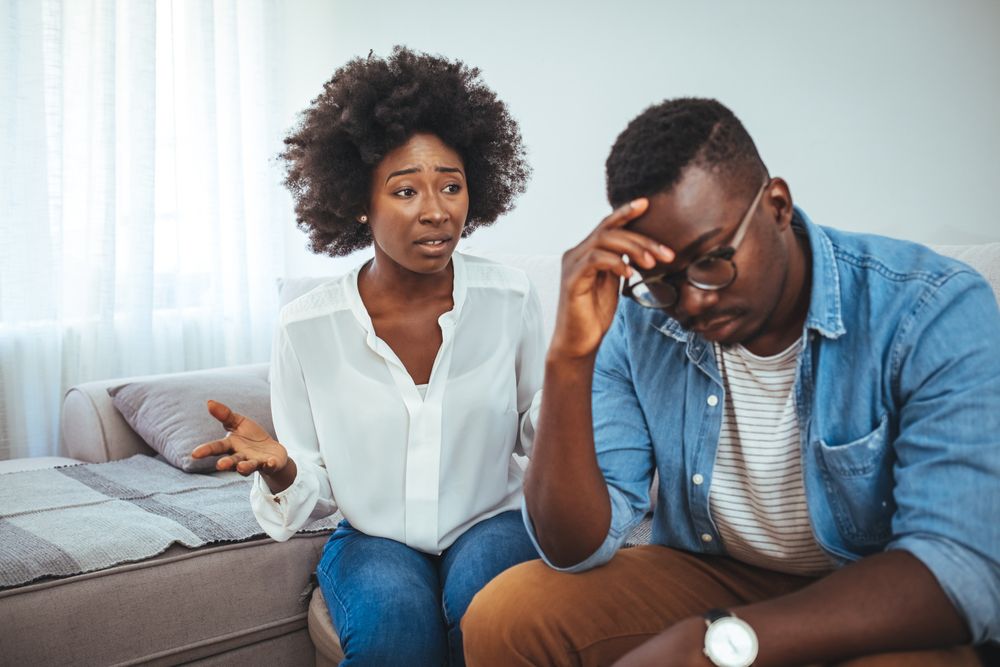
Physical touch is widely believed to be one of the primary, most important means of intimacy and bonding in a romantic relationship. Without frequent hugs, kisses, or sex, couples need to get creative in order to communicate their affection for one another. Most popular relationship advice also reinforces this idea; it’s widely assumed that more physical closeness naturally equates to a stronger, healthier relationship.
But not everyone experiences touch in the same way, nor does everyone want it to the same degree. Some people love frequent physical affection, while others might prefer it in smaller doses or only in specific contexts. So, where does that leave couples who aren’t perfectly aligned? Does physical touch matter equally for every relationship?
Thankfully, a November 2025 study published in Personal Relationships has given us an answer. And, surprisingly, it’s not nearly as black-or-white as most would assume it to be.
Physical Touch and Relationship Well-Being
Instead of simply asking whether physical affection predicts relationship satisfaction, the authors of the 2025 study examined how comfort with affection and perceived similarity in this regard relate to overall relationship well-being.
The study analyzed data from two different samples: a group of almost 2,000 individuals in romantic relationships, and a smaller group of couples in which both partners participated. Together, these samples allowed the researchers to explore both perceived and actual similarities in partners’ comfort with physical affection.
Participants completed a widely used measure of relationship well-being that assessed satisfaction, commitment, intimacy, trust, passion, and love. To measure how comfortable participants felt with affection, they rated how much they enjoyed various forms of physical touch in both private settings (when alone with their partner) and public settings (when others were present).
The clearest finding was that higher average comfort with physical affection was strongly associated with better relationship well-being. This means that couples who, overall in their partnership, felt comfortable giving and receiving touch tended to report greater satisfaction, intimacy, and trust.
Notably, this finding held true for both private and public affection, although the association was significantly stronger for private touch. Overall, this implies that simply being comfortable expressing and receiving affection behind closed doors plays a particularly important role in the health of a relationship.
The researchers also noticed that mismatched comfort matters, but with one especially important caveat. In the larger individual sample, people who perceived a bigger gap between their own comfort level and their partner’s reported lower relationship well-being.
However, when the researchers accounted for the couple’s overall comfort level, the negative effects of mismatch became less consistent. This means that even if partners weren’t perfectly matched in exactly how much affection they’re comfortable with, having a high overall comfort level buffered against the downsides of their imperfect alignment.
Interestingly, the dyadic data from the couples who participated together differed slightly. Specifically, when the actual self-reported differences between partners were analyzed, those mismatches didn’t prove to be as strongly linked to relationship well-being. Instead, for these couples, what mattered most was how different they believed they were, rather than how different they truly were.
Why Physical Touch Matters for Your Relationship
It’s relatively rare for two partners to be precisely matched in:
- How much physical affection they want
- How often they want it
- What forms they’re most comfortable with
- In which contexts they feel most comfortable expressing it
For instance, one partner may like regular cuddle sessions and spontaneous touch throughout the day, while the other might prefer affection that’s more intentional or limited to certain times and places. These differences aren’t inherently problematic in themselves, nor do they automatically suggest that a couple is incompatible.
If they’re broadly compatible outside of this domain, and if they feel that their needs are being met and acknowledged otherwise, there’s no reason why these differing preferences can’t coexist comfortably. If both people feel respected—and if affection is given and received in ways that feel meaningful to each of them—then physical touch can still be a reliable way to build intimacy, without becoming a source of conflict.
These differences are only problematic if one or both partners start associating them with negative emotions. For example, if one partner consistently reaches out for affection and gets rebuffed or met with unenthusiastic compliance, they might start interpreting that distance as rejection or disinterest. Should this become the norm, they might start viewing themself as unlovable or undesirable.
In a similar vein, a partner who constantly feels pressured to engage in more touch than they’re comfortable with will also feel dissatisfied. They may experience guilt and resentment and start to see their boundaries as either unimportant or negotiable.
For these kinds of couples, the absence or presence of touch isn’t what hurts most, but rather what they assume it means about the partnership. Only receiving hugs after asking for them can feel like emotional withdrawal; one-sided initiation in the bedroom can easily be read as disinterest. The study suggests that these interpretations—that is, our perceptions of this mismatch—will have a palpable influence on relationship satisfaction.
On the other hand, even small, consistent gestures of affection can go a long way toward bridging the gap. A quick kiss before leaving for work, resting a hand on a partner’s leg while watching television, or spooning before falling asleep can communicate care and effort.
These don’t require partners to fundamentally change who they are; they aren’t grand, over-the-top forms of affection. Even if they aren’t big on physical touch, only one or two moments like these a day are necessary for a partner to signal willingness to meet the other halfway. The research suggests that believing your partner is trying likely matters more than whether their natural inclination for touch perfectly mirrors your own.