There is a shame Africa does not want to name, because naming it would force responsibility.
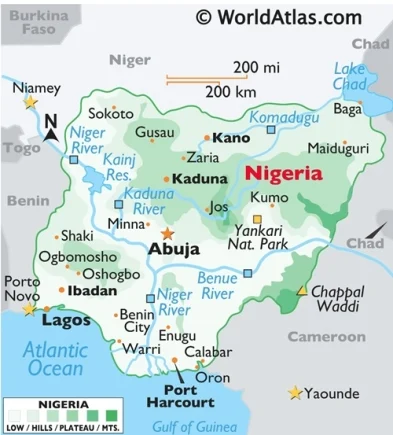
Nigeria, the continent’s largest engine, is asleep on industry, and while it sleeps, Africa is stalled at the roadside, waving politely as the world speeds past.
This is not an insult. It is an indictment.
Nigeria is not weak. Nigeria is not poor.
Nigeria is not short of brains, labour, land, capital or ambition.
Nigeria is unfinished by choice, distracted by noise, anesthetised by politics and comforted by the illusion that time will wait. It will not.
When the largest country on a continent refuses to industrialise, everyone slows down.
When the anchor does not hold, the ship drifts.
When the spine bends, the body collapses.
Africa’s failure to industrialise at scale is not evenly distributed; it is concentrated in Nigeria’s hesitation.
I say this with pain because I have seen the other Nigeria, the
Nigeria that could be. I once had the rare chance to speak with Alhaji Faisa Maigida, one of the most honest, kind and intelligent men Nigeria has ever produced.
Not a politician.
Not a slogan merchant. A builder’s mind. A systems thinker.
A man whose understanding of industrial scale, sequencing and discipline was not loud but lethal in its clarity.
Listening to him was like watching a factory assemble itself: quiet, precise and inevitable.
He understood what too many refuse to admit: industries are not announced; they are protected.
Supply chains are not begged into existence; they are engineered. Skills do not appear after elections; they compound over time.
And time, time is sacred. Waste it on politics and production punishes you.
Nigeria already has such minds.
Africa already has such minds.
But Africa keeps them away from power, while rewarding noise.
That is the shame.
Let us stop pretending.
Nigeria has everything required to industrialise Africa: population scale, geographic advantage, entrepreneurial energy, resource depth and intellectual capital.
What Nigeria has not done is lock these into a protected, uninterrupted industrial project.
Elections interrupt. Identity interrupts.
Short-termism interrupts.
External interests exploit the interruptions.
The result is a country that is always busy and never built.
Africa bleeds opportunity
Without a Nigerian industrial core, Africa remains a supplier of raw materials and a buyer of finished dignity.
Treaties without factories are theatre. Unity without production is ceremony.
Pan-African speeches without Nigerian industry are applause in an empty hall.
This is not theory. It is trade.
If Nigeria had industrialised seriously 20 years ago, if it had protected power, ports, logistics, skills and policy continuity, Africa’s bargaining position today would be unrecognisable.
Currencies would be stronger. Jobs would be local.
Intra-African trade would be real, not aspirational.
The world would not be “engaging Africa”; it would be adjusting to Africa. But Nigeria slept.
And while Nigeria slept, Asia built.
The West protected. Supply chains hardened elsewhere.
Africa watched, debated, voted and imported.
Here is the part that should sting: the world is comfortable with a noisy Nigeria.
A distracted Nigeria is manageable.
A divided Nigeria is predictable.
A politicised Nigeria is profitable to others.
What the world fears is a boring Nigeria: disciplined, organised and relentless.
Boring means factories running.
Boring means port clearing.
Boring means skills compounding.
Boring means policy that survives elections.
Boring means power that does not ask permission.
Nigeria has not chosen boring yet.
Instead, it has chosen survival theatre.
Endless crises. Endless debates.
Endless resets. Energy spent proving resilience rather than building dominance.
This is not accidental, but it is consented to.
Africa’s collective failure
And the consent is Africa’s collective failure.
Because when Nigeria delays, Africa pays twice.
Smaller economies cannot anchor continental value chains alone.
They cannot compel markets.
They cannot force recalibration.
They can inspire.
They cannot shift gravity.
Nigeria can. Nigeria must. Nigeria has not.
The tragedy is not ignorance.
The tragedy is misplaced authority.
Builders are sidelined.
Talkers are crowned. Systems thinkers are ignored.
Short-term winners are celebrated.
Long-term capacity is postponed.
Every election promises a miracle; none protects a factory.
Men like Alhaji Faisa Maigida understand the sequence: energy, logistics, skills, factories, exports and leverage.
They understand that development is engineering, not ideology.
They understand that leadership must be dull, firm, technical and shielded from applause.
They understand that the nation must choose production over sentiment.
Nigeria has not made that choice. So, Africa waits. Africa hopes.
Africa lectures itself about democracy while importing almost everything it uses.
Africa confuses peace with progress and stability with strength.
Africa calls this maturity.
History calls it a delay.
Let us be brutally honest: peace without production is quiet dependency.
Stability without scale is a polite weakness.
The world does not reward good behaviour; it prizes capacity. Nigeria’s sleep is Africa’s tax.
Sleep not death
But sleep is not death.
The day Nigeria decides that production is national security, the ground shifts.
The day it locks in a 15–25-year industrial policy protected from electoral noise, markets recalculate.
The day energy, ports, rail, skills and finance are synchronised under one discipline, Africa’s tone changes fast.
Nigeria does not need perfection.
It needs alignment. Partial coherence at a Nigeria scale is enough to move continents.
Until then, Africa remains delayed, not by destiny, not by resources, not by intelligence, but by the sleep of its strongest pillar.
History is patient, but not indulgent.
Giants do not get infinite naps. Nigeria must wake up.
Or Africa will keep waking up late.
That is the fear.
Compare Nigeria to the rest of the continent and feel the discomfort.
Ghana is peaceful but small. Kenya is energetic but fragmented.
South Africa is industrial but constrained by history and internal limits.
Ethiopia is ambitious but boxed in.
Egypt is large but geopolitically managed.
None of these can force the global system to adjust.
They can participate.
They cannot compel.
Nigeria can compel.
This is why the world tolerates instability in Nigeria more than elsewhere.
This is why capital circles it cautiously instead of abandoning it.
This is why foreign powers hedge instead of disengaging.
They are not waiting for Nigeria to become nice.
They are waiting to see when Nigeria becomes serious.
And here is the part that Africans avoid saying out loud: Africa’s future does not hinge on speeches about unity or conferences about democracy.
It hinges on whether one country builds enough productive power to change the bargaining position of the entire continent.
Nigeria is the only candidate.