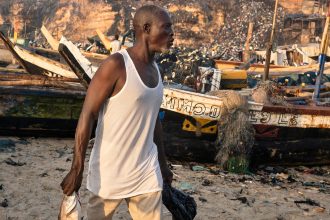
A new report by the Ghana Statistical Service (GSS) has revealed that nearly one in three households in Ghana, representing about 4.8 million people, live in slums or informal settlements.
Titled “The Slums and Informal Settlements Report”, the study found that 29.5% of households reside in substandard housing conditions that lack basic infrastructure, planning, and services.
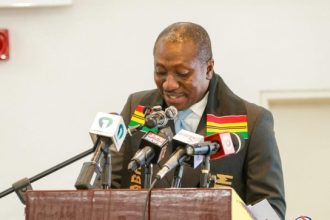
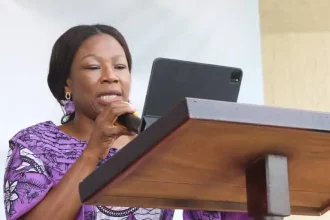
Launching the report, Government Statistician Dr. Alhassan Iddrisu described the findings as a wake-up call for urgent, coordinated action, particularly from local governments.
He stressed that the data should guide district and municipal development strategies and budget allocations.
“Slum development is a symptom of deep inequality in our urban centres, this data must not be shelved, it must drive targeted policy action to reduce disparities.”
Key Findings
-
Regional Disparities: Greater Accra had the highest percentage of slum dwellers in rented housing (52.5%), followed closely by Ashanti (51.8%). In contrast, other regions recorded significantly lower rates, suggesting the problem is heavily concentrated in Ghana’s two most populous areas.
-
Urban Fertility Trends: Women aged 15–49 in slum areas have more children than those in non-slum areas, with a total fertility rate of 2.9 compared to 2.5. The Northern Region topped the chart with a fertility rate of 4.1, while Greater Accra recorded the lowest at 2.3.
-
Widespread Informality: While only 10% of Ghana’s localities are classified as urban, slum characteristics remain widespread. Roughly 46% of all households show at least one slum feature. Additionally, 34.1% of neighbourhoods and 26.6% of localities meet the criteria for being classified as slums.
The report warns that without urgent reforms in housing, sanitation, family planning, and urban services, Ghana’s rapid urbanisation could deepen inequality and strain existing infrastructure.
Dr. Iddrisu called for immediate use of the report’s findings to guide policy: “This should inform how we plan, how we allocate resources, and how we intervene especially at the district and community level.”