The Minority in Parliament has accused the Mahama administration of mismanaging the Gold-for-Reserves programme, claiming that its rapid expansion has resulted in a loss of about US$214 million within nine months.
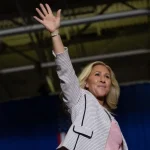
Addressing the media on Thursday, January 8, 2026, the Deputy Minority Leader and Member of Parliament for Asokwa, Patricia Appiagyei, described the development as a serious lapse in economic management and oversight.
She referred to the situation as a “US$214 million scandal,” noting that the amount estimated at about GH¢2.6 billion could have been used to fund critical infrastructure such as hospitals, school equipment, and storage facilities for farmers.
Instead, she alleged, the funds were lost through what she described as a politically connected gold trading scheme.
Madam Appiagyei further stated that the Gold-for-Reserves programme was originally conceived and implemented by the New Patriotic Party (NPP) government under former President Nana Addo Dankwa Akufo-Addo, and was managed with what she described as discipline, transparency, and accountability.
“The programme as we designed and implemented it did not lose US$214 million in nine months,” she said, questioning what changed after President John Mahama returned to office.
According to the Deputy Minority Leader, President Mahama inherited a functioning programme but politicised and expanded it recklessly, placing it in what she described as “unprepared and potentially conflicted hands,” with the results now evident.
She cited the International Monetary Fund (IMF) report which, she said, documents losses of US$214 million within nine months, attributed to the operations of GoldBod and the Bank of Ghana.
Madam Appiagyei acknowledged that GoldBod and the Bank of Ghana have denied making any losses, with GoldBod issuing a response on January 3, 2026, emphatically rejecting the claim.
However, she maintained that statements by the Chief Executive Officer of GoldBod, who has said the institution generated over GH¢960 million in revenue against GH¢120 million in expenditure, projecting a surplus of between GH¢700 million and GH¢800 million do not address the core concerns raised in the IMF report.
“These are bold claims, but they do not answer the central issue,” she said, insisting that the government must provide clarity on how a programme once managed without losses has allegedly deteriorated under the current administration.