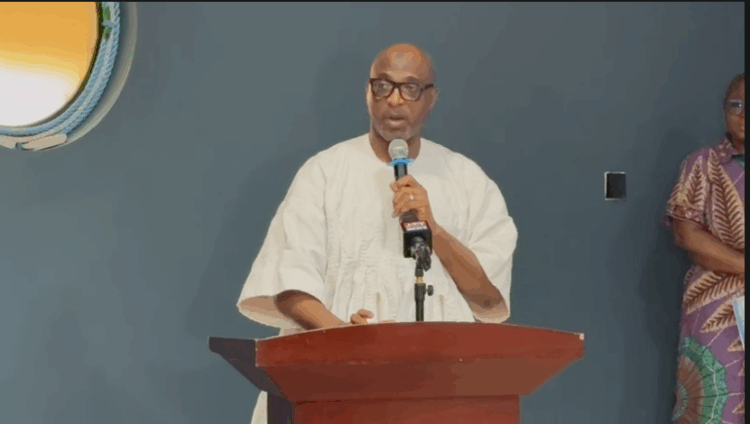
The Minister for the Interior, Muntaka Mubarak Mohammed, has raised concerns about rising crime and growing pressure on Ghana’s borders, warning that the country’s internal security situation is becoming increasingly strained.
Speaking at the Ministry of the Interior’s annual performance review, the Minister acknowledged growing public concern over crime trends, cross-border threats, and accountability within the security services, noting that these issues are placing greater demands on law enforcement and internal security agencies.
He underscored the central role of the Ministry of the Interior within Ghana’s governance framework.
“The Minister of Interior occupies a central place in Ghana’s governance architecture. Our mandates span internal security, public safety, migration management, disaster preparedness, law enforcement, arms regulation, peace building, citizenship, and national identification. Through our agencies and affiliated institutions, we remain at the front line of protecting life, property, and democratic stability,” he stated.
While acknowledging progress in certain areas, the Minister noted that significant challenges persist.
“Over the last year, the security environment has begun to evolve. We have observed heightened public concern over crime trends, persistent border security pressures linked to transnational threats, increasing demand for effective regulation, and growing public scrutiny regarding accountability, service delivery, and respect for human rights,” he said.
He also highlighted gains made by the sector.
“At the same time, the sector has recorded notable gains. These include stronger inter-agency collaboration, progress in digitalisation and intelligence-led operations, and improved independent response and reform aimed at professionalism and oversight. This mixed outcome underscores the importance of a deliberate, evidence-based performance review such as this one,” he added.
The Interior Minister urged security agencies to use the review process to critically assess their performance and address shortcomings.
He also stressed the need for outcome-driven discussions.
“As we review the financial and non-financial performance of the sector for 2025, our discussions must remain firmly anchored on outcomes. What worked, what didn’t work, why that was so, and how we translate these lessons into clear priorities, credible budgets, and coordinated actions in 2026,” he stated.
Addressing heads of agencies directly, the Interior Minister called for honesty and strategic leadership.
“To the heads of the agencies, I urge you to approach this review with candour, ownership, and strategic focus. Leadership demands honesty about constrained decisiveness in addressing weaknesses and clarity in driving reform,” he added.
He concluded with a call for collaboration and accountability.