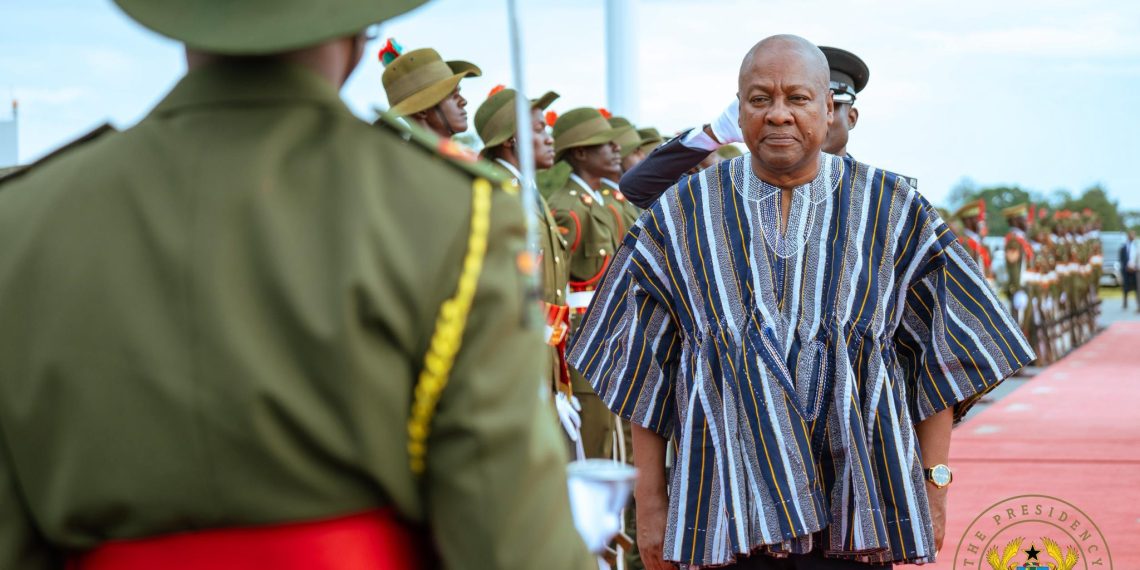
When President John Dramani Mahama landed in Zambia wearing a proud Ghanaian fugu, the northern smock that has survived colonialism, coups and cheap imports, he probably did not expect to spark a continental fashion emergency.
Yet, somewhere in the depths of social media, a concerned Zambian citizen squinted at his screen and typed with confidence: “Why is the President wearing a blouse?” I shudder to think what he made of Lordina in tow.
At that moment, African integration paused for five seconds.
In Ghana, the iconic fugu is royalty’s casual wear. It has walked through palaces, parliaments, the White House, weddings, funerals and campaign rallies. It has survived dust, sweat and highlife. But online, it suddenly became “a blouse,” as if President Mahama had borrowed it from a boutique in the EastPark Mall in Lusaka.
This is how Africa works sometimes: we can recognise Beyoncé’s dress from 2009, but not our neighbour’s heritage from 50 kilometres away. A Kenyan can name five American actors. A Nigerian can quote Mexican telenovelas. A South African can identify five Premier League managers. But ask us about traditional wear from the next country, and we suddenly develop spiritual amnesia.
“Is that a blouse?” “Is that a curtain?” “Is that a prayer cloth?” “No, brethren. It is culture.” The incident is funny. But it is also a tragic-comedy, the African version of Shakespeare, minus the castle,s plus mobile data.
Ironically, Africa speaks often about unity and economic cooperation, yet remains divided by ignorance. Our borders have become so rigid that even cultural symbols struggle to cross them. We have built borders so strong that even fabrics need visas. It limits trade, tourism, creativity and cooperation.
Meanwhile, the fugu has its own CV. Woven by hand. Dyed with patience. Designed for heat, dignity and leadership. Yet, one tweet nearly demoted it to women’s wear.
We talk about Pan-Africanism, but we barely know each other. Imagine if we truly did.
If a Zambian saw fugu and said, “Ah, like our chitenge, but royal.”
If a Ghanaian saw a Maasai shuka and said, “Respect.”
If a Senegalese saw kente and said, “Cousin.”
Instead, we scroll, judge, laugh and move on, missing billion-dollar opportunities in textiles, tourism, trade and creativity. That “blouse” could have started a fashion corridor from Tamale to Lusaka. A textile exchange. A cultural festival. A Pan-African clothing brand. Youth employment. Instead, it became a meme, and we chose comedy.
Still, every crisis needs a tailor. This one stitched a lesson: Africa does not lack intelligence. We lack curiosity about each other.
So thank you, dear ‘anonymous’ commentator. You accidentally reminded us that unity does not begin with summits, nor does integration begin with treaties, but with curiosity, respect and learning about one another.
Africa’s future lies not only in infrastructure and policies but also in understanding each other’s stories one fabric at a time.
It is history. It is identity. It is an opportunity tailored for all of us.