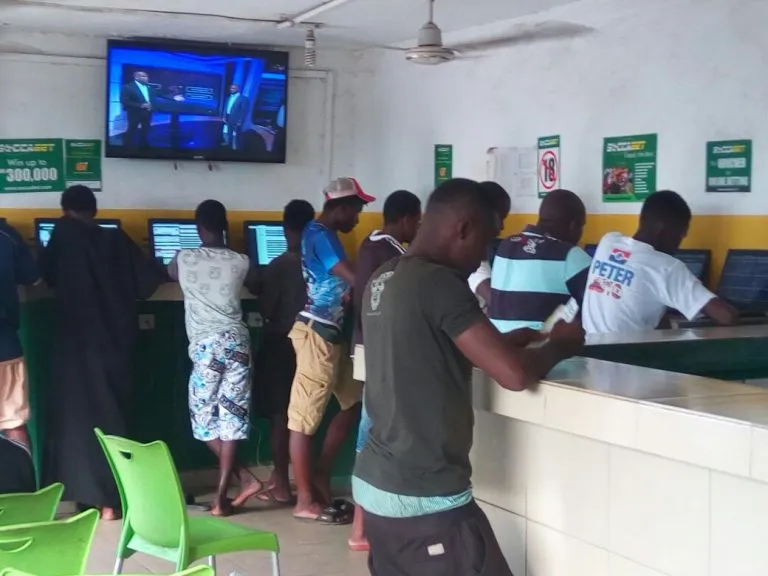
Packed with video games and loud excitement, these centres appear harmless at first glance, yet behind the flashing screens lies a growing concern that parents, teachers, and community leaders can no longer ignore: Are game centres slowly destroying the future of our children?
School-going children
Increasingly, school-going children are abandoning classrooms for game centres.
Some skip school entirely just to spend hours playing video games.
Others lie to their parents, claiming they were sent home for unpaid school fees, when in reality, they simply want time at a game centre.
In more troubling cases, children steal money from home or elsewhere to fund this habit.
What begins as innocent entertainment gradually turns into unhealthy dependence.
Consequences
The short-term consequences of this behaviour are already visible.
Many children involved in excessive gaming perform poorly in school due to missed lessons and lack of concentration.
Discipline problems increase, and respect for authority weakens.
Lying becomes normalised, and petty theft is introduced at an early age.
These behaviours, if left unchecked, shape a child’s character in damaging ways.
The long-term consequences are even more alarming.
Children who consistently miss school risk dropping out entirely, limiting their future opportunities.
Early exposure to dishonesty and theft increases the likelihood of criminal behaviour later in life.
Family trust breaks down, and communities bear the burden of raising a generation less prepared for productive adulthood.
In the long run, the nation itself suffers, as an uneducated and morally weakened generation threatens Ghana’s social and economic development.
Gaming centres
It is important to acknowledge that game centres are businesses that provide livelihoods for operators.
However, when profit comes at the cost of children’s education and moral development, it becomes a national issue.
Many of these centres operate without regulation, supervision, or concern for the age and school status of their patrons.
This lack of control allows children to access game centres during school hours without consequence.
Government intervention is, therefore, necessary, not to destroy businesses, but to protect children.
Authorities should introduce clear regulations that restrict access to game centres during school hours and enforce age limits.
Game centre operators should be licensed and monitored, just like other businesses that affect public welfare.
Community education campaigns can also help parents recognise early signs of gaming addiction and absenteeism.
Beyond regulation, the state must provide safer alternatives for children.
After-school programmes, sports facilities, creative arts initiatives, and digital skills training can channel youthful energy into productive activities.
When children are engaged positively, the attraction of game centres during school hours naturally declines.
Game centres are not the enemy, but unchecked access to them is.
Ghana cannot afford to trade the education and values of its children for short-term entertainment and profit.
Protecting the future generation requires firm policy action, community responsibility, and parental vigilance.
If we fail to act now, the cost will be far greater tomorrow.