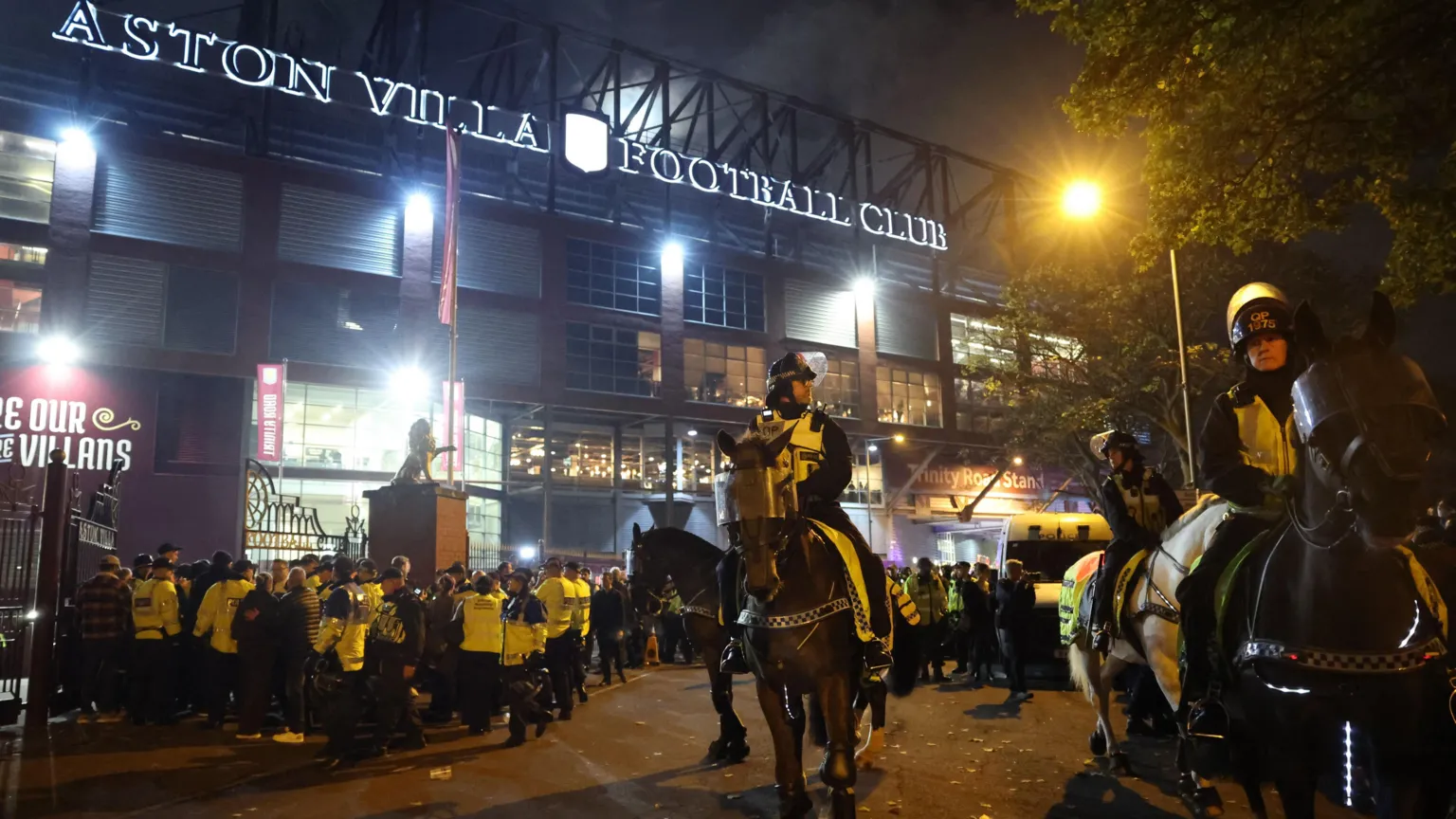
“Late and clumsy” intervention by the government in trying to overturn the banning of Israeli Maccabi Tel Aviv fans from a match against Aston Villa only served to “inflame tensions”, a committee of MPs has found.
The move was “ineffective” and reflected “unfavourably on the culture of the Home Office”, the Home Affairs Committee report concluded.
The report into events surrounding the November Europa League match also found the decision by Birmingham’s Safety Advisory Group (SAG) may have been “unduly influenced by political pressure”.
A Home Office spokesperson said it was only informed a ban was “one possible option” before the decision was taken.
After reviewing evidence presented by West Midlands Police (WMP) the SAG ruled supporters of the Israeli club should not be permitted to attend the fixture over safety concerns. The force has since admitted it “overstated the evidence” used to make the decision.
Following the ban announcement, the government said it would do everything in its power to have the ban overturned.
Government intervention was “clumsy and came too late,” said Karen Bradley, chair of the Home Affairs Committee.
“But their intervention when it came did little more than inflame tensions,” she said.
The Home Affairs Committee report findings include:
- Late government intervention exacerbated tensions
- Political interference in the decision-making process could not be ruled out
- Use of AI reinforced false narratives
- Faith in the competence of West Midlands Police had been undermined
- A new category of matches of national significance should be considered
- Elected politicians should not sit on Safety Advisory Groups
Police use of AI in drawing up its evidence led to “inaccurate and unverified information” which “reinforced false narratives”, said the report.
The “extraordinary measure” to ban fans seemed to have been taken to “make policing the match much easier”, added the Conservative committee chair.
“To justify this step information that showed the Maccabi fans to be a high risk was trusted without proper scrutiny. Shockingly, this included unverified information generated by AI,” she said.
The former chief constable of the force, Craig Guildford announced his retirement on 16 January in the wake of damning criticism surrounding the issue.
It was “right” the chief constable had retired so the force could rebuild trust, the MPs’ report said.
Guildford’s retirement came after he admitted inaccuracies in evidence to the committee, including a denial the force had used AI to research evidence, including a non-existent match between the Israeli club and West Ham.
Senior officers did not intentionally mislead the committee over AI generated intelligence, but demonstrated a “remarkable lack of professional curiosity”, said the report.
 PA Media
The committee said it had considered the presence of Birmingham city councillors on the SAG, including one who had been campaigning against the fixture taking place.
Councillor for Aston ward, Mumtaz Hussain, had failed to declare an interest when attending a SAG meeting on 7 October, and “later characterised some Maccabi Tel Aviv fans as ‘thugs'”, the report states.
She recused herself from a later meeting on 24 October.
Councillor Waseem Zaffar, who has since passed away, did declare an interest as a campaigner against the match at the first SAG meeting.
“However while his contributions to the SAG mostly related to safety, he nonetheless relayed the view of his community ‘that this game should not go ahead’,” the report states.
The city council has commissioned an independent review of its SAG processes.
“It is clear that on this occasion councillors with a stated political aim had a disproportionate opportunity to influence SAG decision-making on a deeply divisive political issue,” the committee report said.
It recommended that changes be made to ensure elected politicians can no longer sit on such groups.
 UK Parliament
Following a first appearance giving evidence to the committee, the force wrote to members of the Jewish community, apologising for giving the impression they had been consulted on the decision.
The report said it was “surprising and disappointing” Assistant Chief Constable Mike O’Hara was not more precise in his remarks about whether Jewish representatives had supported the ban.
“However we note his personal apology, and have no evidence to suggest that he intended to mislead the committee on this point”.
“The Committee found no evidence that the WMP response was motivated by antisemitism but it is clear the force failed to take appropriate steps to engage with Jewish communities. This was in in stark contrast to its active consultation with other communities,” it added.
The report concluded the government should give serious consideration to the proposal to introduce a new category for football matches of national significance.
The Home Office said it had sought to find ways by which fans could safely attend the game.
“It is important that we learn from the events of last autumn and what was a serious failure of leadership by West Midlands Police,” it said in a statement.
Following the incident, the home secretary withdrew confidence in the chief constable and said she planned to restore the power of government to sack police chiefs.
“In such circumstances the public rightly expect action,” she added.
The report also criticised the West Midlands Police and Crime Commissioner (PCC) who “appeared to prioritise defending the chief constable above holding him to account”.
In a statement, the PCC Simon Foster said he would be giving the report “careful consideration” but that he continued to hold the force to account.
WMP said it was “fully committed” to learning from the events surrounding the ban and was seeking to restore the public’s trust and confidence in the force.
Birmingham City Council leader John Cotton said that police evidence was the key driver of the SAG’s decision, “but there are also clear actions for the council, which we will undertake”.