The Ghana National Association of Teachers (GNAT) has urged the government, the Ghana Education Service (GES), and the Ministry of Education to provide prompt assistance to the wife and three children of Yahaya Bukari, the headteacher who was tragically killed in the recent shooting incident in Garu, located in the Upper East Region.
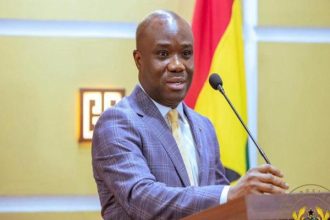
Speaking in an interview, GNAT National President Rev. Isaac Owusu stated that the association has sent a delegation to visit the grieving family to offer condolences and to obtain information regarding the funeral arrangements.
“The late teacher was buried in accordance with Islamic customs on Monday. We have sent a delegation to meet the family and express our condolences. But beyond that, the GES and the Ministry of Education must come out publicly to declare what kind of support they will give to the family,” he said.
Rev. Owusu voiced significant concern regarding the rising violence in Garu and its surrounding areas, labelling them as “war zones” where innocent civilians, including teachers, continue to endure suffering.
“We cannot understand why these shootings and killings keep escalating while innocent people are affected. When Major Mahama died in the line of duty, something was done for him; likewise, the helicopter crash victims. So in this case, the government must also honour Mr. Bukari for his sacrifice,” he lamented in an interview on Adom FM’s Dwaso Nsem.
He further stated that GNAT would not encourage its members to return to classrooms in Garu until there is a guarantee of lasting peace and security.
“If we always wait for people to die before security is heightened, then GNAT cannot ask our members to go to school,” he stressed.
Mr. Bukari, who also held the position of GNAT district treasurer, reportedly lost his life while defending his pupils during the attack that resulted in four fatalities and numerous injuries.
Four armed individuals on two motorcycles invaded the town and commenced shooting indiscriminately near the National Health Insurance Authority (NHIA) office in the Upper East Region.