The International Monetary Fund (IMF) and the Government of Ghana have reached a staff-level agreement on the fifth review of the country’s three-year Extended Credit Facility (ECF) programme.
The agreement, pending approval by IMF management and the Executive Board, will unlock about SDR 267.5 million (approximately $385 million).
Once disbursed, Ghana will have received around $2.8 billion since the programme began in May 2023.
An IMF mission led by Ruben Atoyan held discussions in Accra from September 29 to October 10, 2025, to assess Ghana’s progress on economic reforms.
Mr. Atoyan noted that the country’s recovery is gaining momentum, with stronger-than-expected growth in the first half of 2025, driven largely by the services and agriculture sectors.
He highlighted that Ghana’s external sector has strengthened, supported by robust gold and cocoa exports.
The cedi has appreciated, reserves have exceeded programme targets, and the positive trend is projected to continue into 2026, with growth expected at 4.8% and inflation within the Bank of Ghana’s 8 ± 2% target band.
The IMF commended Ghana for progress in tackling structural challenges, particularly in the energy sector, where legacy arrears and power purchase agreements have been renegotiated and tariff adjustments improved.
On the fiscal front, the country achieved a primary surplus of 1.1% of GDP between January and August 2025, keeping it on track to meet the 1.5% target for the year.
The government has pledged to sustain the surplus in its 2026 budget under the new Fiscal Responsibility Framework.
Debt restructuring efforts were described as advancing well. Ghana has reached bilateral agreements with five countries under the G20 Common Framework, while negotiations with commercial creditors continue.
The IMF said the country’s debt outlook has improved significantly due to fiscal discipline and a stronger macroeconomic performance.
Monetary policy has also seen adjustments, with the Bank of Ghana cutting its policy rate by 650 basis points to 21.5% as inflation trends lower.
Together with the IMF, the central bank has developed a framework to stabilise the foreign exchange market and strengthen reserves.
The Fund further praised Ghana’s steps to safeguard financial stability, including ongoing recapitalisation of state-owned banks, reforms to reduce non-performing loans, and stronger crisis management mechanisms.
The recapitalisation is expected to be completed by the end of 2025.
Mr. Atoyan added that Ghana’s governance diagnostic assessment has been completed and will soon be published.
He urged authorities to continue enhancing transparency and oversight in key sectors such as gold, cocoa, and energy.
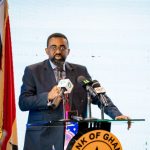
The mission held meetings with Finance Minister Dr. Cassiel Ato Forson, Bank of Ghana Governor Dr. Johnson Asiama, and other senior officials.
The IMF expressed gratitude for Ghana’s cooperation and hospitality throughout the review.