From Italy to Germany, from Greece to Türkiye, from Belgium to France, Ricardo Faty’s playing career has taken him to quite a few different stops. But today, he’s back where it started: the Institut national du football de Clairefontaine.
Born in Villeneuve-Saint-Georges, France, on August 4, 1986, Faty was raised by a Senegalese-Vietnamese father and a Cape Verdean mother in the Parisian suburbs, where he got his first big break with Clairefontaine from 1999 to 2002.
Faty then left his hometown and made the move to Strasbourg, where he spent three years before breaking into the first team in 2005/06.
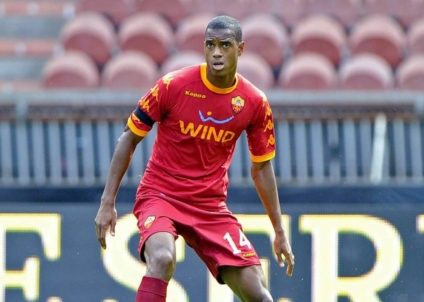
He would play 15 times for Strasbourg – one of which came vs. Roma – before earning a move to Roma, who took advantage of his lack of a professional contract and Strasbourg’s relegation and signed him for €350,000.
Faty would showcase his skills in Italy, excelling against the likes of Lyon, Manchester United, and Milan, and even man-marking 1999 Ballon d’Or winner Rivaldo out of the match on his UEFA Champions League debut.
He made 15 appearances and helped Roma end a six-year trophy drought by winning the Coppa Italia, but he was unable to dislodge the likes of Daniele De Rossi, Simone Perotta, and David Pizarro from the starting line-up.
It’s why he decided to join Bundesliga side Bayer Leverkusen on a two-year loan, only to depart after six months and move to French side Nantes, where he experienced both promotion and relegation.
He then spent two years in Greece with Aris Salonica before joining French outfit AC Ajaccio in 2012; that same year, Faty would switch over from France to Senegal, playing five times for the Lions of Teranga.
Whilst his progress was interrupted by an Achilles injury, Faty nevertheless made 50 appearances for Ajaccio before departing for Standard Liége following the club’s relegation.
He spent a year in Belgium before making the move to Türkiye, where he spent five years with Burasaspor and MKE Ankaragücü, followed by a spell with Serie B outfit Reggina and a swan song with C’Chartres Football in the French fourth tier.
Since retiring in 2023, Faty has balanced his time between raising his three daughters in Paris (his son is playing high school basketball in Providence, Rhode Island) and working as a pundit for major French television and radio outlets.
And similarly to other retired players like Felipe Martins, he’s made a smooth transition into coaching and is now coaching the next top boys and girls from the Île-de-France region in INF Clairefontaine.
Joy News spoke to Faty about a number of topics, including:
You’ve been very outspoken about your experiences dealing with racism.
I’m curious, do you think that’s something that’s been distinct with you, the fact that you’ve been able to use your platform off the pitch to talk about one of society’s evils? And would you say that your experience with racism has differed from country to country?
Okay, I’ll talk about my own experience. In my career, personally, I never experienced racism directly.
But I was a witness of racism in every country I played, even in France.
And the thing is, it’s human nature. Unfortunately, it’s like that. Maybe in some countries, it’s more present, but in every country, I’ve experienced some episode of racism.
Maybe not in Türkiye: when I arrived in 2015, it was the start of the big bang of the social networks – Instagram, Twitter, and the first apparitions of cyberbullying – and in social media, you start to see some bananas and other stuff.
But I’m not talking about virtual stuff, I’m talking about stuff on the pitch, face to face…I’ve never experienced that in Türkiye. But, in Greece, yes. In Italy, yes. In France, yes. Even in Belgium sometimes. Germany, no, but I only spent six months, so I can’t judge.
This is a shame, because I’ve experienced that everywhere at a different level. Obviously, I’ve talked about it a lot with the French and Italian press, but the thing is, I’ve stopped talking about it because nothing has changed.
Sometimes I speak face-to-face with some powerful people, like presidents or higher-ups from the federation and the league, I’ve held meetings with referees and said, ‘If you really want to put racism out of football, you should make a real statement so that nobody will say that again.’
It’s not enough to just close the stands or the stadium, because people won’t care; they’ll come back after the week. Like Samuel Eto’o said, you’ve got to hit their wallets, but they would never do that, because maybe they’re scared or afraid. Unfortunately, this is human nature: I think it will never stop.
So you personally have never suffered racism in your playing career, but you’ve seen your teammates or other Black people suffer?
I’ve seen Black people suffer racism, or I’ve seen someone talk badly about Black people. I’m light-skinned, so in certain countries, I’m not even considered Black, I’ll hear people being racist and will go, ‘What are you saying?’
They’re like, ‘But you’re not Black.’ I’ll say, ‘What, I’m white?’ They’ll say, ‘No, but this one is Black, you’re not Black. I say, ‘Okay, if you say so.’
This is the kind of thing, sometimes it’s just ignorance, and people aren’t educated enough about it. That’s why, sometimes, when I talk to a lot of people, they say that it’s not even racism, it’s ignorance. Sometimes, in the stands, it’s not even racism: people are just ignorant, they just want to put you out of the game, but I’m still not okay with that.
That’s why they need education, but maybe the institutions, they don’t want that, they’re not okay with that…this is the sad truth.
Lastly, after plying your trade in France, Italy, Germany, and Greece, what was it like making the move to Belgium?
After my time in Ajaccio, I realized that it was time for me to move on because the team had suffered relegation to Ligue 2.
To be honest, I wanted to stay in France, but I didn’t have a good offer that I liked, that I was attracted to, and Standard came with a premier project. I started to look down the team and everything, and what’s happening around the team, and I really enjoyed it.
You know me, I always make my choices about the clubs, about the mentality, the supporters, and the project, and everything, the history of the team, so I liked it.
Now, I was used to traveling, so I said, ‘Okay, now I’m turning 29, okay, let’s travel again.’ I decided to go to Belgium to discover a new league, a new country, a new stadium, and a new atmosphere. Honestly, I really enjoyed my time in Liège.
I wish I could have stayed longer there, but I got into some trouble because the president was changing a lot, and the club was very unstable. After one year, they decided to sell me as I received an offer from Turkish club Bursaspor.
I didn’t want to go, but they said, ‘Look, we need to change the strategy of the team, we’re focused on players who are 23/24 years old, whereas you’re 29. You should go there; even the contract in Türkiye is good, so consider this offer. After just one year, I left Liège for Bursaspor, but honestly, I enjoyed my time there.