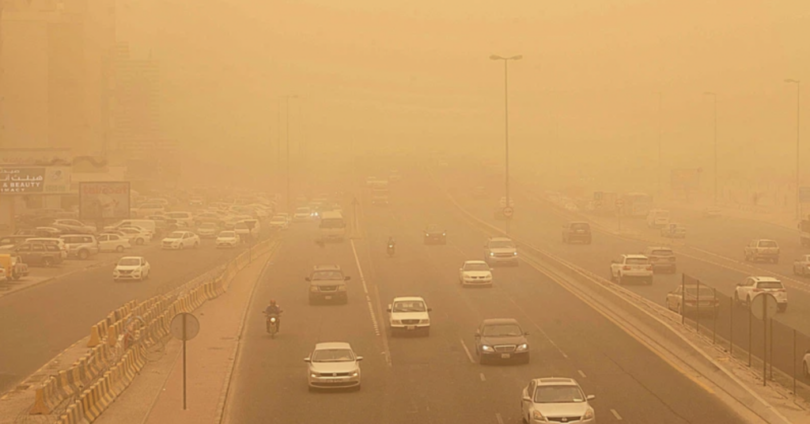
For nearly a year, large stretches of this road have been under construction. What is often framed as “temporary inconvenience” has, in reality, become a prolonged public health exposure for the communities that live along it.
Road construction is not value-neutral. When poorly managed or indefinitely prolonged, it creates environmental conditions that directly harm health. Fine particulate matter from construction dust penetrates deep into the lungs, exacerbating asthma, chronic obstructive pulmonary disease, and respiratory infections.
These conditions disproportionately affect children, the elderly, and those with limited access to healthcare. In roadside communities, windows remain closed in the heat, food is prepared in dust-laden air, and sleep is disrupted by noise and vibration.
Not to mention the ambulances that have to make multiple trips on these roads to transport very ill patients.
Yet these health impacts rarely appear in project evaluations.
In Ghana, infrastructure projects are typically assessed by timelines, budgets, and engineering milestones. Public health impact, when considered at all, is treated as secondary, incidental, or someone else’s responsibility. This separation is artificial and harmful.
Infrastructure is one of the strongest social determinants of health. When projects stall or drag on without mitigation, they quietly shift disease burden onto already vulnerable populations.
The economic consequences are equally profound. Small roadside businesses lose customers as access becomes difficult. Transport costs rise. Informal traders, many of them women, see their daily income shrink or disappear altogether. For families living hand-to-mouth, this is not an inconvenience; it is a livelihood loss.
What makes this particularly troubling is that these harms are predictable and preventable.
Basic public health protections during prolonged road works are well known: regular dust suppression, clear timelines communicated to communities, safe pedestrian access, compensation or support for affected traders, and health impact monitoring alongside engineering progress. These are not luxuries. They are ethical obligations.
Development that improves national connectivity while quietly degrading community health is not progress, but it is cost-shifting. The price is paid in clinic visits, lost income, missed school days, and long-term respiratory disease. These costs do not appear in the project ledger, but they appear in people’s lives.
As a clinician, I see the downstream effects of such decisions every day. We treat the coughs, the asthma exacerbations, the malnutrition that follows lost income, but we rarely name the upstream causes. Roads, like hospitals, shape health outcomes. The difference is that when hospitals fail, we call it a crisis. When infrastructure fails, communities slowly, we call it a delay.
It is time to do better.
Public infrastructure projects must be governed with the same seriousness we apply to public health interventions. This means mandatory health impact assessments for major projects, enforceable timelines, community engagement, and accountability mechanisms when delays cause harm. Ministries of Roads, Health, and Local Government cannot continue to work in silos when the consequences are so clearly intertwined.
A road should connect opportunity, not coat communities in dust for years. Development should not require people to sacrifice their health in silence.
If we are serious about building a healthier Ghana, we must recognise this simple truth: infrastructure is health policy.
Author: Dr Emmanuella Amoako