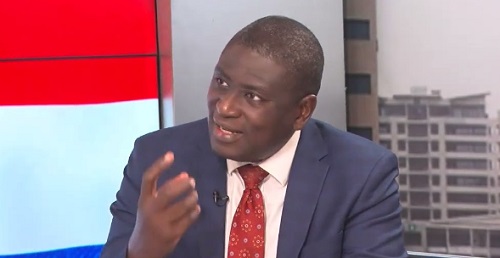
The Executive Director of the Institute for Energy Policies and Research, Kwadwo Poku, has challenged claims that Ghana’s declining inflation rate automatically means better living conditions for ordinary citizens, warning that such conclusions are misleading and out of touch with everyday realities.
Speaking in an interview in response to the latest inflation figures, Mr Poku said the National Democratic Congress (NDC) was using the data in a disingenuous way to suggest that economic pressures have eased, even though many Ghanaians continue to face high prices and limited income growth.
“The real question is whether what Ghanaians are experiencing in their daily lives reflects these figures. Inflation is a statistical measure that helps guide economic policy, but it does not by itself translate into improved living standards,” he said.
His comments follow the release of data from the Ghana Statistical Service showing that inflation fell sharply to 3.8 per cent in January 2026, down from 5.4 per cent in December 2025.
The January figure marks the 13th consecutive monthly decline and the lowest level recorded since the Consumer Price Index was rebased in 2021.
The NDC has pointed to the figures as evidence that economic conditions are improving under current policies, particularly after years of high inflation and rising living costs.
However, Mr Poku argued that focusing solely on inflation statistics overlooks the deeper challenges many households continue to face in meeting their basic needs.
He likened the situation to a moving vehicle, explaining that although the speed has reduced, it has not come to a stop.
“Before, the car was moving faster. Now it is slower, but it is still moving. So prices are still going up,” he added.
The energy policy analyst also noted that inflation plays different roles in different economies and must be interpreted within a broader framework of growth, employment, and social welfare.
“In some jurisdictions, inflation can even be used to fund development,” he said. “But in Ghana, we are beginning to use it as a measure of the standard of living, which is misleading if other factors are not improving.”
He stressed that declining inflation must be supported by rising incomes, job creation, and reduced production costs to have a real impact on citizens.
“They are trying to tell Ghanaians that life is better because inflation is down,” he said. “But when you go to the market, when you pay rent, when you buy fuel, you know that reality is different.”
He called for a more comprehensive approach to economic assessment, one that reflects both statistical performance and lived experiences.