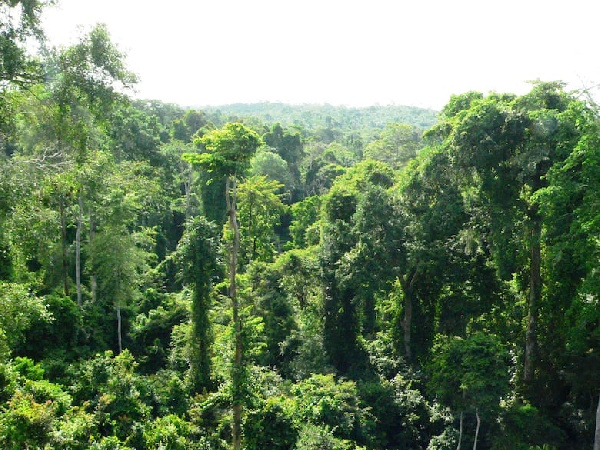
Improper mining and deforestation have waged a quiet war on our nation. They have laid siege not only to our forests but to our water bodies, our food systems, and ultimately our lives. With little resistance in some areas, these destructive practices continue to expand. The trees stand as silent witnesses, their former dominance fading, as ecosystems cry out for protection. Yet, too often, those who should act hesitate.
There is no overstating the danger of inaction. There must be action.
What Can We Do?
As citizens, there is no single or limited response to this crisis. But before charting the way forward, it is important to reflect honestly on what has already been done.
Successive governments under the Fourth Republic have not been entirely negligent. Legal reforms have been introduced, security operations launched, and environmental restoration initiatives promoted. While the effectiveness of these measures remains open to debate, effort has certainly been made.
Traditional leaders have also publicly condemned improper mining and deforestation. Although some individuals face accusations of indirect involvement, many chiefs across the country have spoken firmly against these practices within their jurisdictions. The National and Regional Houses of Chiefs have repeatedly reaffirmed their commitment to ending environmental destruction and have called for stronger collaboration with government.
The media, too, has played a crucial role. Ghanaian journalists have persistently raised awareness, exposed environmental crimes, mobilised public opinion, and provided platforms for national dialogue. Their contribution to this fight cannot be ignored.
In the private sector, several mining and timber companies have implemented Corporate Social Responsibility initiatives, including afforestation and land reclamation projects. While these efforts do not erase the damage done, they demonstrate that some actors recognise their responsibility to contribute to solutions.
No Pointing of Fingers
In a matter this sensitive and complex, endless blame will not save our forests.
Government has acted within its mandate, though not perfectly. Traditional authorities have spoken out, even if enforcement remains challenging. The media has educated and exposed. Parts of industry have responded, albeit unevenly.
The reality is this: environmental destruction thrives not because one group failed entirely, but because collective action has not yet matched the scale of the problem.
Does Destruction Have to Be the End?
So, what then shall we say? If responsibility is shared, should we resign ourselves to inevitability?
I refuse to accept that destruction must be the final chapter.
As someone born and raised in the Western Region of Ghana, I have personally witnessed forests reduced to plains and fertile lands turned barren. I have seen this threat moving steadily closer to our communities, our homes, and our future. Ignoring it will not make it disappear. In today’s Ghana, the consequences of inaction are already visible.
The question remains: does destruction have to be the end?
Introducing a Volunteer-Driven Response
COVERUP MISSIONS LBG is a Ghanaian, volunteer-driven non-governmental organisation established by and for local communities. We believe that if meaningful change is to occur, ordinary citizens must be part of the solution.
Improper mining and deforestation have reached places we never imagined they would. Their impact is no longer distant or abstract. If Ghana is to win this fight, it must be a collective effort.
COVERUP MISSIONS LBG exists to mobilise individuals, raise awareness, promote restoration, and encourage community-led environmental action. This organisation belongs to all of us.
To learn more about our work and how to get involved, visit www.coverupmissions.org. Volunteer, support our initiatives, and contribute ideas that can be adapted and used for greater impact.
The writer is Director, Coverup Missions LBG.
By Ali Braimah Samuel