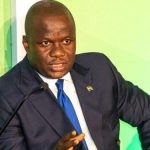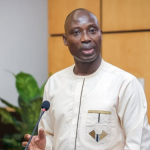
Executive Secretary of the Chamber of Petroleum Consumers (COPEC), Duncan Amoah has once again urged the government to review the many taxes placed on petroleum products.
He emphasised that this appeal is made sincerely and without any ill intent.
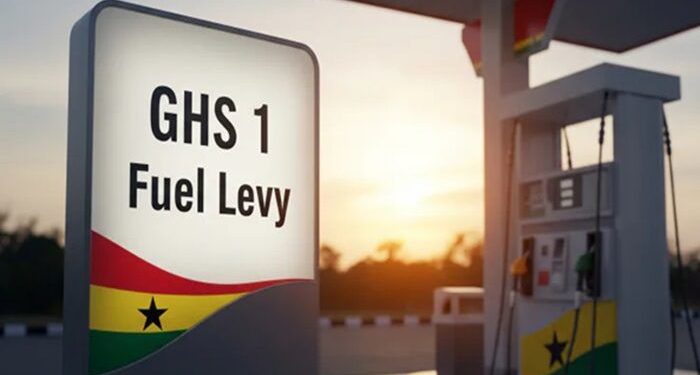
In an interview on March 21 discussing the GHC1 fuel levy, Amoah noted that the continuous increase in global fuel prices is making it increasingly difficult for consumers to cope with the added burden of multiple levies.
“It is a call that we had made that the government should consider lowering the taxes in the face of global spikes in fuel prices, and that is without malice, mischief, or anything. You would want a situation where it is a win-win for everybody. The government cannot continue to pass on every single one of the taxes to the consumer to bear,” he said.
His comments follow renewed debate over the GH₵1 Energy Sector Levy, which the Minority in Parliament has urged the government to repeal, arguing that the debts it was designed to clear have already been settled.
With diesel currently retailing at GH₵15.60 per litre and petrol exceeding GH₵12.40 per litre, critics say the levy now serves only to deepen the financial strain on households.
Amoah had earlier stated in an interview on March 18 that beyond the GH₵1 levy, other charges such as the price stabilisation and recovery levy and the special petroleum tax could also be reviewed.
He explained that while these taxes were initially introduced for specific purposes, such as cushioning premix fuel distribution or offsetting low crude oil prices, they have since become entrenched revenue streams for the government.
He cautioned that if geopolitical tensions in the Gulf persist, consumers may face further price hikes in the coming weeks, making tax relief even more urgent.
“There is a good use for the GH₵1 levy, but we should start preparing to do something about it in earnest,” Amoah added.