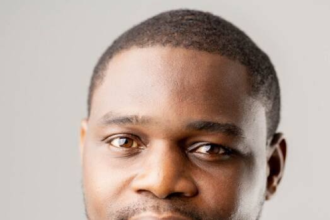
Hair is one of the most deceptively simple yet scientifically powerful forms of forensic trace evidence. In the groundbreaking book “Comb Your Hair – A Unique Forensic Trace Evidence,” Dr. Lawrence Kofi Acheampong and Dr. S. Nwodo elevate hair from a routinely overlooked biological trace into a forensic gold standard for linking people, places, substances and timelines. Drawing from rigorous scientific research including Dr. Acheampong’s ante-mortem and post-mortem forensic hair testing studies, the book demonstrates how hair silently records a person’s biological, chemical and behavioral history.
Hair as a Silent Witness of Crime
The book opens with a compelling scientific and historical foundation, establishing hair as one of the earliest forms of forensic trace evidence. Long before DNA, investigators relied on hair morphology, color, texture and growth patterns to associate suspects with crime scenes. The authors explain how hair grows in phases (anagen, catagen, telogen), meaning that every strand carries a timeline of exposure to drugs, toxins, environments, and even stress. In forensic terms, hair is not just biological matter; it is a chronological record of life events.
Crime Scene Collection and Preservation
One of the strongest contributions of the book lies in its forensic operational guidance. Hair is fragile and easily contaminated, yet it is often found on clothing, bedding, weapons and even victims’ hands. The authors meticulously explain how hair must be collected with sterile tools, packaged in paper containers and sealed with full chain-of-custody documentation. Improper handling can destroy DNA, introduce contaminants or compromise court admissibility, thus turning powerful evidence into useless debris.
Microscopy: The First Layer of Truth
Before DNA, hair undergoes microscopic examination. The book describes how forensic scientists study medullary patterns, cuticle scales, pigmentation and shaft diameter to distinguish human hair from animal hair and to narrow down race, body region and even cosmetic treatment. This morphological profiling remains a critical screening tool, especially in resource limited forensic laboratories.
DNA Analysis from Hair
The authors then move into modern molecular forensics. While hair shafts often lack nuclear DNA, mitochondrial DNA (mtDNA) can be extracted even from rootless hair. This allows forensic scientists to exclude or include suspects, identify victims and link hair to maternal genetic lineages. Case studies in the book demonstrate how hair DNA has solved cold cases and disaster victim identification, despite technical challenges such as degradation and low DNA yield.
Chemical and Toxicological Hair Analysis
Perhaps the most innovative section of the book is the chapter on forensic hair toxicology, based on Dr. Acheampong’s novel research in Ghana. Unlike blood or urine, hair traps chemicals over weeks and months, making it a long-term exposure biomarker. Drugs such as cocaine, cannabis, opioids, tramadol, methamphetamine etc., become embedded in the hair shaft as it grows. The novel Ghanaian study highlighted in the book shows how ante-mortem or post-mortem hair and blood or urine analysis can uncover patterns of substance abuse, poisoning or drug-facilitated crimes that would otherwise go undetected. In forensic medicine, this is revolutionary—it allows investigators to reconstruct behavior before death, not just what happened at the moment of death.
Comparative and Statistical Hair Analysis
Hair evidence becomes powerful when questioned samples are compared with known standards. The book explains how forensic scientists use microscopic, chemical and DNA comparisons supported by statistical models, to evaluate the strength of associations. This ensures that hair evidence is no longer speculative but scientifically quantifiable.
Real-World Case Studies
The authors present cases where hair evidence broke alibis, confirmed contact or exposed drugging and poisoning. These stories reveal hair as a forensic storyteller, capable of rewriting narratives in courtrooms and uncovering hidden truths.
Challenges, Law, and Ethics
The book does not shy away from controversy. It addresses contamination risks, inconclusive results and legal admissibility. It also raises ethical questions: hair contains genetic information, substance-use history and even ancestry. The authors emphasize the need for privacy protection, informed consent and ethical forensic governance.
The Future: AI, Databases and Automation
Emerging technologies such as; automated microscopy, machine learning and forensic hair databases—are transforming hair analysis into a high precision science. The book calls for national and international hair databases to support missing persons identification, disaster victim recovery and criminal investigations.
Training the Next Generation
Finally, the authors advocate for specialized forensic hair examiner training certification programs and collaboration between universities, laboratories and law enforcement. Hair evidence is only as powerful as the expertise behind it.
Conclusion
“Comb Your Hair” is a book based on rigorous novel academic research on ante-mortem and post-mortem forensic hair as a trace evidence. It is a manifesto for trace evidence justice. Dr. Acheampong et al, demonstrate that every strand of hair carries a story of identity, exposure and movement. In an era of rising drug abuse, transnational crime and unexplained deaths, forensic hair analysis offers a scientifically robust, ethically grounded and legally defensible pathway to truth. This book is essential reading for forensic experts, students, pathologists, toxicologists, crime investigators, legal professionals and any curious mind who wish to understand the intersection of how hair is sometimes the smallest trace evidence ,but carries the loudest voice of justice.
By Dr. Lawrence Kofi Acheampong/Dr. S. Nwodo/Rev. Prof Francis Agyemang-Yeboah,Esq.