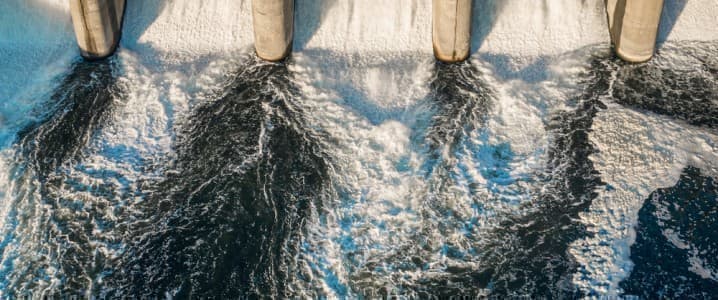
The world’s largest pumped hydro energy storage facility is nearing completion in China. The megaproject will bring China one step closer to its goal of being the world’s first and preeminent electrostate, and will advance the nascent but rapidly growing long-duration energy storage sector.
The storage project being built at the Lianghekou Dam in Western Sichuan plateau will have four units of 300 megawatts (MW) each when completed, making it the largest facility of its kind. The project will house a conventional hydropower plant in addition to a pumped hydro energy storage facility. Pumped hydro works by moving water uphill when excess energy is being generated. When that energy is later needed, the water is released to flow downhill, spinning a turbine to create electricity in the process.
The hydropower plant and the pumped hydro facility will together have a capacity of 4.2 gigawatts (GW), amounting to “the world’s largest hybrid pumped hydro storage system,” according to a recent report from Interesting Engineering. “The pumped hydro facility is designed to absorb green energy from the 7 GW of renewable energy plants being built on the plateau, making it the ‘super power bank’ of the region,” the article goes on to describe.
Pumped hydro is a relatively simple technology with a long history in China. It’s a proven technology with long-term storage potential, making it indispensable in China’s increasingly electrified economy. But the technology also has its downsides. Environmentalists often take a negative view of hydro megaprojects, as dams are extremely disruptive to ecosystems. And hydro systems are vulnerable to climate change, as doubt can severely impact their output – as seen in Sichuan in 2022. But the Chinese government clearly feels that the benefits outweigh the risks.
Even before the addition of this massive energy storage capacity, China has been leading the global energy storage sector for years. The Chinese government has heavily incentivized the sector’s expansion as part of a greater strategy to shore up domestic energy security while also building up Beijing’s dominance as a global clean energy superpower. Being at the forefront of energy storage development and deployment is a key part of the country’s bid to become the world’s first electrostate.
On a global level, the energy storage sector is seeing a meteoric rise, driven in large part by demand from utilities and data centers and the rapid growth of variable energies including wind and solar. Soaring rates of energy demand and increasingly complex energy flows are placing unprecedented strain on global energy grids and creating volatility in energy markets. Energy storage is a critical stopgap to fixing these issues and providing backup for greater energy security and grid resilience.
As a result, energy storage is gearing up to be “clean energy’s next trillion-dollar business.” While the current energy storage landscape is dominated by lithium-ion batteries, this technology has some major drawbacks, including geopolitically fraught value chains (also dominated by China) and short energy storage duration. While lithium-ion batteries can hold onto energy for a matter of hours, balancing energy flows from wind and solar will require storage systems that can hold onto excess energy for full days and even full seasons.
Long-term energy storage, such as pumped hydro, will therefore be increasingly indispensable in the coming years as the global clean energy transition continues to pick up steam. Despite major setbacks in clean energy policy in the United States, the world’s largest economy, solar and wind energy are continuing to go gangbusters on a global level as renewables have simply become too cheap to fail.
And even in the United States, the energy storage sector is continuing to show strong performance “despite policy headwinds”. Grid battery installations hit a record high in 2025. However, far greater levels of investing and policy support will be needed if the United States has any hope of competing with China, where energy storage innovation, development, and deployment are concerned.