

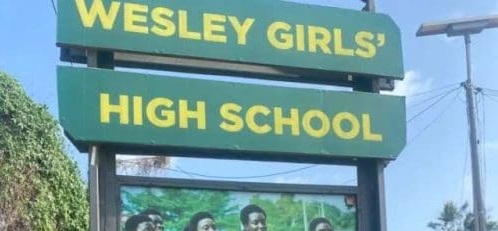
Case of Shafic Osman vs Weygeyhey: Nation’s test of tolerance, diversity, inclusion
Ghana is widely known as a mosaic of religious, ethnic and cultural diversity where Muslims, Christians, and people of other faiths have long lived together in peace.
The lawsuit between Mr Shafic Osman and the Wesley Girls’ High School has transcended the legal arena to become a profound moral and social reckoning for Ghana.
At its heart, the case is about a father’s desire for his daughter to have the freedom to practice her faith, pitted against an educational institution’s long-standing rules.
The echoes it has sent through the nation speak to a much larger question.
In our proudly multi-faith, pluralistic society, how do we balance tradition with the imperatives of tolerance, respect, and inclusion?
Educational institutions must never become a battleground for faith, but rather a space for learning, growth, and development.
When young people are told they cannot practice their religion because of where they study, we risk breeding resentment, alienation, and eroding social cohesion.
Clash of faiths, not just policies
It is vital to approach this issue with empathy for all sides.
Comsys
Wesley Girls’, like many mission schools in Ghana, was founded on a specific Christian ethos.
Preserving this character and the school’s legitimate concern for the well-being of every student in its care are important positions not to dismiss.
Conversely, the wish of a Muslim student to observe her faith is not an act of rebellion but a sign of deep devotion.
This is not a zero-sum game where one side must lose for the other to win.
It is a complex social puzzle that demands a solution rooted in our national values.
True greatness and strength are not demonstrated by uniformity but by a nation’s ability to embrace its beautiful diversity.
Osagyefo Dr Kwame Nkrumah and other prominent freedom fighters envisioned a state where all faiths could thrive. This vision is what is being tested today.
From co-existence to active inclusion
Settling the case out of court provides a quiet resolution but misses the opportunity for a transformative national policy framework that promotes understanding and compassion. Here is what we must champion:
• Develop a National Framework for Mission schools: The Ministry of Education, in consultation with religious bodies, the Ghana Education Service, and other stakeholders, must develop clear, national guidelines for spiritual practices in mission schools.
This framework should protect the school’s founding ethos while legally safeguarding the right to reasonable religious accommodation for minority students.
Schools should not only teach English, Maths and Science, but also empathy, compassion, and mutual respect.
• Move from prohibition to managed accommodation: A blanket ban on fasting is the easiest, but least imaginative solution.
Schools could create a programme that would involve parental consent, medical clearance, and a support system involving housemistresses and dining hall staff to provide meals and pre-dawn (suhoor) and at the time of breaking the fast (iftar).
This turns a problem into an exercise in care and respect.
• Education as a tool for empathy: The curriculum in our schools must actively teach religious tolerance.
Students should not only learn to tolerate the beliefs of others, but also to understand and respect them.
A Wesley Girls’ student who understands why her Muslim classmate fasts is building a more cohesive Ghana than one who simply sees a broken rule.
• Leadership from the top: Religious leaders from all faiths must step forward and model the dialogue we need.
The leadership of the Christian and Islamic faiths in Ghana have a historic opportunity to co-draft a model of co-existence.
This is a moment for bridge-building, not trench-digging.
Ghana for all Ghanaians
The Wesley Girls’ case is a microcosm of Ghana. It reflects our struggles with tradition, our anxieties about change, and our ongoing journey to build a nation where every child, regardless of their faith, feels they truly belong.
Long-standing traditions and legacy practices may reflect a school’s heritage, but when they conflict with constitutional rights or social inclusiveness, they must be re-examined.\Upholding tradition must never come at the cost of justice or equality.
The intolerance exhibited by some schools could potentially affect national unity if left unchecked.
Shafic vs Wesley Girls should be the catalyst that pushes us from passive co-existence to active inclusion.
Let us choose the path of dialogue and of a deep, abiding respect for the tapestry of beliefs that make us who we are.
Let us seize this moment to reaffirm that Ghana is a pluralistic society where every faith, every identity, and everyone matters.
Cultivating a culture that consciously promotes diversity and inclusion, and n