


Australian mushroom murderer appeals against convictions
e for at least 33 years. That means Patterson will be in her 80s before she can apply for parole.
Now she will have the chance to challenge the jury’s conviction.
The 28-day window to lodge an appeal expired on 6 October, however a new procedural rule, giving legal teams an extension without needing to explain why, gave her lawyers more time to lodge the paperwork.
Last month, prosecutors filed their own appeal against the sentencing, saying it was “manifestly inadequate”.

There was intense public interest in the toxic mushroom case, and a media frenzy swirled around the small courtroom in the country town of Morwell during the trial.
Over nine weeks of testimony, the jury heard evidence suggesting Patterson had foraged death cap mushrooms in nearby towns and lured her victims to the fatal meal under the false pretence that she had cancer – before trying to conceal her crimes by lying to police and disposing of evidence.
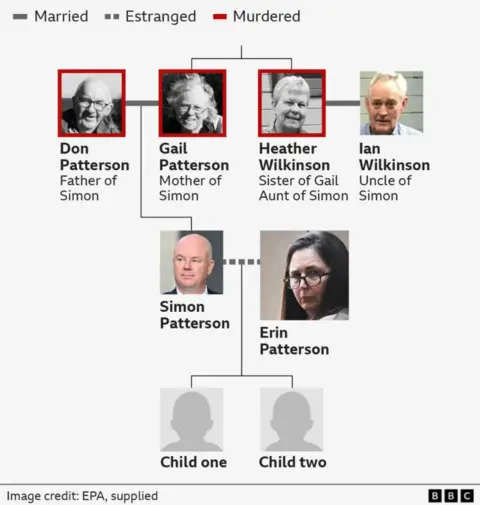
Her estranged husband, Simon Patterson, had also been invited to the lunch but cancelled at the last minute, in part due to his belief that his wife had been trying to poison him for years.
Following the trial, it was revealed that he had become so violently ill after eating several of her meals in the past that he had been in a coma, a large part of his bowel had been surgically removed, and his family had been told to say goodbye to him twice as he was not expected to survive.
Patterson is currently in a female maximum security prison – the Dame Phyllis Frost Centre in Melbourne. During her sentencing, Justice Christopher Beale told the court she spent 22 hours a day in her cell, with no contact with other inmates due to her “major offender status”.
The judge noted that Patterson’s reputation and the huge media and public interest in the case meant she would likely “remain a notorious prisoner for many years to come, and, as such, remain at significant risk from other prisoners”.