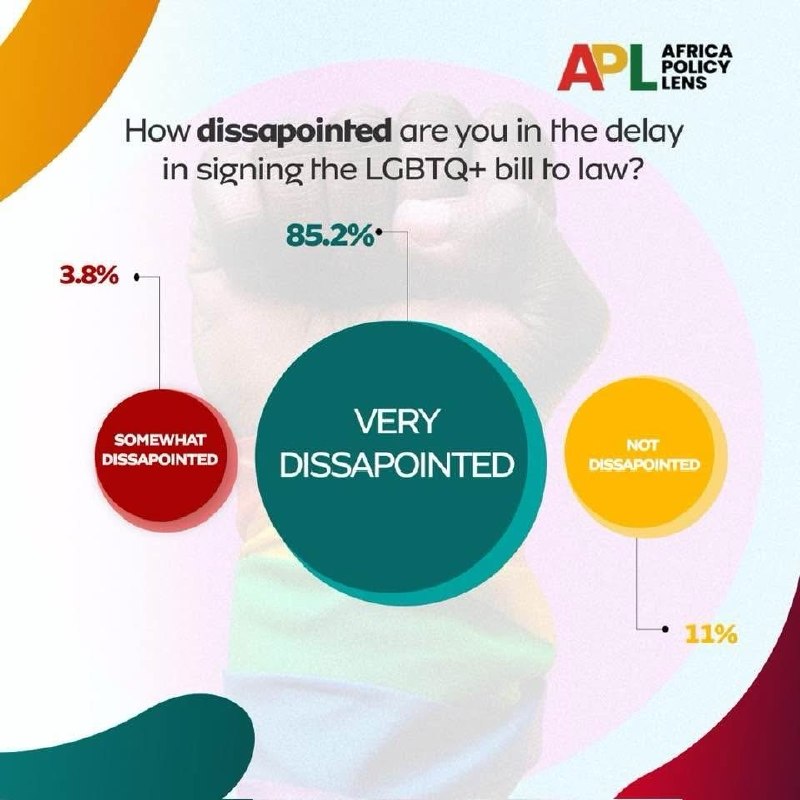
A new survey by African Policy Lens (APL) has revealed widespread public dissatisfaction with the government’s stance on LGBTQ+ issues in Ghana, with 85% of respondents expressing disappointment in the current position.
The findings come in the wake of recent comments by President John Dramani Mahama, who indicated that LGBTQ+ matters are “not a priority” for his administration at this time.
His remarks, intended to signal a focus on pressing economic and governance concerns, appear to have struck a chord with many Ghanaians, but not necessarily in the way the government may have expected.
According to the APL survey, a significant majority of citizens believe the government should take a clearer and more decisive stance on LGBTQ+ issues, rather than downplaying their importance.
While public opinion in Ghana has historically leaned conservative on matters relating to LGBTQ+ rights, the survey suggests that citizens are increasingly dissatisfied with what they perceive as a lack of leadership and clarity from this government.
The findings reflect a broader public expectation of government responsiveness, even on socially sensitive topics. For many respondents, they think the government is reneging on its promises made during the 2024 election campaign.
In the heat of the 2024 election campaign, the current president, then flagbearer of the opposition National Democratic Congress (NDC), made promises to the clergy and the general public of his willingness to sign the Anti-LGBTQ+ bill when elected as president.
President Mahama’s assertion that LGBTQ+ concerns are not a priority may have been influenced by Ghana’s ongoing economic challenges, high unemployment, high social vices and increased tax burden on Ghanaians.
However, the public argues that sidelining the issue altogether risks creating the impression of avoidance and a failure of his campaign promise to Ghanaians.
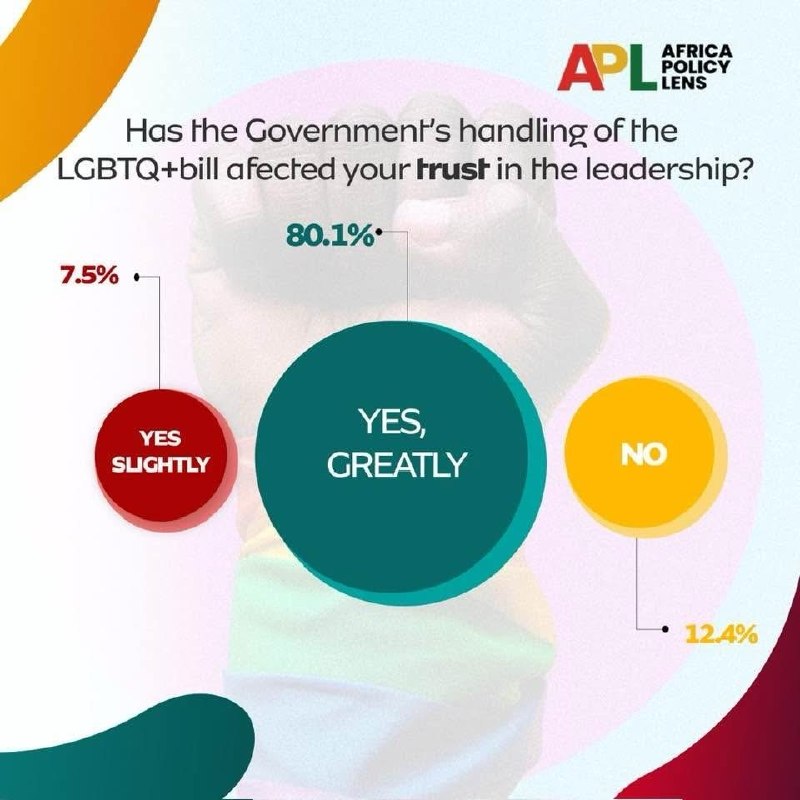
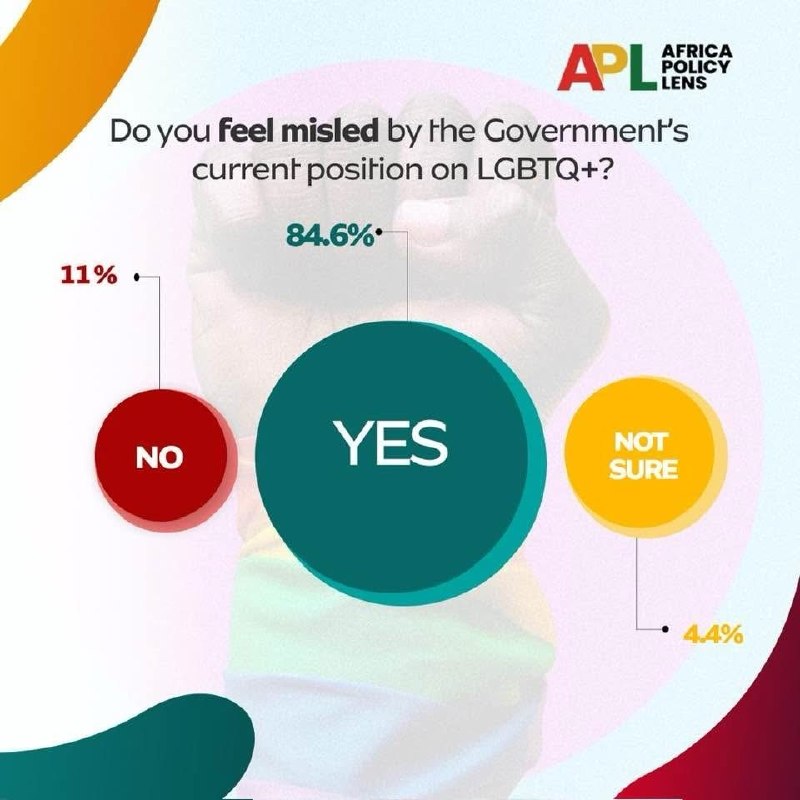
The research also shows that 84.6% of Ghanaians feel misled by the government’s current position on LGBTQ+, while 80% of the respondents believe the government’s handling of the LGBTQ+ bill has affected their trust in the leadership.
As the conversation continues, the APL findings show that 86.4% of the respondents want the bill to be signed into law now.
Whether the government chooses to maintain its current position or recalibrate its approach, the issue of LGBTQ+ rights, priority or not, remains firmly on the national agenda.