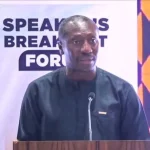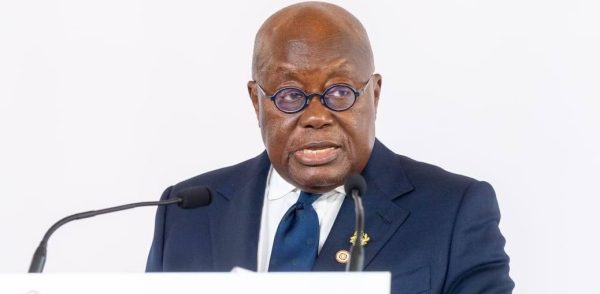
Former President Nana Addo Dankwa Akufo-Addo has renewed calls for the establishment of an African-led credit rating agency, arguing that global rating systems are biased against African nations and hinder their access to affordable development financing.
Speaking at the 32nd Annual Meetings of the African Export-Import Bank (Afreximbank) in Abuja, Nigeria, Akufo-Addo applauded the bank for supporting Ghana when international markets turned their backs during the COVID-19 crisis.
“When Ghana was locked out of the international market, Afreximbank stepped in with $750 million in 2022. While others turned away, Professor Oramah and his team stood with us. For that, Ghanaians and I, as former President will always be grateful,” he said.
Beyond praise, Akufo-Addo issued a sharp critique of the global financial architecture.
He decried the double standards in credit ratings, noting that countries with similar economic profiles receive more favorable ratings simply because they aren’t in Africa.
“It is unjust. We are forced to pay higher risk premiums based on biased assessments,” he said.
His remarks follow Fitch’s recent downgrade of Afreximbank’s credit rating, citing risks linked to Ghana and Zambia’s debt restructuring plans.
Ghana, however, maintains that Afreximbank should be treated as a commercial creditor, not as a multilateral development bank—under the IMF’s Common Framework.
Akufo-Addo argued that Africa’s development depends on taking control of its financial future.
“We cannot build our continent when the instruments of finance are in foreign hands,” he said, urging stronger support for homegrown institutions like Afreximbank and the African Development Bank.
He also reiterated his proposal—first made at an African Union summit that African nations should deposit at least 30% of their sovereign reserves with African financial institutions.
“These reserves are earning next to nothing in foreign banks, while our countries struggle to fund essential infrastructure,” he noted.
Afreximbank’s long-standing presence in Ghana further underscores its importance.
The bank has disbursed over $2 billion to support the country’s trade, energy, and financial sectors including support for cocoa loans, foreign exchange stability, and emergency power sector financing during the 2014 energy crisis.
While Ghana’s ongoing debt negotiations continue to spark debate about the treatment of Afreximbank debt, Akufo-Addo’s broader message was one of economic sovereignty and continental solidarity.
“If America says ‘America First,’ then Africa must say ‘Africa First.’ We must believe in ourselves and invest in our own future,” he declared.