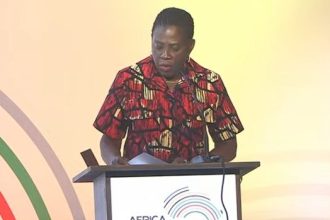
The Executive Chairman of the McDan Group of Companies, Mr Daniel McKorley, has called for urgent and practical reforms to empower small and medium-sized enterprises (SMEs), women and young entrepreneurs if Africa’s single market under the African Continental Free Trade Area (AfCFTA) is to deliver meaningful economic transformation.
Speaking at the 2026 Africa Prosperity Dialogues, Mr McKorley said the continent stood at a pivotal moment, with a rapidly growing population, a youthful workforce and expanding innovation hubs, yet continued to trade more with external partners than within its own borders.
“Africa stands at a defining moment,” he said, noting that while the continent was home to 1.4 billion people and would account for one in four people globally by 2050, intra African trade still accounted for only 15 to 18 per cent of total trade. He contrasted this with levels of nearly 60 per cent in Europe and Asia, describing the imbalance as “like having a massive family but buying from strangers instead of trading with each other”.
Mr McKorley said the solution lay in deliberately empowering SMEs, women and youth, whom he described as central, not peripheral, to Africa’s economic future. He noted that small and medium sized enterprises accounted for more than 80 per cent of businesses across the continent and provided the majority of jobs.
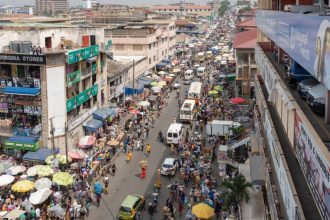
However, he acknowledged that significant barriers continued to constrain cross border trade for African businesses. He cited high transport costs, border delays, inconsistent customs procedures and fragmented regulatory systems as obstacles that made intra African trade expensive and unpredictable.
“Many African entrepreneurs are still trading across borders that exist more in systems than on maps,” he said, adding that he had encountered cases where moving goods within Africa cost more than shipping them outside the continent. “That is not a market problem. That is a systems problem.”
He argued that implementing AfCFTA required making trade practical for SMEs through digital customs systems, one stop border posts and mutual recognition of standards. Mr McKorley criticised the lack of harmonisation across markets, saying Africa still had “what feels like 54 different ways of saying ‘this product is safe’”.
“Harmonisation is not a technical detail. It is the difference between a small business scaling or shutting down,” he said.
The business leader also underscored the importance of infrastructure in supporting trade, stating that speeches alone would not move goods across borders. “Trade does not move on speeches. It moves on ships, trucks, ports, rail, and logistics networks,” he said.
He linked this to efforts by his group to revive the Black Star Line, explaining that strengthening African owned shipping capacity was aimed at reducing the cost and complexity of moving goods within the continent. “If we want SMEs to trade, we must lower the physical and financial cost of movement,” he added.
Turning to women entrepreneurs, Mr McKorley said although women owned about a third of formal businesses in Africa and far more in the informal sector, they continued to face disproportionate barriers to finance. He described this as both a social and economic challenge.
“This is not only a gender issue. It is an economic inefficiency,” he said, citing experiences from interest free loan initiatives that had enabled women to build sustainable enterprises. “When a woman’s enterprise succeeds, families are strengthened, communities benefit, and local economies expand.”
He described empowering women entrepreneurs as “one of the fastest ways to multiply Africa’s growth”.
On youth unemployment, Mr McKorley warned that Africa could not rely solely on job creation within the formal sector, given the millions of young people entering the labour market each year. He argued that entrepreneurship must form a central part of the solution.
“The answer cannot only be employment. It must also be enterprise,” he said, noting that young Africans possessed talent and innovation but lacked scale. He stressed the need for access to markets, mentorship, patient capital and strong business networks to help youth led enterprises grow beyond survival level.
Mr McKorley concluded by calling for stronger collaboration among governments, investors, financial institutions and the private sector to translate AfCFTA into tangible outcomes. He urged governments to remove trade barriers and simplify regulations, investors to design financial products suited to SMEs and startups, and large companies to integrate smaller firms into their supply chains.
“Ecosystems build industries, not isolated successes,” he said, adding that if implemented effectively, Africa’s single market would generate jobs, deepen industrialisation and keep wealth circulating within the continent.
“If we get this right, a small agro processor in Tamale, a fashion entrepreneur in Nairobi, or a tech startup in Kigali will not think of themselves as local businesses. They will think and operate as African businesses,” he said.
Describing the moment as a transition “from potential to production, from conversation to commerce”, Mr McKorley urged African leaders and businesses to innovate, collaborate and trade more deliberately within the continent.