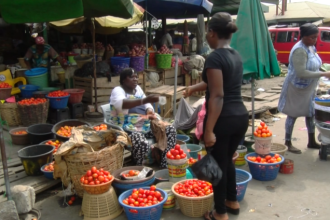
The recent deadly attack on Ghanaian tomato traders in Burkina Faso is a deeply concerning development for regional commerce and serves as a reminder of how interconnected and at times, fragile our food systems can be.
When the Minister for Trade, Agribusiness and Industry, Hon. Elizabeth Ofosu-Adjare, called for calm and stability to protect cross-border trade, it was a timely and reassuring appeal. Beyond restoring calm, it encourages thoughtful reflection on how our systems can be strengthened over the long term, with the aim of reducing vulnerability to disruptions that may lie beyond our foresight or control.
Tomatoes capture a long-standing contradiction in Ghanaian agriculture. In peak seasons, farmers harvest abundantly, prices collapse, and produce goes to waste. A few months later, the country leans heavily on imports to meet everyday demand.
Each time borders tighten or insecurity flares, farmers, traders, processors, and consumers absorb the losses. The events in Burkina Faso should be read as a warning signal, not a one-off disruption.
The government’s renewed emphasis on year-round tomato production is a welcome and positive development. Investments in expanded irrigation, protected cultivation such as greenhouses and net houses, and climate-smart practices have strong potential to reduce seasonal fluctuations and improve supply stability.
At the same time, this effort presents an opportunity to look more broadly at the entire value chain. Alongside increasing production volumes, attention to areas such as seed selection, post-harvest handling, access to finance, logistics, and processing can help ensure that these gains translate into a more resilient and well-functioning tomato system.
This is why the policy direction articulated in the tomato value-chain work associated with the Deputy Minister for Food and Agriculture, Hon. John Setor Dumelo, deserves close attention. The central message is familiar to practitioners across the sector: Ghana produces tomatoes, but often not the types required by processors. Harvests are substantial, yet losses between farm and factory are unacceptably high. Trading occurs without reliable off-take, and processing capacity exists, but it operates intermittently because supply is inconsistent and contracts are weak.
At the heart of the problem, there is a mismatch between varieties and purpose. Many tomatoes grown locally perform well in fresh markets but fall short for industrial use due to low solid content, uneven sizing and short shelf life. Without a deliberate varietal strategy aligned to processing needs, factories will continue to idle while imports fill the shelves.
Compounding this is the quiet drain of post-harvest losses. Poor handling, inadequate packaging, and weak transport systems strip value from the crop long before it reaches consumers or processors. Cutting these losses is one of the fastest ways to expand effective supply without expanding acreage.
Processing remains another fault line. Plants require steady year-round volumes of quality tomatoes. Farmers require assured markets, fair prices, and prompt payment. Where trust, enforceable contracts, and financing are missing, both sides retreat, investment stalls, and imports become the default solution. These challenges are amplified by coordination gaps across the value chain where inputs, extension, credit, aggregation and off-take operate in silos, shifting risk onto those least able to bear it.
The path forward is therefore not mysterious, but it is demanding. Ghana must align seed systems with market and industrial demand, promote protected and irrigated production clusters near processing hubs and make off-take agreements bankable so farmers and processors can plan with confidence. Practical investments in crates, packhouses and modest cold-chain solutions can rapidly reduce losses. Patient blended finance can help crowd in private capital where uncertainty has discouraged scale. While regional trade remains important, resilience depends on the ability to feed and process locally first and trade from a position of strength rather than dependence.
The violence in Burkina Faso is painful and unsettling. Yet if it compels Ghana to confront the fundamentals of its tomato economy and act decisively, it could become a turning point from vulnerability to resilience, imports to industry and reaction to strategy. Year-round production may capture the headlines, but value-chain coordination will determine the outcome. This is the moment to make that shift.
About the Author:
Dr Mavis Owureku-Asare is a food scientist with specialized expertise in tomato processing technologies, particularly in value addition and post-harvest loss reduction.