
Former Deputy Minister of Trade and Industry, Michael Okyere Baafi, has denied allegations of corruption connected to the One District One Factory (1D1F) programme.
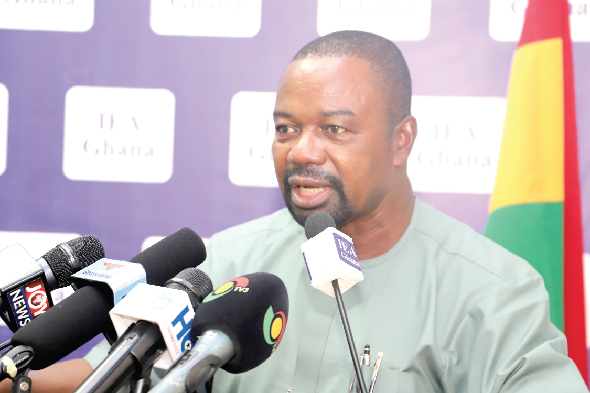
Speaking to journalists in Koforidua, Mr. Okyere Baafi questioned the accuracy and timing of an audit report that claims there were financial irregularities related to the programme.
He said the claims were misleading and not transparent because the full audit report has not been made public.
He called on the government to release the entire document so that the public can review it.
Mr. Okyere Baafi, who is also the Member of Parliament for New Juaben South Constituency and the Ranking Member on Parliament’s Trade and Industry Committee, explained that the structure of the 1D1F programme did not allow government officials to misuse funds in the way being suggested.
According to him, the government’s role in the programme was only to subsidise 50 percent of the interest on loans that commercial banks would give to companies participating in the initiative. However, he said the loans were never actually given to the companies.
Because no loans were disbursed, he explained, there was no interest for the government to pay or subsidise.
“There was no loan advanced, so there was no interest to pay,” he said, stressing that claims of misuse of public funds were inaccurate.
Mr. Okyere Baafi also criticised the audit process, saying the fact that the report has not been made available to the public makes it difficult to trust its findings.
“The auditors didn’t do well… there’s no report; we don’t have access to it,” he said.
He further accused the current government of trying to create the impression that the previous administration had mismanaged public funds.
“We should not create the impression that the old government mismanaged funds,” he added.
His comments follow statements made by the Ministry of Finance in Parliament on Tuesday, March 10.
The statement was delivered on behalf of Finance Minister Cassiel Ato Baah Forson by Deputy Finance Minister Thomas Ampem Nyarko.
According to the ministry, public claims worth GH¢68.7 billion were submitted for auditing. Out of this amount, GH¢45.4 billion was approved for payment after verification.
However, GH¢8.1 billion in claims were rejected due to problems such as lack of proper documents, duplicated claims, inflated amounts, and payments requested for projects that were reportedly not completed.
The Deputy Finance Minister also told Parliament that GH¢13.2 billion worth of claims have been set aside for further investigation because of serious concerns raised during the audit.
He explained that the audit found several weaknesses in the system. These weaknesses allowed issues such as fake claims, reused invoices, forged store receipt documents, and possible collaboration between contractors and some public officials.
In response to these problems, the government has introduced what it calls a “triple-lock” accountability system. This new system will require strict checks and verification before any public payments are approved to help prevent financial irregularities in the future.