
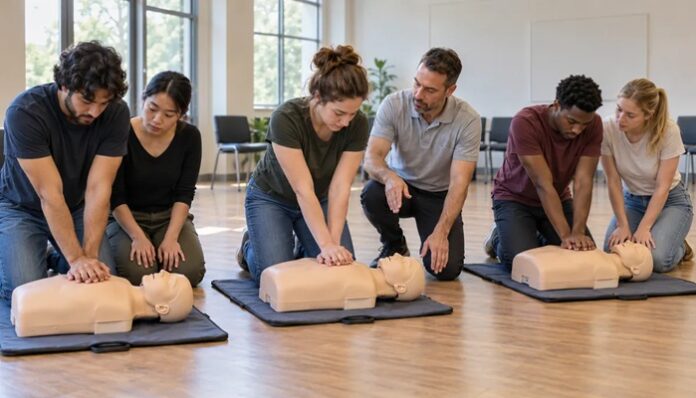
I thought it would be easy. I’d seen it on TV a hundred times. Someone collapses, someone kneels, pushes on their chest, and the music swells.
Then I was actually there, on a gym-mat floor in a room full of strangers, staring at a plastic torso. And my hands started to shake. Just enough that I noticed, and hoped nobody else did.
Nobody warned me about that. So if you’re thinking about getting CPR certified with Coast2Coast in Newmarket or anywhere else, here’s what my first class really felt like, and why the shaky hands are kind of the point.
The First Ten Minutes Were Weird
I didn’t know where to sit. Mannequins ns lay in a row on the floor like they were waiting for something. The instructor was friendly, but everyone avoided eye contact. Some people needed the course for nursing programs or new jobs. I just felt I should know this stuff by now. We were all, I’m sure, wondering if we’d look stupid.
That faded fast. Once my hands were on the mannequin’s chest, there was no room left to feel self-conscious.
Compressions Are Harder Than They Look
Kneeling for CPR is physical. Knees pressed into the mat, I locked my elbows, stacked my hands, and got my shoulders over them. It felt wrong, then less wrong, then right. This kind of learning lives in your hands and arms, not your head.
Adult guidance is to push at least 5 cm (2 inches) deep at 100 to 120 compressions per minute, letting the chest come all the way back up each time. That’s fast, and that’s deep. Within a minute, I was sweating, and my arms were burning. The instructor suggested matching a song’s beat. I counted out loud and lost count. Apparently that’s normal.
Many training mannequins click when you push deep enough (some use lights instead). My first click felt like a tiny victory. When it went silent, I pushed harder and learned that “deep enough” is deeper than you think. That little sound taught me more than any diagram could.
Then came the pattern trained rescuers use: 30 compressions, 2 breaths, repeat. I fumbled my first transition. Almost everyone does.
The AED Talked Me Through It
The AED trainer, a practice version of the defibrillators I’d walked past in malls, gyms, and airports, started talking the moment I opened it. Place the pads. Don’t touch the patient. I didn’t have to memorize everything. It’s built to guide someone nervous, rushed, and scared. Someone like me.
When It Stopped Feeling Like Practice
Mid-compression, it hit me. This could be my roommate. My mom. My dad on a hot day at the cottage. A stranger crumpled near a concert stage while everyone else records them on their phones. My hands shook all over again, but I paid much closer attention.
According to the Heart and Stroke Foundation, an estimated 60,000 out-of-hospital cardiac arrests happen in Canada every year, and only about one in 10 people survive. CPR and an AED can double someone’s chance of survival, and every minute without them, survival chances drop by about 10 percent. Those first minutes belong to whoever’s closest. A friend, a co-worker, a passerby. Maybe me.
Scared of getting it wrong? In Ontario, the Good Samaritan Act, 2001 protects people who give emergency first aid in good faith. Not trained? Hands-only CPR is still an option: call 911, push hard and fast in the center of the chest, and get an AED.
What I’d Tell First-Timers
Wear comfy clothes you can kneel in, bring water, ask the questions you’re embarrassed to ask, and expect to be bad at first. Certificates are typically valid for three years, so set a renewal reminder. Browsing Coast2Coast First Aid’s CPR courses helped me compare formats, including blended options where the theory is done online.
I left with sore arms, feeling a little taller. I notice AEDs everywhere now and sometimes rehearse the steps in my head. That’s not anxiety. It’s readiness.
I’ve forgotten the instructor’s name and who knelt beside me. But I remember how my hands felt, the click, and the moment it stopped being a drill.
If you’re near Bayview Avenue and Davis Drive, the Southlake Regional Health Center area, or the surrounding area, Coast2Coast First Aid & Aquatics offers CPR and first aid training there.