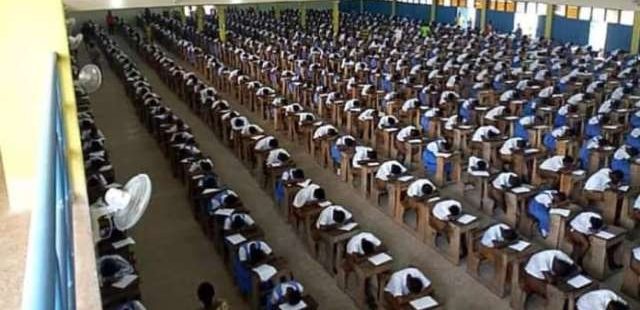
This year’s Computerised School Placement has once again left tears at the GNAT Hall.
A couple of days ago on TV3, a father interviewed at the resolution centre said he had come to change his daughter’s school — not because she failed, but because she was crying every day, saying she does not like the school the computer had placed her in.
In the same report, another mother lamented why two of her children, with similar aggregates, could not get posted to the same school.
These stories repeat every year, but they reveal a deeper truth: the computer is not necessarily unfair, but it is unexplained — and where explanation fails, exploitation thrives.
From explanations I gathered, plus the guidance given to me by my ward’s teachers when I was choosing schools for him, I learned what many parents appear to have been missing the point that “not all Grade 1s are equal”.
In BECE, 75 per cent can be Grade 1, 80 per cent can be Grade 1, and 90 per cent can be Grade 1.
All appear as Aggregate 6 on the result slip. But when all three choose a Category A school like PRESEC or Mawuli, the computer ranks them by their raw scores.
The child with 90 per cent is considered first, then 80 per cent, then 75 per cent.
This is explained to some parents at the selection stage.
Some listen and balance their choices across Category A, B and C.
Some refuse and insist on only Category A schools for prestige.
The result is what we experience after the computer has done its posting — “not placed” or placed in a school that is not a child’s choice.
But there is a darker side I have also learned.
Corruption that feeds on ignorance
In some schools, parents allege that some teachers collect money from ignorant parents and assure them of their choices.
“Pay and I will make sure he gets PRESEC,” a parent told me.
Peugeot Ghana
The parent pays, the child still gets “not placed,” and the teacher is nowhere to be found.
In other cases, there are persistent allegations, though yet to be proven, that money is paid to some school authorities so that a deserving student may be unduly rejected to create space for a protocol candidate.
Alleged, though, the smoke is too much to ignore.
When placement is not explained, parents begin to believe the computer is rigged.
This is what happens when a system operates in darkness.
And GES fails
I can state on record: GES has never done sustained public education on the CSSPS— in local languages.
When was the last time you heard a GES jingle on Volta Star Radio in Ewe explaining that 75 per cent Grade 1 and 90 per cent Grade 1 are not the same to the computer?
When was the last time you saw a GES officer on an Accra-based TV station featuring on the News in Ewe, explaining raw-score ranking?Business news reports
We do all education in English on national TV, then expect a farmer in Kpedze who cannot read English to understand why his son, with aggregate 16, did not get Mawuli. It is not possible.
If the Electoral Commission can educate voters in Ewe, Twi, Dagbani and Ga about voting, why can’t GES educate parents in those languages about school selection?
What Must Be Done
We don’t need a new system. We need to fix this one with transparency.
• Public education in local languages:
GES must, from March every year, run radio jingles and community durbars in local languages. Simple message: “Grade 1 no be Grade 1. Computer dey look your raw score.”
• Enforce guided, balanced selection:
The CSSPS portal must be programmed to reject six Category A choices.
Every candidate must choose at least two Category B and one Category C school.
The portal must also warn parents: “Your score has a low chance in this school; consider alternative.”
• Criminalise, publish protocol:
Any person who collects money to ensure placement must be sanctioned.
And if protocol placements must exist, publish them — how many slots per school, who authorised them.
Secrecy breeds corruption. Free SHS promised access.
CSSPS must deliver fairness and trust.
The computer is doing its job. It is our job to make parents understand its job, and to close the dark corners where exploitation thrives.
The writer is a teacher/public relations advocate/football coach.
GES officer on an Accra-based TV station featuring on the News in Ewe, explaining raw-score ranking?Business news reports
We do all education in English on national TV, then expect a farmer in Kpedze who cannot read English to understand why his son, with aggregate 16, did not get Mawuli. It is not possible.
If the Electoral Commission can educate voters in Ewe, Twi, Dagbani and Ga about voting, why can’t GES educate parents in those languages about school selection?
What Must Be Done
We don’t need a new system.
We need to fix this one with transparency.
• Public education in local languages:
GES must, from March every year, run radio jingles and community durbars in local languages. Simple message: “Grade 1 no be Grade 1. Computer dey look your raw score.”
• Enforce guided, balanced selection:
The CSSPS portal must be programmed to reject six Category A choices.
Every candidate must choose at least two Category B and one Category C school.
The portal must also warn parents: “Your score has a low chance in this school; consider alternative.”
• Criminalise, publish protocol:
Any person who collects money to ensure placement must be sanctioned.
And if protocol placements must exist, publish them — how many slots per school, who authorised them.
Secrecy breeds corruption
Free SHS promised access. CSSPS must deliver fairness and trust.
The computer is doing its job.
It is our job to make parents understand its job, and to close the dark corners where exploitation thrives.