There comes a time in the life of every nation when it must stop defending a system simply because it has existed for a long time.
For Ghana, that time has come.
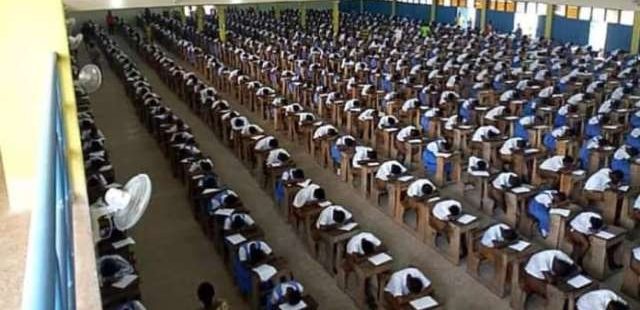
The country’s basic and secondary education system has become excessively obsessed with examinations, grades, aggregates, school categories and placement.
Every year, hundreds of thousands of young people are pushed through the same cycle.
Write the Basic Education Certificate Examination.
Wait for the results.
Select schools.
Pray for placement.
Fight over Category A schools.
Discover more
Live Radio Streaming
Local News
Newspapers
Accept Category B or C when Category A does not work.
Then spend three years preparing for another major examination — the West African Senior School Certificate Examination.
After that, compete again for university admission.
And we call this education.
I do not.
I call it an examination pipeline.
And Ghana needs to have the courage to dismantle it.
SCRAP THE BECE. SCRAP THE WASSCE. START AGAIN.
My position is straightforward:
The BECE and WASSCE, in their current high-stakes forms, should be scrapped.
Not renamed.
Not cosmetically reformed.
Not subjected to another committee review.
Not given another grading formula.
Scrapped.
And replaced with a modern assessment system that measures what children actually know, what they can do, what they are capable of learning and what pathway best suits their abilities.
Because if the objective of education is to develop human beings, then our assessment system should not be designed primarily to sort them into winners and losers.
What exactly are we achieving with BECE?
Consider what happens after a child writes the BECE.
The child does not simply graduate from basic education and move smoothly into secondary education.
The child enters another competition.
The current CSSPS system requires candidates to make choices across school categories. Under the 2026 guidelines, candidates can select up to two Category A schools, up to three Category B schools and additional Category C choices. (CSSPS)
Discover more
investments
Entertainment News Updates
Political Analysis Reports
And this is where the absurdity begins.
We have created a system in which the letters A, B and C have become a social ranking of children and schools.
Category A.
Category B.
Category C.
Everybody understands what these letters are increasingly perceived to mean.
A is the “best.”
B is the next level.
C is what many people regard as the option you settle for when you cannot get what you wanted.
But who created this mentality?
We did.
And government policy has helped institutionalise it.
Instead of asking why every public senior high school cannot provide a comparable standard of education, we have created a competition for a limited number of schools and then designed a computerised system to distribute disappointment.
That is not educational transformation.
The placement crisis is telling us something
The latest placement exercise should force the country to pause.
Reports indicate that roughly 50,000 BECE candidates failed to qualify for SHS placement because they did not meet the required English or Mathematics threshold. (Facebook)
Think about that number.
These are not numbers on a spreadsheet.
They are children.
Fifty thousand young people.
Behind every candidate is a mother, a father, a guardian, a teacher and a family that has invested years of hope in that child’s education.
Yet our response is essentially:
You failed the required subjects, so you did not qualify.
Then what?
Where is the structured second chance?
Where is the intensive remedial pathway?
Where is the alternative educational route?
Where is the system designed to identify why the child failed and help the child overcome the problem?
Instead, we have built an education system where one examination can determine whether a child progresses to the next stage.
That is too much power to give to one examination.
And then comes WASSCE
Suppose the child survives BECE and enters SHS.
The examination culture does not end.
It becomes worse.
For three years, the student is told that another examination is waiting.
WASSCE.
Three years of schooling eventually become condensed into examination performance.
Then we publish league tables.
We compare schools.
We compare regions.
We compare candidates.
We celebrate the highest-performing schools.
We shame the lowest-performing ones.
And once again, the system asks:
Who passed?
But I want to ask a different question:
What did they learn?
There is a difference.
A student can learn how to pass an examination without necessarily developing the intellectual, practical, social and professional competencies required to succeed in life.
The WASSCE culture has become too powerful
WASSCE was created as an assessment mechanism.
But it has gradually become something much larger.
It determines university opportunities.
It determines public perception of schools.
It determines whether a student is labelled academically successful.
It influences parental decisions.
It influences school reputations.
It influences employment conversations.
And it reinforces the idea that academic performance in a standardised examination is the most important indicator of a young person’s potential.
That is a dangerous philosophy.
A child is more than an aggregate.
A child is more than a grade.
A child is more than a WASSCE certificate.
We are producing examination survivors
Our education system should be producing thinkers.
Problem-solvers.
Researchers.
Entrepreneurs.
Technicians.
Scientists.
Writers.
Engineers.
Farmers.
Designers.
Innovators.
Leaders.
But too often, the immediate objective becomes:
Pass the examination.
So students memorise.
Teachers rush through syllabuses.
Parents pay for extra classes.
Schools compete over results.
Students become terrified of failure.
And everybody forgets the fundamental purpose of education.
To prepare a human being for life.
The category system exposes the deeper problem
The Category A, B and C arrangement is not the root of the problem.
It is a symptom.
The deeper problem is that Ghana has allowed its education system to become a hierarchy of institutions instead of a network of institutions providing quality education.
The CSSPS guidelines themselves acknowledge the categories and use them to regulate school choices. (CSSPS)
But why should we need such a hierarchy?
If one school has better laboratories, improve laboratories elsewhere.
If one school has better teachers, examine its staffing and leadership.
If one school has better ICT facilities, replicate the infrastructure.
If one school consistently produces stronger academic outcomes, investigate what it is doing differently and spread those practices.
Do not simply put a letter beside the school’s name and tell the rest of Ghana that some schools are superior.
That is lazy policy.
The computer cannot solve a human problem
We have become too fascinated with computerised placement.
Automatic placement.
Self-placement.
Manual placement.
The official CSSPS system even provides these different placement routes. (CSSPS)
But a computer can only process the rules humans give it.
If the rules produce inequality, the computer will efficiently distribute the inequality.
If the system has too few spaces in highly demanded schools, the computer cannot manufacture additional spaces.
If parents believe Category A is superior to Category C, the computer cannot change that perception.
Technology is not the solution to a fundamentally flawed educational philosophy.
What should replace BECE and WASSCE?
Scrapping BECE and WASSCE does not mean scrapping assessment.
That distinction is critical.
Ghana should replace the current high-stakes examination model with continuous, competency-based and nationally moderated assessment.
A student’s performance should be assessed over time.
Their academic knowledge should matter.
But so should:
critical thinking;
communication;
digital literacy;
creativity;
practical skills;
problem-solving;
teamwork;
research;
entrepreneurship;
technical competence; and
civic responsibility.
A national assessment can still exist.
But it should not be a single examination that effectively tells a teenager:
This is how much your future is worth.
We need multiple routes to success
Not every Ghanaian child needs to become a university graduate.
And there is nothing inferior about that.
We need world-class technical and vocational education.
We need modern apprenticeship programmes.
We need strong agricultural education.
We need technology and digital-skills pathways.
We need creative arts.
We need entrepreneurship.
We need professional education.
We need academic education.
The mistake is pretending that every child must pass through exactly the same examination gate before society recognises their potential.
Ghana should stop ranking schools and start strengthening them
Imagine a different Ghana.
Imagine a country where a child does not have to obsess over whether their school is Category A, B or C.
Imagine parents asking:
“What programme does the school offer?”
“What are the teachers like?”
“What practical opportunities does my child have?”
“What skills will my child acquire?”
“What support does the school provide?”
That is the conversation we should be having.
Not:
“Which category is the school?”
This is not an attack on teachers
Our teachers deserve enormous respect.
Many teachers are working under difficult circumstances and doing everything they can to help students succeed.
The problem is the architecture within which they operate.
A teacher cannot fundamentally change an assessment system alone.
A headteacher cannot abolish WASSCE.
A parent cannot abolish CSSPS.
A student certainly cannot.
Government must take responsibility for the system it has designed.
The government must stop patching the problem
Every year, we hear about reforms.
Change the number of school choices.
Change the categories.
Adjust the placement process.
Open self-placement.
Modify the rules.
Then the following year, we return to the same arguments.
This is not reform.
It is maintenance.
Ghana needs structural reform.
And structural reform sometimes requires admitting that an old system has reached the end of its useful life.
Scrap it — and build something better
I am therefore calling for a national conversation on the complete abolition of the current BECE and WASSCE model.
Not because examinations are inherently evil.
Not because academic standards do not matter.
And certainly not because students should not be assessed.
But because the assessment system should serve education — education should not serve the assessment system.
That distinction has been lost.
We have allowed the examination to become the destination.
It should only be one tool along the journey.
The children of Ghana deserve better.
They deserve an education system that discovers their strengths rather than defining them by their weaknesses.
They deserve an education system that gives a struggling student another opportunity rather than closing the door.
They deserve schools whose quality does not depend on whether they carry an A, B or C label.
They deserve pathways that recognise the engineer, the lawyer, the journalist, the farmer, the electrician, the programmer, the entrepreneur, the artist and the skilled technician.
Most importantly, they deserve an education system designed for the Ghana of 2030 and beyond, not one that simply continues what previous generations inherited.
So yes, I will say it plainly:
SCRAP THE BECE.
SCRAP THE CURRENT WASSCE MODEL.
SCRAP THE CATEGORY A, B AND C PRESTIGE CULTURE.
SCRAP THE EXAMINATION-OBSESSED MODEL OF EDUCATION.
Then let us build something worthy of the Ghanaian child.
Because the purpose of education is not to produce children who are exceptionally good at passing examinations.
The purpose of education is to produce people who are exceptionally prepared for life.