This message is especially for those of us who live in countries where waste segregation is not practised, that is, where every kind of waste, from kitchen scraps to hazardous materials, is dumped into one bin and eventually ends up in landfills or dumpsters.
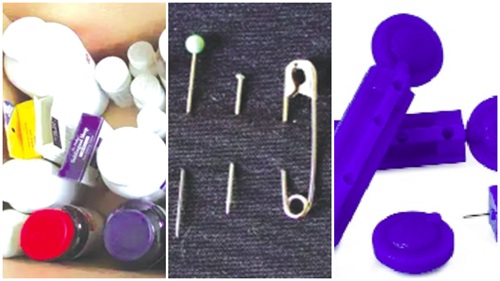
To be honest, most of us do not stop to think about what happens to our used lancets (for diabetes testing), rusty nails, pins, needles, razor blades, broken glass, ceramic shards or unneeded or expired medication. Literally, if it is no longer wanted, it goes in the trash bin.
However, that is wrong. That tiny mistake can have enormous consequences.
Here is the thing: your household trash is not a black hole. It actually embarks on a journey: one that involves sanitation workers, landfills, water systems and sometimes curious little hands, mentally challenged individuals and domestic or stray animals, particularly dogs and cats.
So, before you toss that used lancet, rusty nail, pin, needle, razor blade, broken glass, ceramic piece or expired medicine or even flush them, let’s talk about doing it the right way.
Personally, with unwanted sharps, such as, office pins, notice board pins, needles, razor blades and nails, I wrap them in tissue before discarding them.
For broken glass and ceramics, old newspapers or outdated calendars are ideal. I recognise that the young man who comes by my house to empty my trash bin (often without gloves) could easily be injured if I am not intentional about how I dispose of sharp objects.
Dormant Account Notice
If you use lancets for diabetes or malaria tests or syringes for insulin injections at home, remember that these are biohazardous medical wastes capable of transmitting blood-borne viruses such as hepatitis and HIV.
In this case, it’s safer to store used lancets and syringes in a heavy-duty bottle (not a thin mineral water bottle, as needles can pierce through those easily) and hand them over to a health facility for proper disposal during your next visit.
Medicines
Moving on to medicines, many of us have avoided the Medicine Cabinet clean-out for too long.
I recently found a bottle of methylated spirit I bought in March 2020 during the COVID-19 lockdown. I had kept it all this while, intending to experiment with making hand sanitiser not knowing it had expired way back in 2023.
I know I am not the only guilty one when it comes to cleaning out stuff we don’t need simply because we don’t have the time, or because we hold on to the belief that we may need those things someday.
However, seriously speaking, we should stop keeping medicines we no longer need or that are expired.
For example, that dusty bottle of cough syrup from 2018 or that leftover antibiotic from 2025, needs to go because these aren’t just clutter anymore; they are risks.
They can lead to accidental poisoning, which happens far more often than you might think.
Franko Speed Shopping
They can also be misused. Keeping unneeded medicines around is like leaving a loaded drawer or cabinet of temptation or tragedy, especially with children in the house.
Likewise, disposing of them improperly can endanger sanitation workers, scavengers (including children and mentally challenged individuals) and stray animals.
Here is what I do: before I dispose of unneeded pills or capsules, I remove them from their blister packs or containers and mix them with water in the sink.
If they’re soluble, they dissolve quickly and go down the drain.
If not, I scoop the wet pills out and toss them in the trash.
For liquid medicines, I pour out the remaining contents and rinse the bottle before discarding it.
My goal is to render the medication inaccessible for consumption.
It is also suggested to soak the liquid medicines in tissue and then put them in the trash bin.
One thing I never do is donate unused or leftover medicines (even if they haven’t expired).
This is because I can’t be certain that I stored them under optimal conditions to make them safe for someone else to consume.
Safe
The bottom line is, safe disposal is not a matter of convenience; in fact, it is a moral and civic responsibility.
The few minutes it takes to wrap a sharp object or dispose of medication properly can prevent a family’s devastation, a sanitation worker’s lifelong infection, injury or death to pets or stray animals, and environmental contamination.
There is no harmless way to ignore this issue.
The sharps, broken glass, ceramics and unneeded medications in your home will be disposed of.
The only question is whether it will be done with care and conscience or with consequences that ripple far beyond your front door.
Let’s choose responsibility.
Let’s choose safety.
The writer is a lawyer.