The Institute of Economic Research and Public Policy (IERPP) says Ghana’s recent economic improvements do not necessarily mean the country has gained meaningful fiscal space, warning that the positive indicators may mask deeper financial challenges.
In an analysis by its Executive Director, Prof. Isaac Boadi, the institute acknowledged progress, including lower inflation, a stronger cedi, reduced interest rates and an improved debt-to-GDP ratio.
However, it stressed that these gains do not automatically translate into greater financial flexibility.
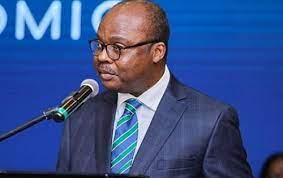
Prof. Boadi explained that fiscal space is not simply about having money available but about a government’s ability to meet existing obligations while still investing, borrowing responsibly and responding to economic shocks.
Drawing on the Bank of Ghana’s Summary of Economic and Financial Data released on July 21, 2026, the analysis noted that Ghana’s debt-to-GDP ratio fell from 51.1% in April 2025 to 41.5% in January 2026, while inflation declined from 13.7% to 3.2%. The Monetary Policy Rate also dropped from 28% to 14%.
However, Prof. Boadi argued that the lower debt ratio was largely due to the rebasing of Ghana’s Gross Domestic Product (GDP), which increased the size of the economy statistically rather than through higher output.
“The debt ratio fell mainly because the denominator moved, not the numerator,” he argued, adding that domestic debt in cedi terms continued to rise.
He also noted that government revenue is still heavily consumed by recurrent spending and debt servicing, leaving little room for capital investment.
“Nearly everything the state collects is absorbed by recurrent spending and debt service, which is the textbook definition of no fiscal space,” Prof. Boadi stated.
IERPP further warned that Ghana’s recovery remains vulnerable, pointing to the cedi’s depreciation throughout 2026, rising inflation, declining foreign exchange reserves, lower cocoa prices and growing pressure on the banking sector.
The institute added that Ghana is experiencing “fragile stabilisation rather than expanded fiscal freedom” and urged policymakers to prioritise stronger revenue mobilisation, reserve protection and sustainable investment instead of assuming the country has broad fiscal flexibility.